



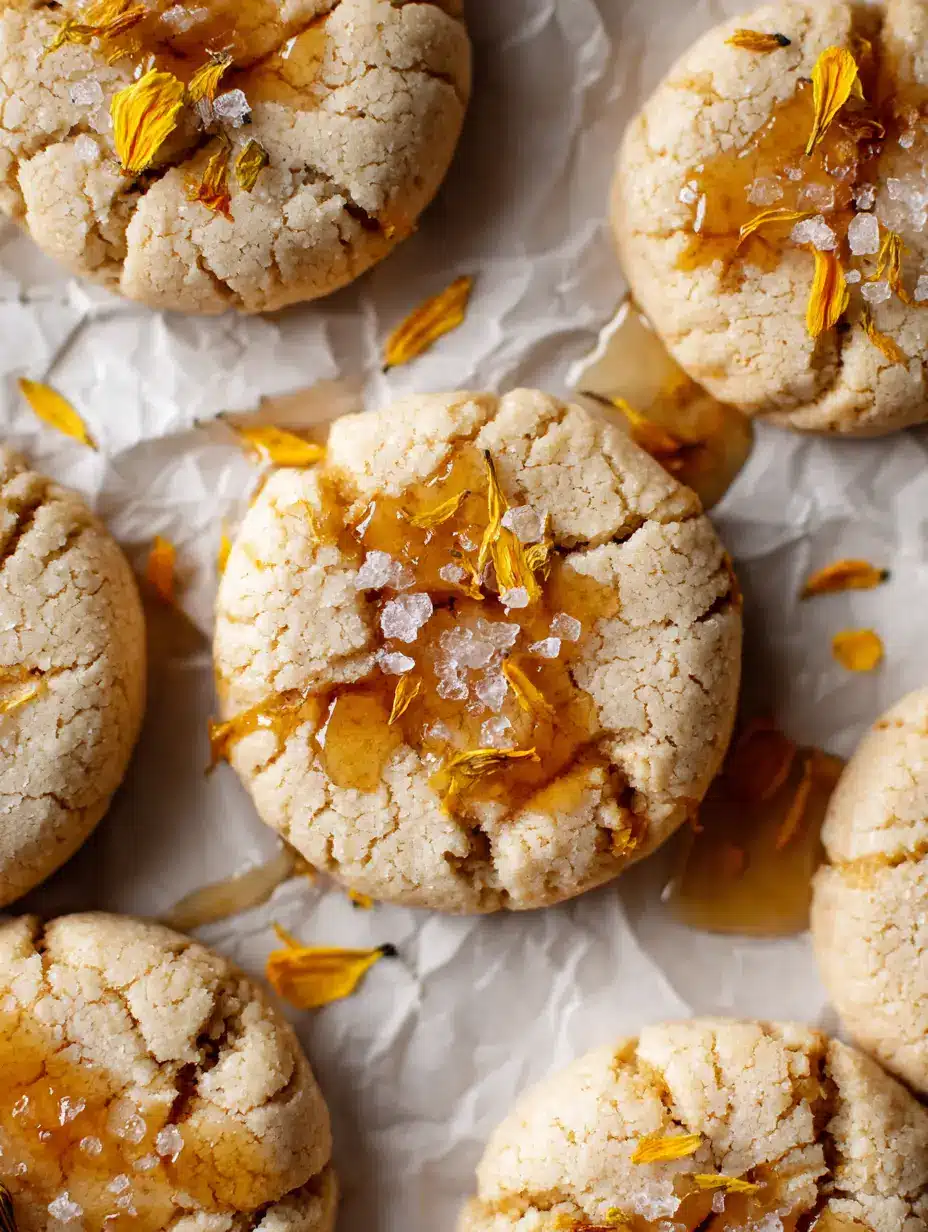
There is something inherently magical about the way honey behaves in the oven. When you bake a batch of Salted Honey Cookies, your kitchen transforms into a fragrant sanctuary of toasted sugar and floral nectar. These cookies aren’t just a sweet treat; they are a masterclass in textural contrast, featuring a soft, pale golden-blonde center and perfectly toasted golden-brown edges.
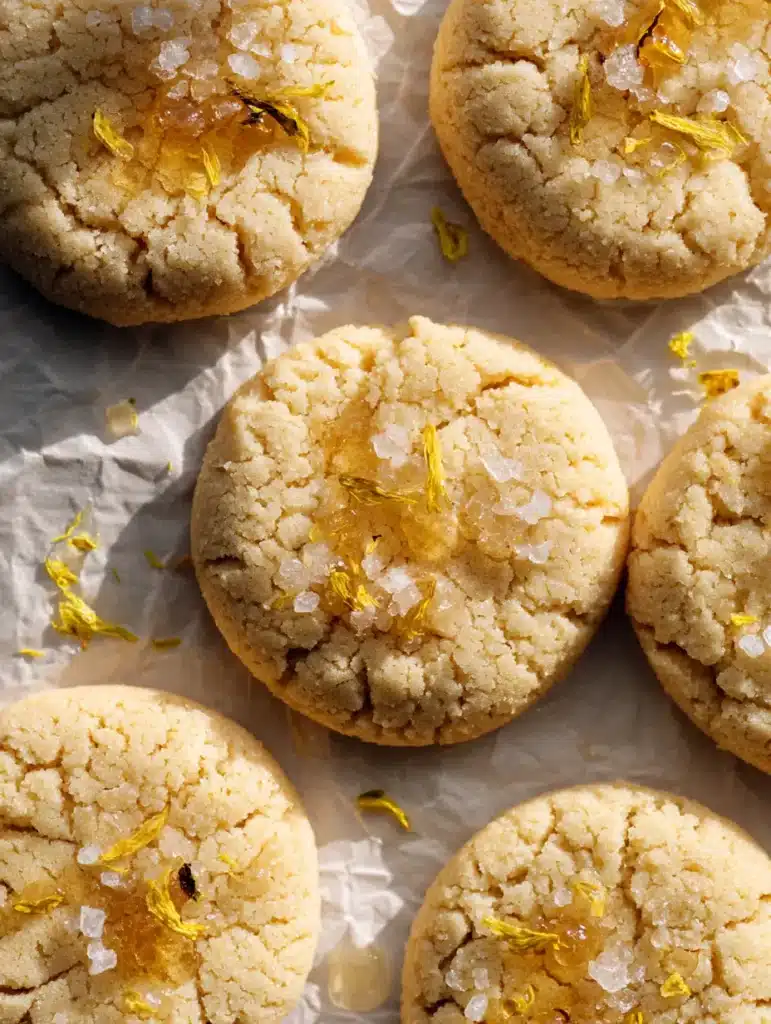
If you have been searching for a recipe that looks like it stepped out of a high-end artisanal bakery, you have arrived. We are going to achieve that iconic “crinkled” look—complete with natural cracks and ripples—that holds onto a generous drizzle of translucent, amber-colored liquid honey. Each bite is balanced by the sharp, clean crunch of large sea salt flakes and the delicate beauty of dried yellow edible flower petals.
This Salted Honey Cookies recipe is designed for the home baker who appreciates the finer details. We will delve into the science of why honey creates such a uniquely chewy crumb and how to time your bake to get those visually stunning two-tone edges. Let’s get our parchment paper ready and dive into the world of sophisticated, honey-infused desserts.
Why You Will Fall in Love With These Honey-Infused Masterpieces
- The Perfect Chew: Thanks to the hygroscopic nature of honey, these cookies stay moist and chewy for days, offering a dense, satisfying bite that contrasts with the crisp outer rim.
- Visual Sophistication: The combination of the “pale blonde” dough and the “toasted mahogany” edges creates a stunning visual gradient that looks professional and hand-crafted.
- Sweet and Salty Balance: The large, flat sea salt flakes cut through the floral sweetness of the amber honey, creating a complex flavor profile that isn’t cloying.
- Artisanal Garnishing: Using dried yellow flower petals elevates these from simple snacks to a centerpiece-worthy dessert.
The Anatomy of Artisan Salted Honey Cookies: Ingredients and Substitutions
To achieve the specific visual results of a pale center and golden edges, the choice of sugar and leavening is critical. Every ingredient in this list serves a structural and aesthetic purpose to ensure your cookies match the professional “top-down” look of our blueprint.
Unsalted Butter (1 cup / 225g): We use softened butter to create a stable emulsion with the sugars. This ensures the Salted Honey Cookies have enough fat to spread slightly, creating those beautiful natural cracks on the surface.
Granulated White Sugar (¾ cup / 150g): White sugar is essential for achieving the pale golden-blonde hue in the center of the cookie. It provides sweetness without the darkening effect of excessive molasses found in brown sugar.
Light Brown Sugar (¼ cup / 50g): Just a touch of brown sugar provides the moisture needed for a chewy texture. It also contributes to the toasted golden-brown edges as the edges caramelize faster against the hot baking sheet.
High-Quality Liquid Honey (⅓ cup / 80ml + extra for drizzling): Use a translucent, amber-colored honey like Clover or Wildflower. This provides the primary flavor profile and creates that beautiful pooled effect in the center depressions after baking.
Large Egg (1 unit): The egg acts as the primary binder, providing the protein structure needed to hold the thick, circular shape. Ensure it is at room temperature for seamless integration into the dough.
All-Purpose Flour (2 ¼ cups / 280g): This provides the “body” of the cookie. We want a thick, circular result, so we use enough flour to prevent the dough from becoming too thin or greasy.
Baking Soda (1 tsp / 5g): Baking soda reacts with the acidity in the honey. This reaction is what creates the “ripples and cracks” as the cookies rise and then gently deflate during the cooling process.
Fine Sea Salt (½ tsp / 3g): This is the “invisible” seasoning that enhances the floral notes of the honey within the dough itself.
Flaky Sea Salt (For Garnish): These large, translucent white flakes provide the visual “pop” and the essential salty finish. If you love this flavor profile, you might also enjoy my Salted Honey Cinnamon Cookies.
Dried Yellow Edible Flower Petals: These are purely for the “Culinary Forensics” aesthetic. Marigold or Calendula petals work beautifully to mimic the tiny yellow accents described in our visual prompt.
Essential Equipment for the Perfect Circular Cookie
Achieving a professional, thick, and circular Salted Honey Cookies shape requires the right tools. You don’t need a commercial kitchen, but these items will make a massive difference in your final presentation.
First, you will need a heavy-duty baking sheet lined with white parchment paper. The parchment prevents sticking and reflects heat in a way that helps maintain that “pale blonde” bottom while allowing the edges to toast. A high-quality cookie scoop (about 2 tablespoons capacity) is also vital for ensuring every cookie is identical in size and thickness.
Lastly, a small Offset Spatula or a simple teaspoon will help you create the “center depressions” where the amber honey will pool. If you’re a fan of sophisticated baking techniques, you should also check out the process for making French Almond Dacquoise Cookies, which also focus heavily on texture and garnish.
The Step-by-Step Guide to Baking Salted Honey Cookies
Follow these steps closely to ensure the sensory cues match the visual blueprint. We aren’t just mixing; we are building layers of flavor and texture.
Phase 1: Creaming for Structure and Aeration
In a large bowl, cream together your softened unsalted butter, white sugar, and light brown sugar. Beat on medium-high for about 3 minutes until the mixture is pale and fluffy.
Add the egg and the ⅓ cup (80ml) of honey. Continue to mix until the honey is fully incorporated and the batter looks like a smooth, pale gold ribbon. This step is where we build the “pale blonde” foundation of the cookie dough.
Phase 2: Incorporating the Dry Elements
Sift together the all-purpose flour, baking soda, and fine sea salt. Sifting is crucial here to avoid any clumps of soda that could cause uneven browning or “hot spots” on the cookie surface.
Slowly fold the dry ingredients into the wet mixture. Stop as soon as the last streak of flour disappears. Over-mixing will develop gluten, turning your chewy Salted Honey Cookies into tough, bread-like discs.
Phase 3: The Chill Factor
Chill the dough for at least 30 minutes. This prevents the cookies from spreading too thin. We want them to remain “thick and circular” as described in the Midjourney prompt. Chilling also deepens the honey flavor profile.

Phase 4: Precision Baking and Visual Cues
Preheat your oven to 350°F (175°C). Scoop the dough into balls and place them on the crinkled white parchment paper. Leave about 2 inches of space between each cookie.
Bake for 10-12 minutes. Watch for the Visual Cue: the centers should still look slightly underbaked and pale golden-blonde, while the very outer edges should have turned a distinct, toasted golden-brown. This contrast is the hallmark of a perfectly baked honey cookie.
Phase 5: The Amber Drizzle and Garnish
Immediately after removing the cookies from the oven, use the back of a spoon to create a very slight depression in the center of each warm cookie. Allow them to cool on the pan for 5 minutes to set their shape.
Once slightly cooled but still warm, drizzle the extra translucent amber honey over the tops, allowing it to pool in the center and streak across the natural cracks. Finish with a generous sprinkle of large sea salt flakes and a few tiny, dried yellow flower petals.
Expert Tips for Bakery-Style Success
- The “Slam” Technique: If your cookies aren’t showing enough ripples, gently tap the baking sheet against the oven rack halfway through baking. This collapses the air bubbles and creates those natural cracks.
- Honey Temperature: If your drizzling honey is too thick, microwave it for 5 seconds. It should be “liquid amber” so it flows effortlessly into the cookie’s rippled surface.
- Parchment Matters: Use “crinkled” parchment paper for the photo-ready aesthetic. It provides a beautiful, textured background that contrasts with the smooth honey drizzle.
- Salt Timing: Add the salt flakes while the honey drizzle is still wet. This ensures the flakes “bond” to the cookie and don’t just fall off when you take a bite.
What to Serve With Salted Honey Cookies
These cookies are a sophisticated dessert that pairs perfectly with a variety of flavor profiles. Because of their sweet-salty nature, they work well alongside savory snacks or as a follow-up to a rich meal.
For a complete dessert spread, try serving these with Banana Bread Brownies for a mix of fruit and honey flavors. If you are hosting a party and want to offer a savory contrast, these cookies are surprisingly delightful after a meal of Spinach White Cheddar Chicken Burgers or even some Air Fryer Veggie Chips for a crunchy side.
For a drink pairing, the floral notes in the honey are amplified by a glass of cold milk or a light, fruity tea. If you’re feeling adventurous, a drizzle of Garlic Hot Honey Sauce on a nearby appetizer can create a fun “honey-themed” menu for your guests.
Storage and Freshness Guide
At Room Temperature: Store your Salted Honey Cookies in an airtight container for up to 5 days. Because honey is a humectant, they actually tend to get even chewier on the second day!
Freezing the Dough: You can freeze the scooped dough balls for up to 3 months. Bake them directly from frozen, adding 2 minutes to the total baking time. Do not add the honey drizzle or salt garnish until after they are baked.
Reheating: If you want that “just out of the oven” experience, pop a cookie in the microwave for 8 seconds. This will soften the honey and make the center tender again.
Frequently Asked Questions
The petals are primarily for the artisanal visual appeal. They add a very faint floral note, but the cookies will still taste amazing without them.
While you can, Manuka honey is very opaque and strong. For the ‘translucent amber’ look described, a Clover or Wildflower honey is visually superior.
The ripples come from the reaction of baking soda with honey. For extra cracks, gently bang the pan on the counter halfway through baking to deflate the centers.
Maldon sea salt or any large, flat sea salt flakes are best. They provide the translucent look and the perfect crunch without being too salty.
This usually happens if the butter was too warm or the dough wasn’t chilled. Ensure you chill the dough for at least 30 minutes to maintain that thick, circular shape.
The Ultimate Salted Honey Cookies Recipe Card
Salted Honey Cookies: The Ultimate Chewy Artisan Recipe with Amber Drizzle
Ingredients
Equipment
Instructions
- Beat softened butter, white sugar, and brown sugar until pale and fluffy (approx. 3 mins).
- Add the egg and 1/3 cup honey, mixing until a smooth pale gold ribbon forms.
- Fold in sifted flour, baking soda, and fine sea salt until no flour streaks remain.
- Chill the dough for 30 minutes to ensure thick, circular cookies.
- Scoop dough onto parchment. Bake at 350°F (175°C) for 10-12 minutes until edges are toasted golden-brown but centers remain pale.
- Create a center depression while warm. Drizzle liquid amber honey, then sprinkle with flaky salt and flower petals.
Notes
Use high-quality clover honey for the most translucent amber drizzle.

Join the Hearth Recipe Community!
These Salted Honey Cookies are a testament to how simple ingredients like honey and salt can create a world-class dessert. The visual contrast of the toasted edges and the glistening amber drizzle makes them a showstopper for any occasion. We hope you enjoy the process of watching these golden beauties come to life in your oven!
If you made these, we would love to hear from you! Leave a comment below or share your photos on social media. Be sure to follow us on Pinterest for more artisanal baking inspiration and culinary deep dives. Happy baking!