



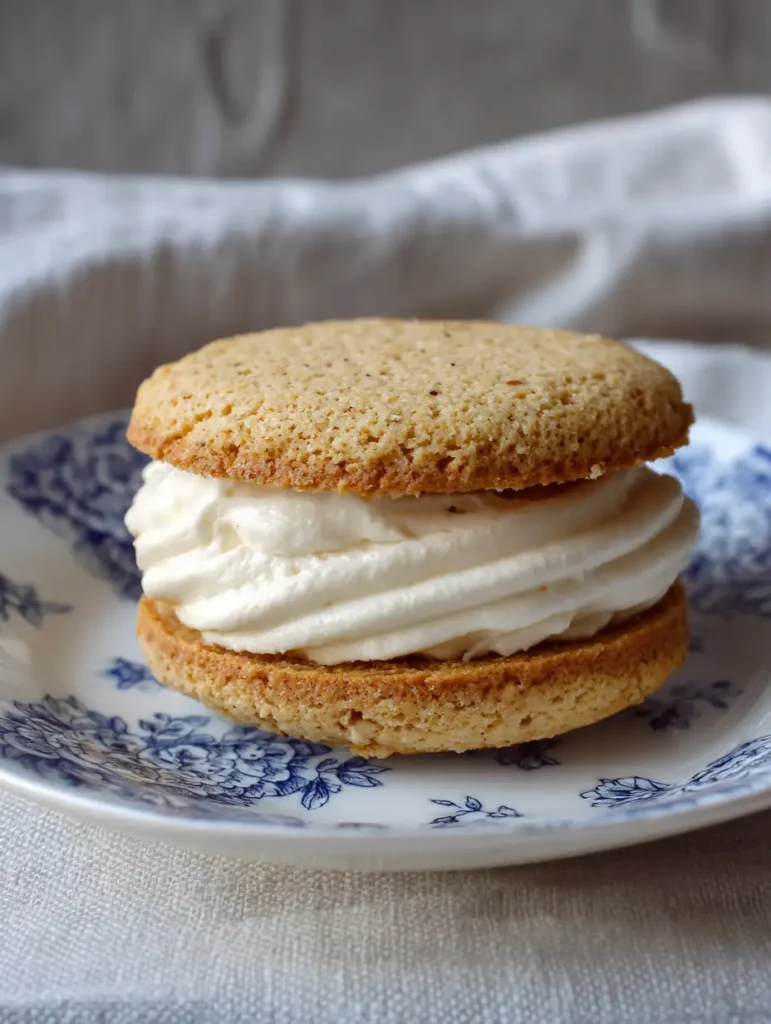
There is something inherently poetic about the shatter of a perfectly baked meringue meeting the velvet embrace of a whipped nut cream. These French Almond Dacquoise Cookies are the pinnacle of that sensory experience, offering a sophisticated alternative to the classic macaron. Unlike their smoother cousins, dacquoise shells are celebrated for their rustic, “cracked” exterior and the visible, toasted specks of ground almonds that hint at the deep, nutty flavor within. When you see these pale golden-brown disks resting on a classic white ceramic plate with a delicate blue floral pattern, you know you are in for a treat that is as visually stunning as it is delicious.
In this comprehensive guide, we are going to master the delicate balance of the French Almond Dacquoise Cookies. We will explore the culinary science of egg white stabilization, the importance of precision piping for that “tall” cream profile, and the specific visual cues—like that signature slight cracking—that signal a professional-grade result. Whether you are baking for a high-tea event or looking to elevate your weekend dessert game, these cookies provide a masterclass in French pastry technique, optimized for the home kitchen.
Why These Meringue Sandwiches Are a Pastry Shop Standout
- The Textural Contrast: You will achieve a shell that is incredibly crisp on the outside while remaining tender and slightly chewy in the center.
- Visually Stunning Presentation: The contrast between the pale golden-brown meringue and the thick, smooth white almond cream creates a high-end aesthetic.
- Deep Nutty Profile: By using toasted ground almonds, we ensure the flavor is robust and aromatic, rather than just sweet.
- Perfect Structural Integrity: These cookies are designed to hold their “tall” piped filling without collapsing, making them ideal for impressive plating.
The Scientific Essentials for Your Ingredient List
To achieve the specific visual and structural results of these French Almond Dacquoise Cookies, every ingredient serves a dual purpose: flavor and architecture. We aren’t just making a cookie; we are building a stable foam that must withstand the heat of the oven while retaining its shape.
The Foundational Meringue Components
1 1/2 cups (150g) Almond Flour (Ground Almonds): This provides the primary structure and the “visible specks” noted in the visual blueprint. Ensure you use a high-quality, skin-on or slightly toasted meal for the best flavor depth.
1 1/4 cups (150g) Powdered Sugar: This finely milled sugar dissolves instantly into the egg whites, helping to create that “smooth but slightly cracked” exterior. It also helps stabilize the meringue during the long baking process.
5 Large (150g) Egg Whites: These are the engine of your dacquoise, providing the protein structure necessary for a high rise. Ensure they are at room temperature to achieve maximum volume during the whipping stage.
1/2 cup (100g) Granulated Sugar: Added slowly to the whipping whites, this creates a tight, glossy “French” meringue. It acts as the “glue” that keeps your almond disks from crumbling into dust.
1/2 tsp (2g) Cream of Tartar: This invisible essential is an acid that prevents the egg white proteins from over-coagulating. It ensures your meringue is flexible enough to pipe into perfect circles without breaking.
1/4 tsp (1.5g) Fine Sea Salt: A crucial flavor enhancer that cuts through the sugar. Salt also helps strengthen the protein bonds in the egg whites for a sturdier cookie shell.
The Whipped White Almond Cream Filling
1 cup (225g) Unsalted Butter, Softened: This forms the base of our thick, “tall” filling. Using high-fat European-style butter ensures the cream stays smooth and holds its piped shape at room temperature.
2 cups (240g) Powdered Sugar: This provides sweetness and body to the almond cream. It must be sifted to ensure the “smooth, piped” appearance seen in the professional visual prompt.
1/4 cup (60ml) Heavy Cream: A small amount of whipped heavy cream is folded into the butter base to lighten the texture. This creates the “whipped” quality that makes the filling feel airy rather than heavy.
1 tsp (5ml) Pure Almond Extract: This provides the signature aromatic punch that defines the French Almond Dacquoise Cookies. It bridges the flavor of the meringue shells and the creamy center.
Professional Baking Tools for Precision Results
To recreate the “close-up” smartphone photo aesthetic of a perfect dacquoise, you need the right gear. Precision in French pastry is often a result of having the correct tools for air incorporation and shape retention.
- Stand Mixer with Whisk Attachment: Essential for reaching the “stiff peak” stage required for a dacquoise that doesn’t spread in the oven.
- Large Piping Bag with a 1/2-inch Plain Round Tip: This is necessary for both the meringue disks and the “thick, tall layer” of cream.
- Silicone Baking Mats (Silpat): These provide even heat distribution, ensuring the bottoms of your cookies are pale golden-brown rather than burnt.
- Fine-Mesh Sieve: You must sift the almond flour and powdered sugar together to avoid lumps and achieve that “smooth” finish.
- Digital Kitchen Scale: In French pastry, weight is more accurate than volume. Use the metric measurements provided for the most consistent results.
Mastering the Meringue: A Step-by-Step Guide
Creating the perfect shell for French Almond Dacquoise Cookies requires patience and a keen eye for sensory cues. We are looking for a specific “slightly cracked, crisp exterior” that still yields to a tender bite.
Step 1: Toasting and Prepping the Almond Base
Start by preheating your oven to 300°F (150°C). Spread your ground almonds on a baking sheet and toast for 5-7 minutes until they are fragrant. This step is vital for the “toasted ground almonds” requirement in our recipe blueprint. Once cooled, sift the toasted almonds with the 1 1/2 cups of powdered sugar. If any large bits remain in the sieve, pulse them in a food processor until fine. This ensures your “visible specks” are uniform and elegant.
Step 2: Whipping to Stiff Peaks
In the bowl of your stand mixer, begin whipping the room-temperature egg whites and cream of tartar on medium-low speed. Once the mixture becomes foamy—resembling the top of a latte—increase the speed to medium-high. Gradually add the granulated sugar one tablespoon at a time. Continue whipping until the meringue is stiff, glossy, and holds its shape when the whisk is lifted. You are looking for a texture that looks like thick shaving cream.
Step 3: Folding with Finesse
Gently fold the almond-sugar mixture into the meringue using a wide rubber spatula. Do not stir; use a “cut and fold” motion to preserve the air bubbles you’ve worked so hard to create. Stop folding as soon as no dry streaks remain. Over-mixing will cause the dacquoise to lose its height and become gummy rather than crisp.
Step 4: Piping the Disks
Transfer the mixture to your piping bag. On a lined baking sheet, pipe 2-inch (5cm) circles, starting from the center and spiraling outward. This technique ensures the “circular, pale golden-brown” look. Dust the tops lightly with a tiny bit of extra powdered sugar; this is the secret to achieving that “slightly cracked, crisp exterior” as the sugar caramelizes slightly in the heat.
Step 5: The Low and Slow Bake
Bake at 300°F (150°C) for 20-25 minutes. You are looking for the cookies to be firm to the touch and a very “pale golden-brown.” If they start to darken too much, lower the heat. Turn off the oven and leave the door slightly ajar for another 15 minutes. This slow cooling process prevents the meringue from collapsing and enhances the crispness.
Whipping the Velvet Almond Cream
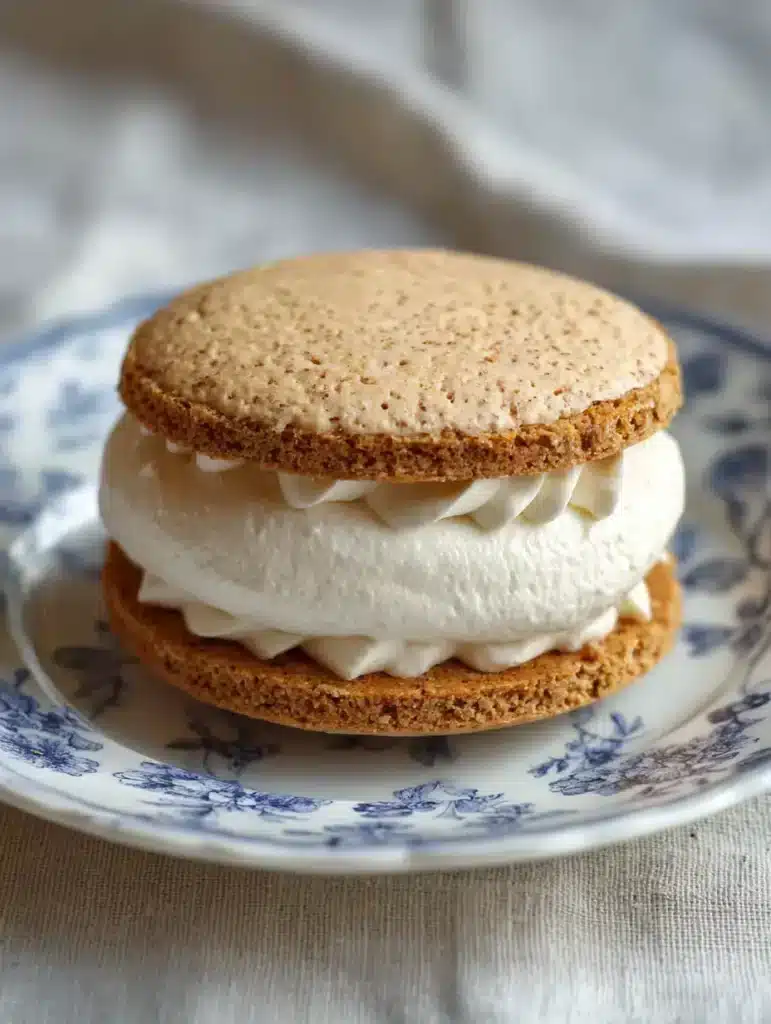
While the shells cool, we focus on the “smooth, piped white almond cream.” This filling needs to be stable enough to sit “tall” between two cookies without oozing out the sides.
Beat the softened butter and sea salt until extremely pale and fluffy—about 3 minutes. Gradually add the powdered sugar and almond extract, beating on low until combined, then high for another 2 minutes. Finally, fold in the whipped heavy cream. The result should be a bright white, stiff frosting that holds a sharp peak. If your kitchen is warm, chill the cream for 10 minutes before piping to ensure it retains its “thick, tall layer” appearance.
The Final Assembly: Achieving the Signature Sandwich Look
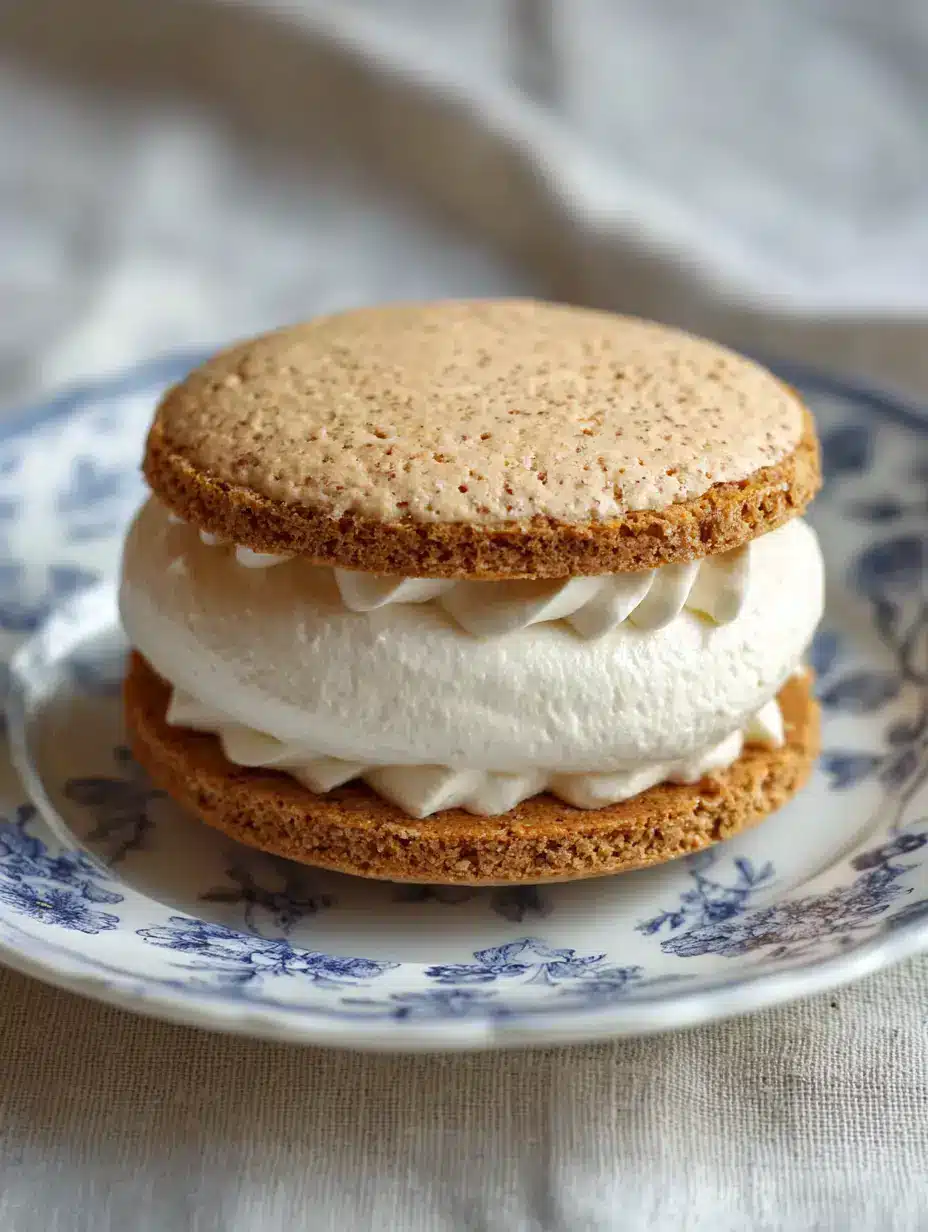
Pair up your dacquoise shells by size. Flip one shell over and pipe a generous mound of the white almond cream onto the flat side. Place the second shell on top and press very gently—just enough so the cream reaches the edges but maintains its height. The “visible specks of ground almonds” on the top shell should be the star of the show.
For the most authentic experience, serve these French Almond Dacquoise Cookies on a white ceramic plate with a blue floral pattern. The contrast of the rustic, cracked meringue against the delicate porcelain is a classic European aesthetic that never fails to impress.
Pro-Level Troubleshooting for Meringue Success
- My meringue is chewy, not crisp: This usually happens in high humidity. Ensure you bake them long enough and let them cool completely in the oven to dry out.
- The shells cracked too much: A few cracks are desirable for dacquoise, but large fissures mean the oven was too hot. Check your oven calibration with a thermometer.
- The filling is melting: Ensure the shells are 100% cold before piping. Even a hint of residual heat will liquify the butter-based almond cream.
- The ground almonds are too chunky: If your toasted almonds are too large, they can deflate the meringue. Always sift and regrind the larger bits.
Keeping Your Cookies Crisp: Storage and Freshness
Because meringue is hygroscopic (it absorbs moisture from the air), storage is key. French Almond Dacquoise Cookies are best enjoyed within 24 hours of assembly. If you need to make them ahead of time, store the baked shells in an airtight container at room temperature for up to 3 days. Only assemble with the almond cream shortly before serving to maintain the “crisp exterior.”
You can also freeze the assembled cookies! Place them in a single layer in a freezer-safe container. When you are ready for a treat, let them thaw in the refrigerator for 2 hours. This actually creates a lovely “semifreddo” texture in the cream that many pastry chefs adore.
Elegant Pairings for Your Afternoon Tea
The nutty, sweet profile of these cookies makes them a versatile companion for various flavors. If you are hosting a full spread, consider serving them alongside something savory to balance the sugar. A light meal of lemon ricotta spaghetti provides a bright, citrusy lead-in to the deep almond notes of the dacquoise.
For a dessert-themed gathering, these cookies pair beautifully with other textured treats. Try serving them with banana bread brownies for a mix of chewy and crisp textures. If the weather is warm, a glass of pineapple sangria offers a tropical acidity that cuts through the rich almond cream perfectly. And for those who love a “sweet and salty” finish, a side of salted honey cinnamon cookies will round out your dessert platter with warm, spicy notes.
Common Questions About Baking Dacquoise
Traditional French Almond Dacquoise Cookies rely on nut flour for structure. You can substitute hazelnut or pistachio flour, but using a seed flour like sunflower seed meal will significantly alter the flavor and texture profile.
The secret is using a stabilized butter and whipped cream base. Ensure your butter is cool-room temperature and your heavy cream is whipped to stiff peaks before folding it in. Chilling the filling for 10 minutes before piping also helps it hold its shape.
While both use almond meringue, a dacquoise is more rustic with a slightly cracked, crisp exterior and visible toasted almond specks. Macarons are smooth and require a complex ‘macaronage’ process, whereas dacquoise is folded more gently to maintain a light, airy height.
Store the un-filled shells in an airtight container at room temperature. Once filled, dacquoise cookies absorb moisture from the cream, so they are best eaten within a few hours for maximum crispness.
Gumminess is usually caused by under-baking or high humidity. Ensure you bake them until they feel firm and ‘set,’ and always let them cool completely in a dry environment to allow the meringue to fully crisp up.
The Ultimate French Almond Dacquoise Cookies Recipe
French Almond Dacquoise Cookies: The Ultimate Guide to Piped Meringue Perfection
Ingredients
Equipment
Instructions
- Toast almond flour at 300°F (150°C) for 5-7 mins. Cool and sift with powdered sugar.
- Whip egg whites and cream of tartar to soft peaks. Gradually add granulated sugar, whipping to stiff, glossy peaks.
- Gently fold almond mixture into meringue. Pipe 2-inch circles onto lined baking sheets.
- Bake at 300°F (150°C) for 20-25 mins until pale golden-brown. Cool in the oven with the door ajar.
- Beat butter and sugar until fluffy. Add extract and fold in whipped heavy cream until smooth and thick.
- Pipe a tall layer of cream onto one shell and top with another, pressing gently to sandwich.
Notes
Assemble cookies only when shells are fully cooled to prevent the cream from melting.
Join the Hearth Recipe Community!
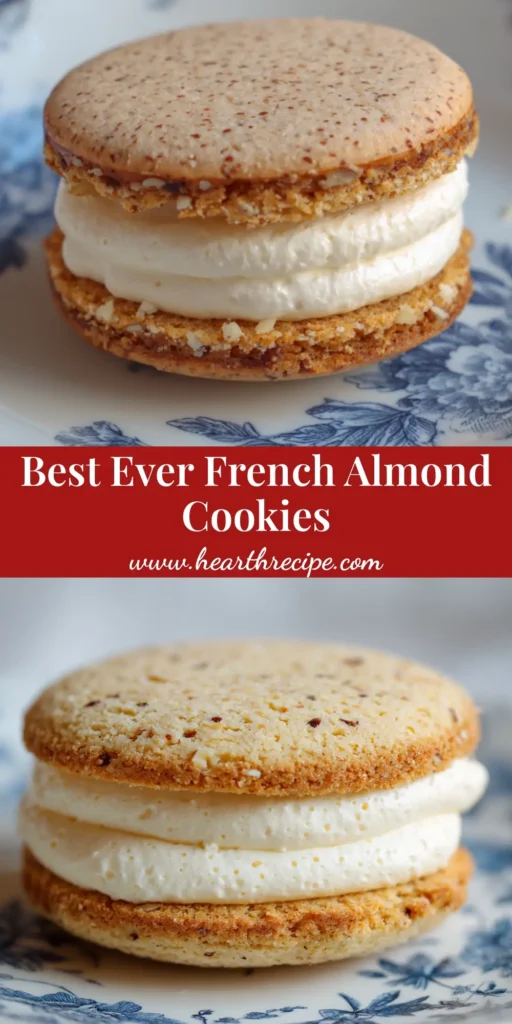
Mastering the French Almond Dacquoise Cookies is a true badge of honor for any home baker. The combination of that signature cracked meringue and the velvety almond filling creates a dessert experience that is truly world-class. If you enjoyed this journey into French pastry, we would love to see your results! Leave a comment below with your success stories or questions.
Don’t forget to follow us and share your beautiful bakes on Pinterest. Your support helps us continue to develop scientifically-backed, visually-aligned recipes for passionate cooks like you. Happy baking!