




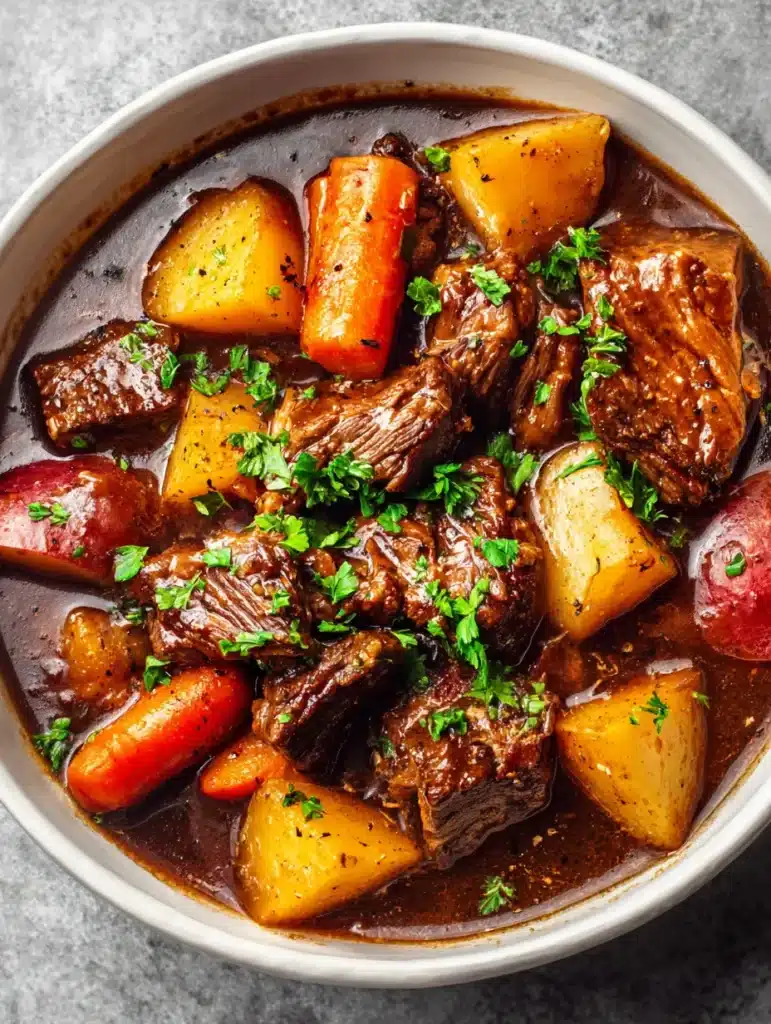
There is nothing quite as restorative as a bowl of Crockpot Beef Stew that has spent the better part of a day developing deep, complex flavors. When you lift the lid of your slow cooker, you aren’t just looking for a meal; you are looking for that specific visual of tender beef chunks and vibrant vegetables swimming in a dark, glossy sauce.
This recipe is designed to bridge the gap between a simple “dump-and-go” meal and a gourmet braise. By following a few critical culinary steps, we achieve a stew with a rich mahogany-brown gravy and beef that retains its fiber texture while remaining fork-tender.
Whether you are coming home after a long day or prepping for a cozy Sunday dinner, this version of Crockpot Beef Stew delivers on every sensory promise. From the visible flecks of dried thyme to the bright pop of fresh parsley, every element is curated for maximum flavor and visual appeal.
Why This Slow-Simmered Beef Stew Works
- Maillard-Driven Depth: We don’t just boil the meat; we sear it to create a deep brown crust that dissolves into the gravy for a rich, dark mahogany finish.
- Structural Integrity: By using skin-on red potatoes and thick diagonal-cut carrots, the vegetables maintain their shape and “bite” even after eight hours of cooking.
- Velvety Consistency: The base is a thick, glossy beef gravy that clings to the spoon, rather than a thin, watery broth.
- Aromatic Infusion: Dried thyme and cracked black pepper are layered throughout the cooking process to ensure every bite is seasoned to the core.
The Anatomy of a Perfect Mahogany Stew Base
To achieve the visual result seen in professional culinary photography, we must select ingredients that contribute to both color and viscosity. This isn’t just about nutrition; it’s about the chemistry of a “hearty” stew.
Chuck Roast (1.36kg / 3 lbs): This is the gold standard for slow cooking. The high fat and connective tissue content break down into gelatin, which provides that sought-after velvety mouthfeel in the gravy.
Red Potatoes (680g / 1.5 lbs): We keep the skin on for texture and color. Unlike Russets, red potatoes are waxy and hold their cubed shape perfectly during the long trek in the crockpot.
Large Carrots (340g / 3-4 large): Slicing these on a thick diagonal increases the surface area for the sauce to cling to while ensuring they don’t turn into mush.
Beef Bone Broth (945ml / 4 cups): A high-quality bone broth provides the collagen necessary for a glossy finish. If you usually make a beef tenderloin roast, you know that the quality of the meat’s liquid is everything.
Tomato Paste (30g / 2 tbsp): This is our secret weapon for color. It provides the base for that “dark mahogany” hue that distinguishes an elite stew from a pale one.
Worcestershire Sauce (15ml / 1 tbsp): Adds an umami punch and helps deepen the brown tones of the gravy base.
Dried Thyme (2g / 1 tsp): We use dried here because it stands up to the long heat of the slow cooker better than fresh, leaving beautiful green flecks in the finished sauce.
Fresh Flat-Leaf Parsley (15g / 1/4 cup): Added at the very end, this provides a “vibrant garnish” that cuts through the richness of the stew.
Essential Tools for Success
To achieve the seared texture of the beef chunks, you will need a heavy-bottomed skillet—preferably cast iron. While the crockpot does the heavy lifting for the braise, the skillet is where the flavor is “born.”
You will also need a sharp chef’s knife to create those thick diagonal carrot slices and uniform cubes of red potatoes. Precision in cutting ensures that all vegetables finish cooking at exactly the same time.
The Step-by-Step Path to Stew Perfection
Phase 1: The Critical Sear
Begin by patting your beef chunks (cut into 1.5-inch pieces) dry with paper towels. Season them aggressively with salt and cracked black pepper. If the meat is wet, it will steam instead of sear, and you will lose that “visible fiber texture.”
Heat 2 tbsp (30ml) of neutral oil in your skillet over medium-high heat. Add the beef in batches, ensuring you do not crowd the pan. Look for a deep golden-brown crust to form on at least two sides of each chunk.
This crust, or “fond,” is the foundation of our mahogany gravy. Once seared, transfer the beef to the crockpot, but do not wash that skillet yet!
Phase 2: Deglazing and Building the Sauce
Add a splash of beef broth to the hot skillet and scrape up all the browned bits with a wooden spoon. Stir in the tomato paste and cook for 1 minute until it turns a shade darker—this “pins” the color of your stew.
Pour this concentrated flavor liquid into the crockpot over the beef. This step ensures that your Crockpot Beef Stew has a professional, unedited look with a rich, velvety consistency.
Phase 3: Layering the Aromatics and Vegetables
Add the cubed red potatoes (skin-on) and the thick-sliced carrots to the pot. Sprinkle the dried thyme flecks and additional cracked black pepper over the top.
Pour in the remaining beef broth and Worcestershire sauce. The liquid should just barely cover the ingredients. In a slow cooker, less is often more, as the vegetables will release their own moisture over time.
Phase 4: The Low and Slow Transformation
Cover and cook on Low for 7-8 hours or on High for 4-5 hours. You will know it is ready when the beef is tender enough to be broken with a spoon, but still holds its chunk-like shape for that “hearty” presentation.
If you find the sauce needs more body, whisk 2 tbsp (15g) of cornstarch with 2 tbsp (30ml) of cold water and stir it in during the last 30 minutes of cooking. This creates the “glossy” finish we are aiming for.
Expert Tips for the Best Crockpot Beef Stew
- Don’t Skip the Flour: Tossing the beef in a light coating of flour before searing can help thicken the gravy naturally as it cooks.
- Acid Balance: If the stew tastes “heavy,” add a teaspoon of red wine vinegar at the end. It brightens the mahogany sauce without changing the flavor profile.
- Potato Selection: If you’ve enjoyed Greek lemon potatoes, you know that waxy potatoes hold up best. Avoid Russets here, as they will dissolve into the gravy and make it grainy.
- The Thyme Timing: While we use dried thyme for the cook, rubbing the dried leaves between your palms before adding them “wakes up” the oils for better aroma.
The Art of Serving Your Stew
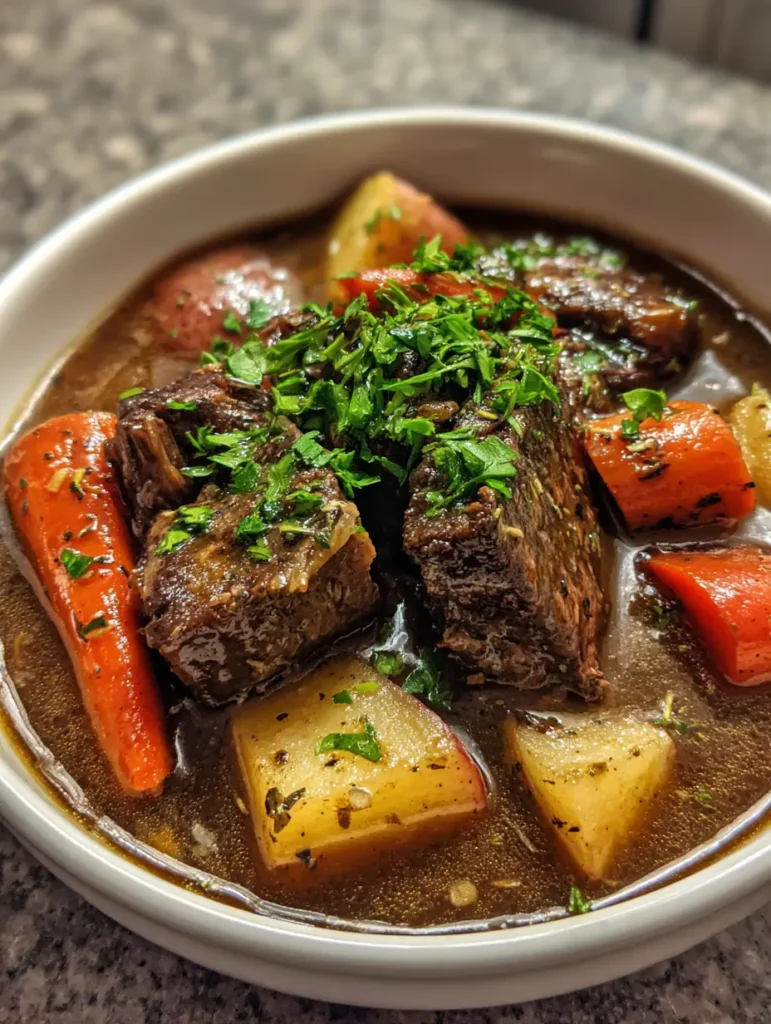
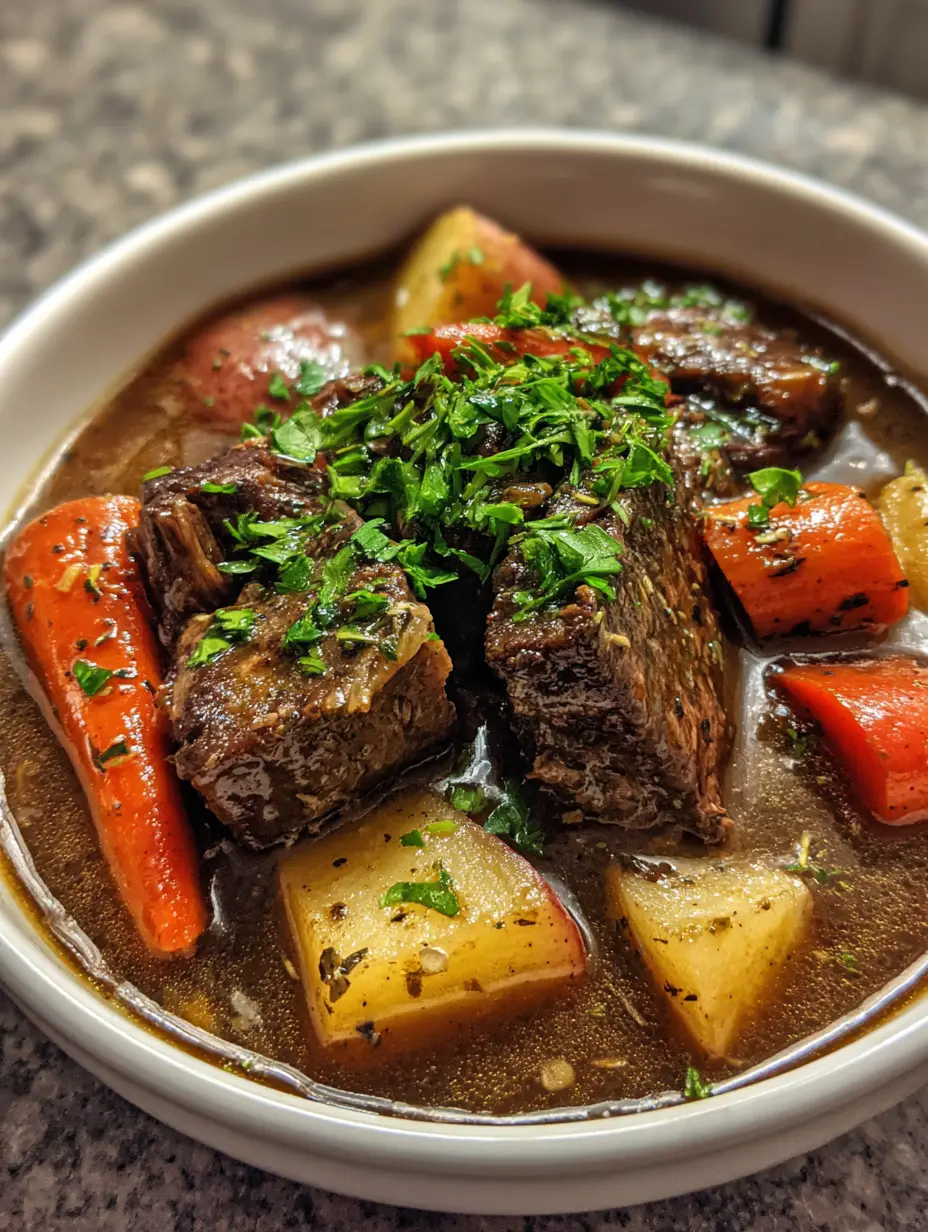
To match our visual blueprint, serve this stew in a deep white ceramic bowl. The white background makes the dark mahogany gravy and orange carrots pop with color.
Top each bowl with a generous handful of freshly chopped flat-leaf parsley. The contrast between the rich, dark stew and the vibrant green herbs is what makes this dish look as good as it tastes. For a complete meal, consider serving this alongside something with a different texture, like air fryer veggie chips for a bit of crunch.
If you’re in the mood for other slow-cooked comforts, our chicken and dumplings recipe offers a similar level of “pot-to-bowl” satisfaction.
Storage and Reheating Guidelines
Beef stew is famously better the next day. As it sits, the starches from the potatoes further thicken the sauce, and the flavors of the thyme and pepper permeate the meat.
Refrigeration: Store in an airtight container for up to 4 days. The gravy may solidify slightly due to the natural gelatin; it will liquefy again upon heating.
Freezing: This stew freezes beautifully. Store in freezer-safe bags for up to 3 months. Thaw in the fridge overnight before reheating on the stovetop over low heat.
Frequently Asked Questions
Yes, you can cook it on high for 4-5 hours. However, cooking on low for 7-8 hours allows the collagen in the chuck roast to break down more effectively, resulting in a more velvety consistency.
It is not recommended to put frozen meat directly into a crockpot for safety reasons. Thaw the beef completely, then sear it to ensure proper texture and food safety.
Yes. Searing creates the Maillard reaction, which is essential for the deep mahogany color and complex flavor of the gravy. Without it, the meat will look grey and the sauce will lack depth.
Whisk 2 tablespoons of cornstarch with 2 tablespoons of cold water to create a slurry. Stir this into the crockpot during the last 30 minutes of cooking on high heat.
You likely used starchy Russet potatoes. For Crockpot Beef Stew, always use waxy red potatoes with the skin on; they hold their cubed shape perfectly even after 8 hours of cooking.
The Ultimate Crockpot Beef Stew Recipe Card
Crockpot Beef Stew: The Ultimate Guide to a Velvety Mahogany Gravy
Ingredients
Equipment
Instructions
- Pat the beef chunks dry and season with salt and cracked black pepper.
- In a hot skillet with oil, sear beef chunks in batches until a deep brown crust forms. Transfer to the crockpot.
- Add a splash of broth to the skillet to scrape up the fond. Stir in tomato paste and cook for 1 minute.
- Pour skillet liquids over the beef in the crockpot.
- Add diagonal carrots, red potatoes, dried thyme, and remaining broth to the pot.
- Cook on Low for 7-8 hours or High for 4-5 hours until beef is tender.
Notes
Use red potatoes to ensure they hold their shape during the long cook time.

Join the Hearth Recipe Community
If you enjoyed this Crockpot Beef Stew, we would love to hear from you! The secret to great home cooking is sharing the journey. Leave a comment below with your favorite stew “secret ingredient” or tag us in your photos.
For more kitchen inspiration and visual recipe guides, follow us on Pinterest. Don’t forget to sign up for our newsletter to get every new recipe delivered straight to your inbox!