



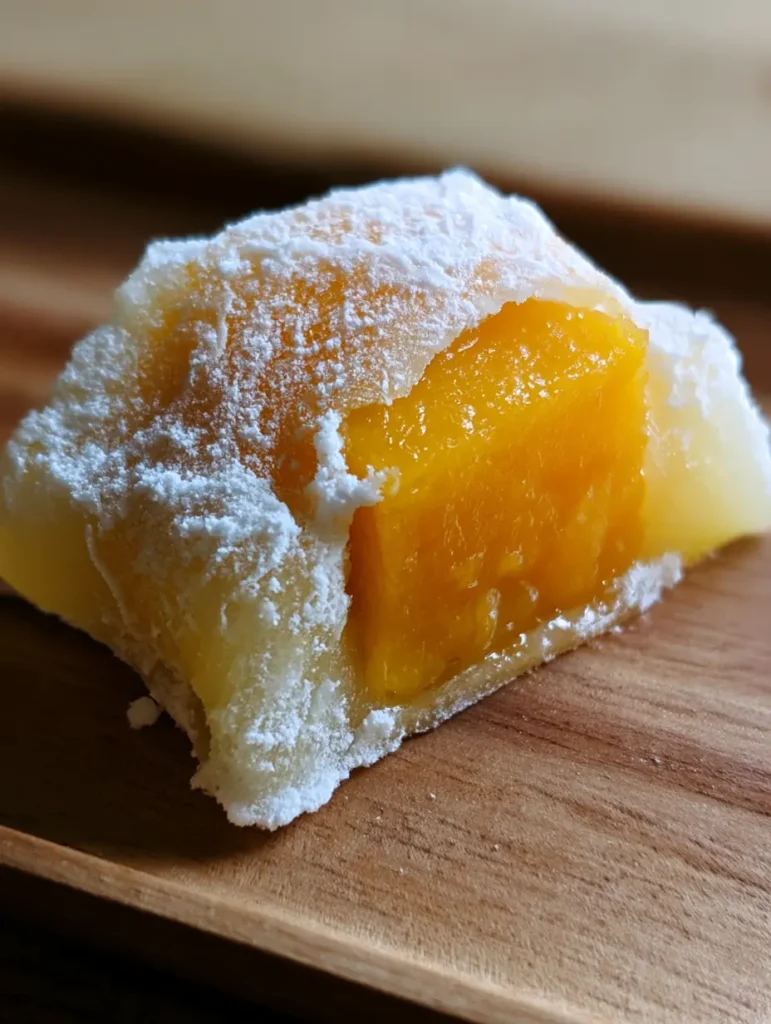
There is something undeniably satisfying about the perfect Homemade Mango Mochi. It is a masterclass in texture, contrasting a pillowy, elastic outer shell with the succulent, dripping sweetness of a perfectly ripe mango core. This recipe captures that exact moment of culinary bliss, mimicking the authentic, handheld experience of a fresh Japanese treat.
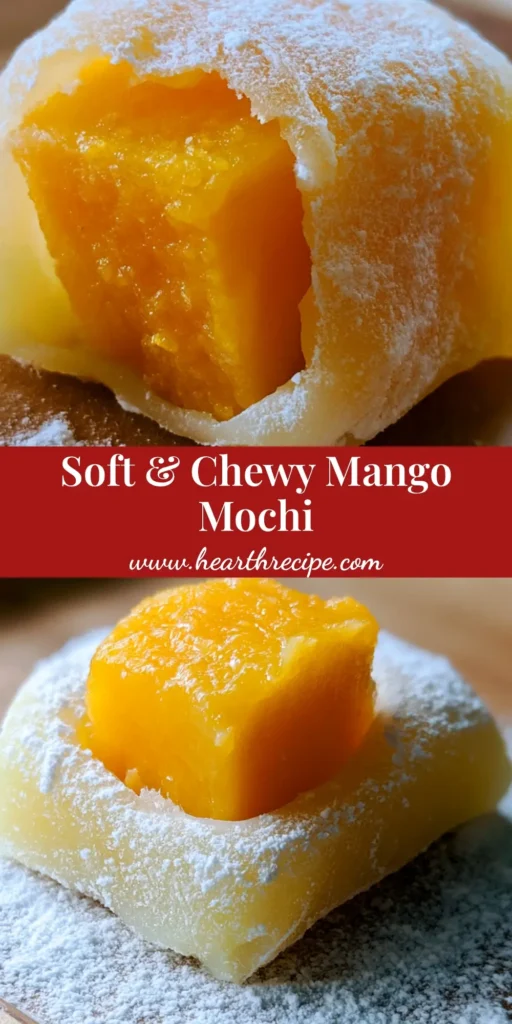
Inspired by the vibrant colors of tropical summers, this Homemade Mango Mochi features a translucent, pale yellow dough that stretches effortlessly. Inside, a bright orange, square-cut cube of mango provides a burst of refreshing flavor that balances the subtle sweetness of the glutinous rice. Whether you are a seasoned confectioner or a curious home cook, this guide will help you master the delicate art of mochi-making.
In this tutorial, we will explore the science of steamed glutinous rice flour and the precision required to achieve that signature matte cornstarch finish. We will move beyond basic instructions to ensure your dough is never too sticky or too tough. Get ready to create a dessert that looks as professional as a high-end boutique find, all from the comfort of your kitchen.
Why This Homemade Mango Mochi Is a Total Game Changer
- The Perfect Elasticity: By using the steaming method, we develop a glutinous rice dough that is incredibly thin, translucent, and elastic, just like the highest quality traditional daifuku.
- Vibrant Visual Contrast: The combination of the pale yellow dough and the deep, bright orange mango core creates a stunning aesthetic that is perfect for food photography.
- Authentic Texture: We utilize a fine, matte layer of white cornstarch to ensure the mochi is easy to handle while maintaining its soft, velvety mouthfeel.
- Pure Fruit Flavor: Unlike recipes that use heavy creams or pastes, this version highlights the natural integrity of a large, fresh mango cube.
The Essential Components for Authentic Homemade Mango Mochi
Creating the perfect mochi requires specific ingredients that behave in very particular ways under heat. Understanding the “why” behind each component is the first step toward success.
Glutinous Rice Flour (Mochiko): 1.5 cups (200g)
This is the structural foundation of your mochi; it provides the unique chewiness and elasticity that standard rice flour cannot replicate. Ensure you are using “glutinous” or “sweet” rice flour to achieve the correct translucent finish.
Granulated Sugar: 0.5 cup (100g)
Sugar does more than add sweetness; it acts as a softener for the starch molecules, keeping the dough supple and preventing it from becoming hard or brittle as it cools. Without enough sugar, the mochi will lose its signature “bounce” quickly.
Filtered Water: 1 cup (240ml)
Water hydrates the rice flour, creating a smooth slurry before the steaming process. For a more intense flavor profile, you can replace a portion of the water with fresh mango nectar, though pure water ensures the most translucent dough.
Pale Yellow Food Coloring: 2-3 drops
To achieve the specific visual blueprint of a pale yellow exterior, a tiny amount of gel-based food coloring is integrated into the liquid base. This subtly signals the mango flavor to the palate before the first bite.
Fresh Ripe Mangoes: 2 large (approx. 400g)
Look for Ataulfo or Kent mangoes, which are less fibrous and provide a smooth, buttery texture. You will be cutting these into large, precise square cubes to serve as the heart of your Homemade Mango Mochi.
Cornstarch: 0.5 cup (65g) for dusting
Cornstarch is the “anti-stick” hero of this recipe, providing that fine, matte white finish described in our visual guide. It allows you to handle the elastic dough without it clinging to your fingers or the serving board.
The Culinary Tools for Professional Results
To replicate the soft, diffused daylight aesthetic of a professional kitchen, you need the right tools to handle the delicate dough. A bamboo or metal steamer is essential for even heat distribution during the cooking phase.
You will also need a heat-proof glass bowl that fits comfortably inside your steamer setup. A flexible silicone spatula is non-negotiable, as it allows you to scrape the sticky dough effectively without tearing it. Finally, a minimalist wooden serving board provides the perfect organic backdrop for presenting your finished creations.
Mastering the Steamed Dough: A Step-by-Step Guide
Preparing the Mango Core
Start by peeling your mangoes and slicing the “cheeks” away from the central pit. Using a sharp knife, cut the flesh into uniform, large square cubes, roughly 1 inch (2.5cm) in size. Place these on a paper towel to remove excess moisture, which ensures the dough adheres properly.
Mixing the Translucent Slurry
In your heat-proof bowl, whisk together the glutinous rice flour and granulated sugar until well combined. Gradually pour in the water and add the pale yellow food coloring. Whisk vigorously until the mixture is completely smooth and no lumps remain; any dry pockets will result in tough spots in your finished Homemade Mango Mochi.
The Steaming Process
Set up your steamer over a pot of simmering water. Place the bowl of slurry inside, cover with a lid (wrapped in a kitchen towel to prevent condensation drips), and steam for 15-20 minutes. You will know it is ready when the dough transforms from a milky liquid to a translucent, slightly darker yellow solid that looks matte on the surface.

Kneading for Maximum Elasticity
Once steamed, use your silicone spatula to stir the hot dough vigorously for 2-3 minutes. This mechanical action develops the “elastic” texture mentioned in our visual blueprint. The dough should become glossy and very stretchy, resisting the spatula as you pull it.
Shaping and Filling the Mochi
Generously dust your clean workspace with cornstarch. Turn the warm dough out onto the starch and divide it into equal portions. Flatten each piece into a thin, circular disc. Place one large, bright orange mango cube in the center, then gently pull the edges of the dough up and over the fruit, pinching it tightly to seal. If the dough feels too thick, gently stretch the edges before sealing to ensure a thin, translucent layer.
Expert Tips for Success
- Temperature Control: Always work with the dough while it is still warm; once it cools completely, it loses its elasticity and becomes much harder to seal around the mango.
- The Dusting Balance: Use enough cornstarch to prevent sticking, but avoid over-dusting, which can make the Homemade Mango Mochi taste chalky. A soft pastry brush can remove excess powder.
- Mango Selection: If your mango is too soft, it will lose its square shape during the assembly process. Choose fruit that is fragrant and ripe but still holds its structure when sliced.
- Sticky Fingers: Keep your hands lightly coated in cornstarch at all times to maintain the “matte” look and prevent the dough from tearing.
Storage, Reheating, and Freshness
Homemade Mango Mochi is best enjoyed within a few hours of assembly when the dough is at its most supple. Because fresh fruit has a high water content, the moisture will eventually begin to soften the dough from the inside out.
If you must store them, place the mochi in an airtight container at room temperature for up to 24 hours. Do not refrigerate them, as the cold temperature causes the glutinous rice starch to undergo retrogradation, turning the soft dough hard and opaque. For a refreshing twist, you can pair these with a chilled spicy pineapple cucumber salad to keep the tropical theme alive.
What to Serve With This Tropical Delight
The delicate sweetness of Homemade Mango Mochi pairs beautifully with other vibrant, fruit-forward dishes. If you are hosting a summer gathering, consider serving these alongside a honey lime chicken with mango salsa for a cohesive flavor profile.
For a more diverse dessert spread, these mochi look stunning next to strawberry cheesecake wonton bites. The contrast between the soft, elastic mochi and the crunchy wonton shells offers a delightful sensory experience for your guests. If you want to lean into the savory-sweet balance, try a light Vietnamese noodle salad as a precursor to the mochi.
Frequently Asked Questions
Fresh mango is highly recommended. Frozen mango releases too much moisture as it thaws, which will dissolve the dough and create a messy, soggy mochi.
No, regular rice flour will result in a crumbly, non-elastic texture. You must use glutinous or ‘sweet’ rice flour to achieve the signature chewy mochi pull.
Translucency is achieved through proper steaming. Ensure the dough is cooked until it changes from a milky white to a semi-clear, slightly darker yellow state.
It is best to avoid the fridge, as the cold makes the rice starch turn hard and opaque. Store them in an airtight container at room temperature for up to 24 hours.
Mochi dough is naturally very sticky. Ensure you are using enough cornstarch on your hands and workspace, and try to shape the dough while it is still warm.
The Final Homemade Mango Mochi Recipe

Homemade Mango Mochi: The Ultimate Guide to Soft and Elastic Fruit Daifuku
Ingredients
Equipment
Instructions
- Slice mangoes into large, uniform square-cut cubes. Pat dry with paper towels to ensure the dough adheres.
- Whisk glutinous rice flour, sugar, water, and food coloring in a heat-proof bowl until a smooth, pale yellow slurry forms.
- Place the bowl in a steamer for 15-20 minutes until the dough becomes translucent and elastic.
- Vigorously stir the hot dough with a silicone spatula for 2 minutes to develop stretchiness.
- Dust workspace with cornstarch. Divide dough into 8 pieces, flatten, place a mango cube in the center, and pinch the edges to seal. Dust with more cornstarch for a matte finish.
Notes
Store at room temperature in an airtight container for up to 24 hours.
Closing & Call to Action
Mastering Homemade Mango Mochi is a rewarding journey into the world of Japanese-inspired confections. The combination of the thin, pale yellow elastic dough and the vibrant, square-cut mango core is a testament to the beauty of simple, high-quality ingredients. By following these professional techniques, you can recreate this authentic handheld treat with confidence.
We would love to see your creations! Did your dough achieve that perfect translucent glow? Let us know in the comments below or share your photos on social media. For more visually stunning recipes and culinary inspiration, be sure to follow us on Pinterest and sign up for our newsletter.