

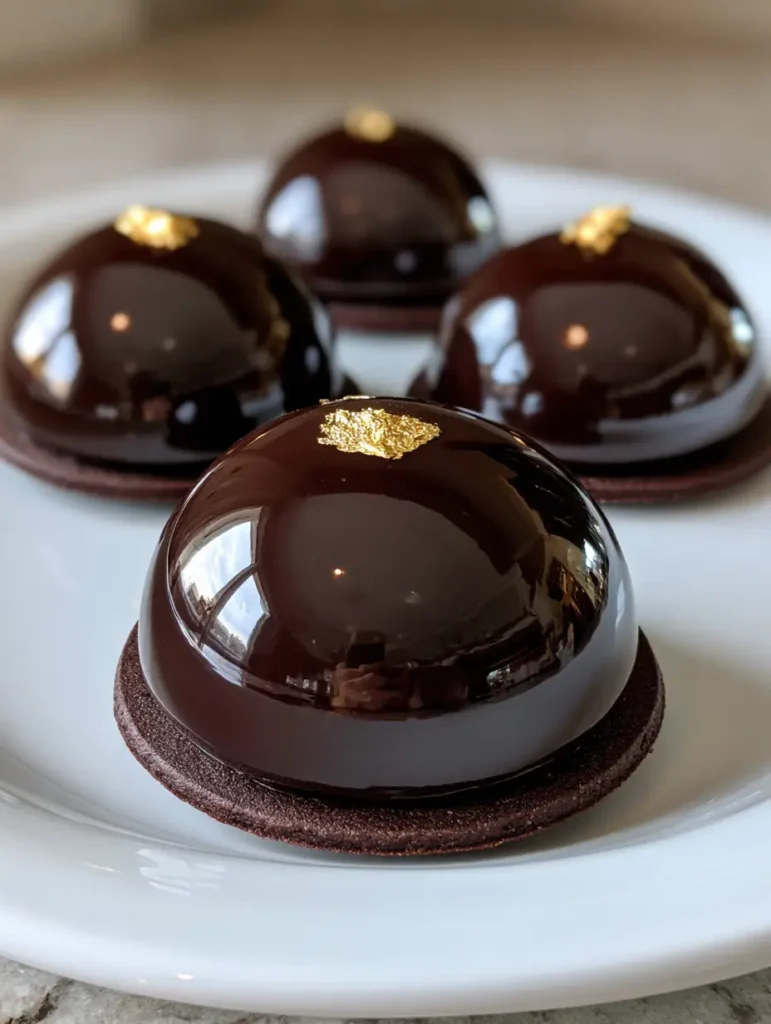
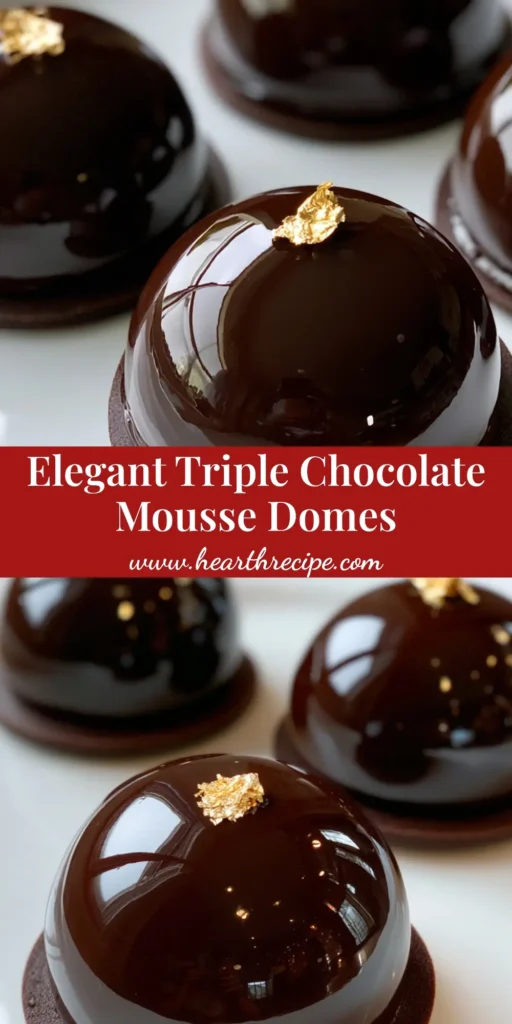
There is something undeniably magical about the moment you set a plate of Triple Chocolate Mousse Domes in front of a guest. The natural daylight catches the highly reflective dark chocolate mirror glaze, casting a shimmer that looks more like a piece of polished obsidian than a dessert. These are the crown jewels of the pastry world, combining three distinct layers of chocolate into a single, handheld masterpiece.
Achieving this level of professional pâtisserie at home isn’t about luck; it is about precision and the right culinary blueprint. By layering velvety white, milk, and dark chocolate mousses atop a crisp chocolate shortbread base, you create a symphony of textures. Each bite offers a transition from the snap of the matte biscuit to the ethereal melt of the mousse, finished with the luxury of a single gold leaf flake.
In this guide, we are going to master the “entremet” technique. We will dive deep into the science of gelatin blooming, the secrets to a bubble-free glaze, and how to achieve those perfectly defined internal layers that look stunning when sliced. Whether you are celebrating a milestone or simply want to elevate your weekend baking, these domes are the ultimate expression of chocolate craft.
Why These Triple Chocolate Mousse Domes Are a Showstopper
- The “Mirror” Effect: We use a professional-grade dark chocolate mirror glaze that is so glossy you can actually see your reflection in the surface.
- Triple-Threat Texture: You get the airy lightness of white chocolate, the creamy depth of milk chocolate, and the bold intensity of dark chocolate in every spoonful.
- Structural Integrity: The circular chocolate shortbread base provides a sturdy, matte-textured foundation that contrasts beautifully with the soft mousse.
- Elegant Garnish: A single, precisely placed flake of edible gold leaf adds a touch of high-end luxury that screams “fine dining.”
- Make-Ahead Perfection: These domes actually benefit from a long freeze, making them the perfect stress-free dessert for entertaining.
Essentials for the Perfect Triple Chocolate Layers
High-Quality Couverture Chocolate: Use chocolate with a high cocoa butter content for all three layers. This ensures the mousse melts instantly on the tongue rather than feeling waxy or heavy.
Gelatin Sheets or Powder: Gelatin is the “invisible architecture” of these Triple Chocolate Mousse Domes. It provides the stability needed for the domes to hold their shape once thawed at room temperature.
Heavy Whipping Cream (35% Fat): The cream must be whipped to soft peaks only. If you over-whip the cream, the mousse will be grainy instead of silky and smooth.
Dutch-Processed Cocoa Powder: For the shortbread base, Dutch-processed cocoa provides that deep, dark, matte appearance. It also offers a more mellow, earthy flavor that balances the sweetness of the white chocolate layer.
Glucose Syrup or Corn Syrup: This is the secret to the mirror glaze’s elasticity and shine. It prevents the sugar from crystallizing and keeps the glaze pourable and reflective.
Edible Gold Leaf: A small amount goes a long way. This garnish identifies the dessert as a premium creation and provides a stunning focal point on the dark glaze.
The Culinary Toolkit for Entremet Success
To achieve the precise look of the Triple Chocolate Mousse Domes, you will need a few specific tools. First and foremost are silicone dome molds, typically 2.5 to 3 inches (6-7cm) in diameter. These allow for a clean release of the frozen mousse without damaging the smooth surface.
An immersion blender is non-negotiable for the mirror glaze. It incorporates the ingredients while removing air bubbles, which is how you achieve that “smartphone-photo-ready” finish. You will also need a fine-mesh sieve to strain the glaze and a circular cookie cutter that matches the diameter of your molds for the shortbread bases.
Step-by-Step Architecture of the Mousse Domes
Crafting the Matte Chocolate Shortbread Base
In a large bowl, cream together 1/2 cup (115g) of softened unsalted butter with 1/3 cup (65g) of granulated sugar. Sift in 1 cup (125g) of all-purpose flour and 1/4 cup (25g) of Dutch-processed cocoa powder with a pinch of salt.
Mix until a sandy dough forms, then roll it out between two sheets of parchment paper to a 1/4 inch (6mm) thickness. Chill the dough for 30 minutes before cutting out circles that match the size of your dome molds. Bake at 350°F (175°C) for 10-12 minutes until set but still matte in appearance. Let them cool completely; these must be crisp to support the weight of the domes.
Layering the Triple Chocolate Mousse
We work from the “top” of the dome down, starting with the dark chocolate layer. Melt 3.5oz (100g) of dark chocolate and fold it into a mixture of 1/2 cup (120ml) of whipped cream and a small amount of dissolved gelatin. Pour this into the bottom of the silicone molds, filling them only 1/3 of the way.
Freeze for 20 minutes until set, then repeat the process with the milk chocolate layer, followed by the white chocolate layer. By the time you reach the white chocolate, the mold should be full. If you have extra chocolate, consider using it as a filling for strawberry cheesecake wonton bites later in the week.
The Masterclass: Dark Chocolate Mirror Glaze
Bloom 3 gelatin sheets in cold water. In a saucepan, bring 1/2 cup (100g) of sugar, 1/3 cup (80ml) of water, and 1/3 cup (100g) of glucose syrup to a gentle boil. Remove from heat and stir in the bloomed gelatin and 1/4 cup (70g) of sweetened condensed milk.
Pour this hot liquid over 3.5oz (100g) of finely chopped dark chocolate. Let it sit for 2 minutes, then use your immersion blender to emulsify. Hold the blender at an angle to avoid creating bubbles. Strain the glaze through a fine-mesh sieve and let it cool until it reaches exactly 90°F (32°C). This is the “magic temperature” for a perfect, thick pour.
Assembly and the Final Garnish
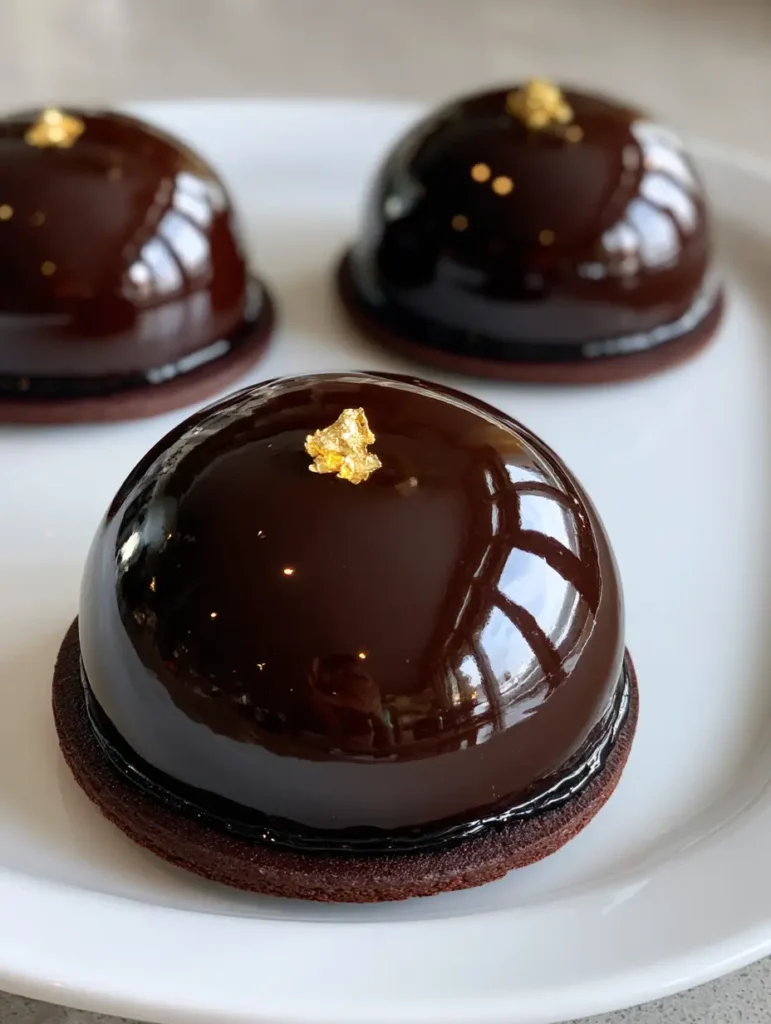
Unmold the frozen Triple Chocolate Mousse Domes and place them on a wire cooling rack over a clean tray. Pour the glaze generously over each dome in a single, fluid motion. Allow the excess to drip off for 5 minutes before carefully lifting each dome with an offset spatula.
Place the glazed dome onto the center of a chocolate shortbread biscuit. Finally, using a pair of clean tweezers, place a single flake of edible gold leaf precisely in the top center of the dome. The contrast between the matte base and the reflective top is visually stunning.
Expert Tips for a Flawless Finish
- Temperature Control: Never glaze a warm mousse. The domes must be “rock hard” frozen to ensure the glaze sets instantly upon contact.
- Bubble Trouble: If you see bubbles in your glaze, tap the container firmly on the counter or pass a blowtorch very quickly over the surface of the poured glaze.
- Clean Cuts: To see those beautiful triple layers, use a hot, sharp knife to slice through the dome in one clean motion.
- Gelatin Precision: Always squeeze the excess water out of your gelatin sheets. Too much water will thin the glaze and cause it to slide off the domes.
What to Serve with Triple Chocolate Mousse Domes
Since these Triple Chocolate Mousse Domes are incredibly rich, they pair best with light, acidic, or refreshing sides. A tart berry coulis or a side of fresh raspberries can cut through the intensity of the dark chocolate mirror glaze.
If you are hosting a full dinner party, start with something savory like grilled shrimp bowls or Greek chicken flatbread. For a lighter afternoon tea setting, these domes are a fantastic follow-up to a spicy pineapple cucumber salad, which cleanses the palate before the chocolate indulgence begins.
Frequently Asked Questions
Yes! You can keep the unglazed domes frozen for up to 2 weeks. Glaze them the day you plan to serve them for the best shine.
It is best to use high-quality couverture chocolate bars. Chocolate chips often contain stabilizers that prevent the glaze from achieving a perfectly smooth and reflective finish.
Since they are small, the domes will take about 1-2 hours to thaw in the refrigerator. They are best served slightly chilled.
An immersion blender is critical for removing air bubbles. If you don’t have one, you must whisk very gently and strain the glaze through a very fine-mesh sieve several times.
This usually happens if the glaze was too warm (above 94°F/34°C) or if the mousse domes weren’t completely frozen. Ensure the glaze is exactly 90°F (32°C) for the best cling.
The Ultimate Recipe for Triple Chocolate Mousse Domes
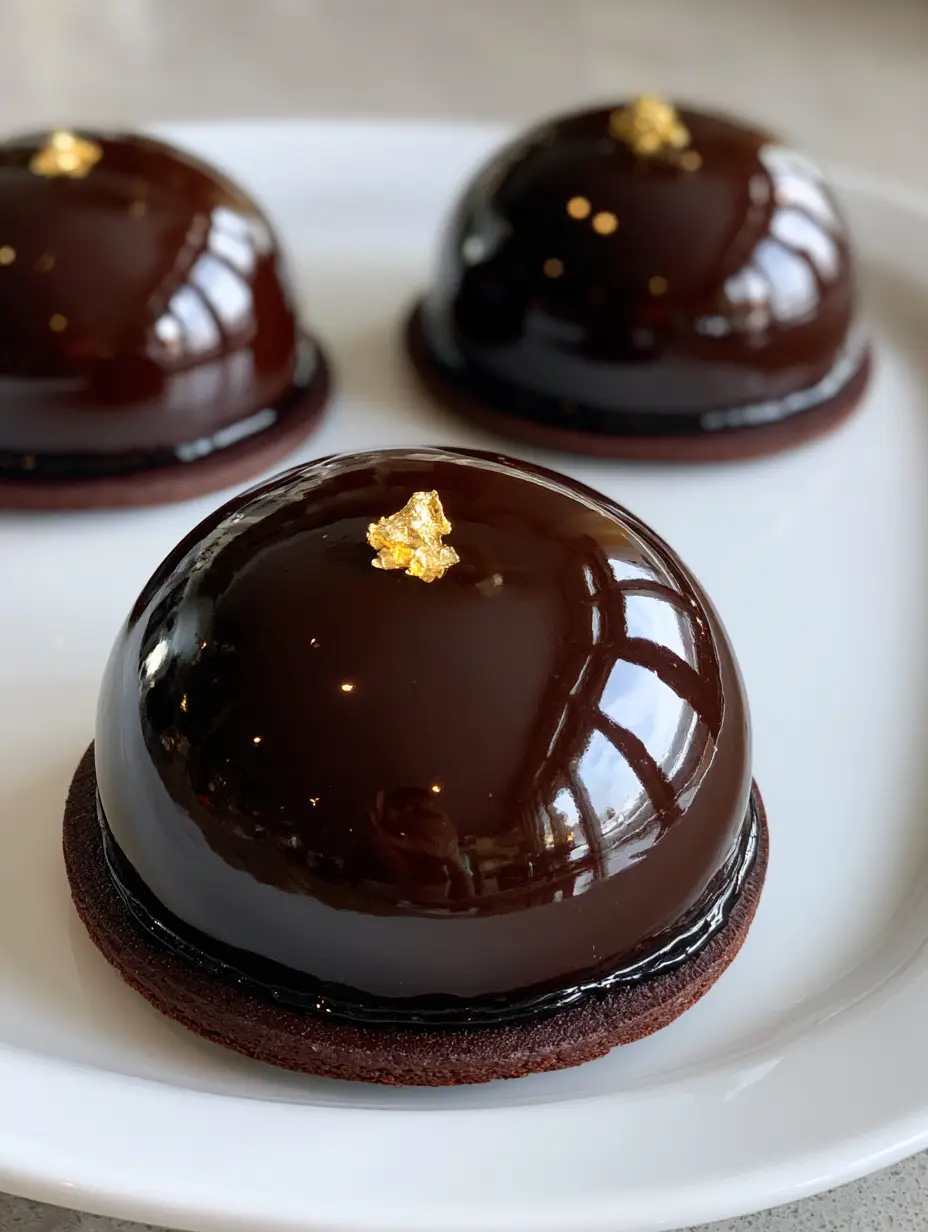
Triple Chocolate Mousse Domes with a High-Shine Mirror Glaze
Ingredients
Equipment
Instructions
- Cream butter and sugar, mix in flour and cocoa. Roll to 1/4 inch thickness, chill, and cut into circles. Bake at 350°F (175°C) for 12 minutes.
- Melt dark chocolate, fold into 1/2 cup whipped cream with gelatin. Fill molds 1/3 full and freeze until set.
- Repeat the process for the milk and white chocolate layers, freezing between each to ensure distinct lines.
- Boil sugar, water, and glucose. Add gelatin and condensed milk, then pour over dark chocolate. Blend until smooth with an immersion blender.
- When glaze reaches 90°F (32°C), pour over frozen mousse domes. Garnish with gold leaf and place on shortbread bases.
Notes
Hold the immersion blender at an angle to prevent air bubbles in the glaze.
Closing & Call to Action
Mastering the Triple Chocolate Mousse Domes is a rite of passage for any serious home baker. The combination of technical skill and visual artistry results in a dessert that is as rewarding to make as it is to eat. Once you see that first pour of mirror glaze coat the mousse in a perfect, glossy sheet, you’ll be hooked on the world of entremets.
If you enjoyed this recipe, please leave a comment below and tell us how your glaze turned out! Don’t forget to share your creations and follow us on Pinterest for more culinary inspiration. Happy baking!