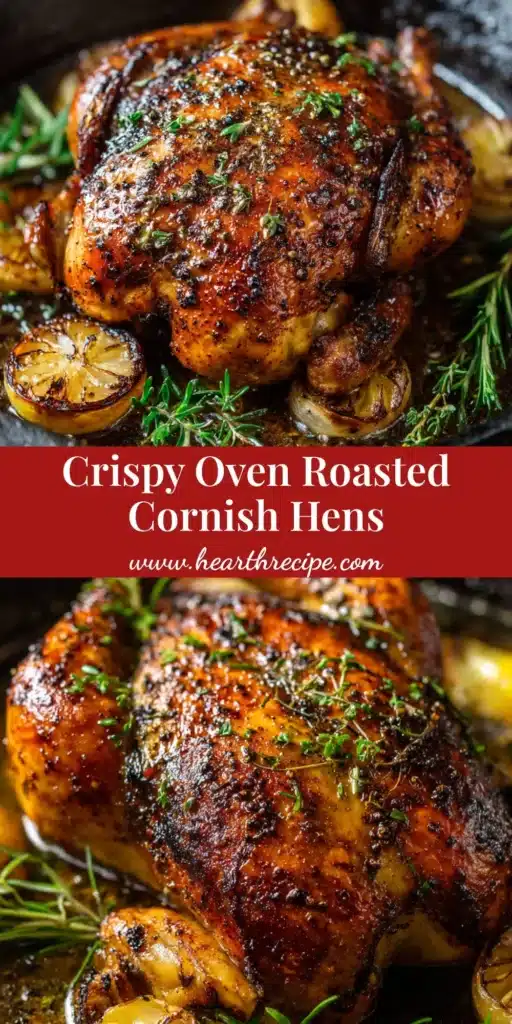




There is nothing quite like a perfectly Roasted Cornish Hen to make an ordinary evening feel like a five-star dining experience. This recipe delivers a beautifully presented bird resting in a dark cast iron skillet, completely surrounded by aromatic pan juices.
If you love deeply golden brown, crispy skin that shatters slightly when you cut into it, this is the exact technique you need. The skin literally blisters under the high heat, locking in the meat’s natural moisture.
Finished with a rich melted butter glaze and heavily speckled with cracked black pepper and coarse salt, every single bite is packed with savory perfection. Caramelized roasted garlic and charred lemon halves elevate the flavor profile to a professional culinary level.
Why You’ll Love This Recipe
- Unmatched Texture: The blistering skin provides a satisfying crunch that contrasts perfectly with the tender, juicy meat underneath.
- Incredible Aromatics: Fresh bright green sprigs of rosemary and thyme gently infuse the meat juices while baking.
- Visual Perfection: Glistening with melted herb butter, this dish looks like it came straight out of a high-end culinary magazine.
- Rich Flavor Depth: Whole roasted garlic cloves with caramelized edges add a sweet, savory undertone to every bite.
Ingredients & Substitutions
Whole Cornish Hen: You will need 1 whole Cornish hen, about 1.5 lbs (680g), patted completely dry. Removing all surface moisture is the absolute scientific key to achieving deeply golden, blistering skin.
Coarse Salt & Cracked Black Pepper: Use 1.5 tsp (8g) coarse kosher salt and 1 tsp (2g) cracked black pepper. The heavy speckling of these coarse seasonings acts as a dry brine, drawing out skin moisture for maximum crispiness.
Olive Oil & Chicken Broth: You need 1 tbsp (15ml) olive oil to coat the cast iron skillet and 1/4 cup (60ml) chicken broth for the pan base. The broth mingles with the drippings to create rich meat juices without burning the garlic.
Fresh Garlic Cloves: Use 1 whole head of garlic, separated into unpeeled cloves. Leaving the skins on prevents burning while allowing the garlic to soften and develop sweet, caramelized edges.
Yellow Lemon: You’ll need 1 yellow lemon, halved. Roasting the lemon cut-side down creates a slight char and mellows the acidity, turning the juice into a sweet, tangy pan sauce enhancer.
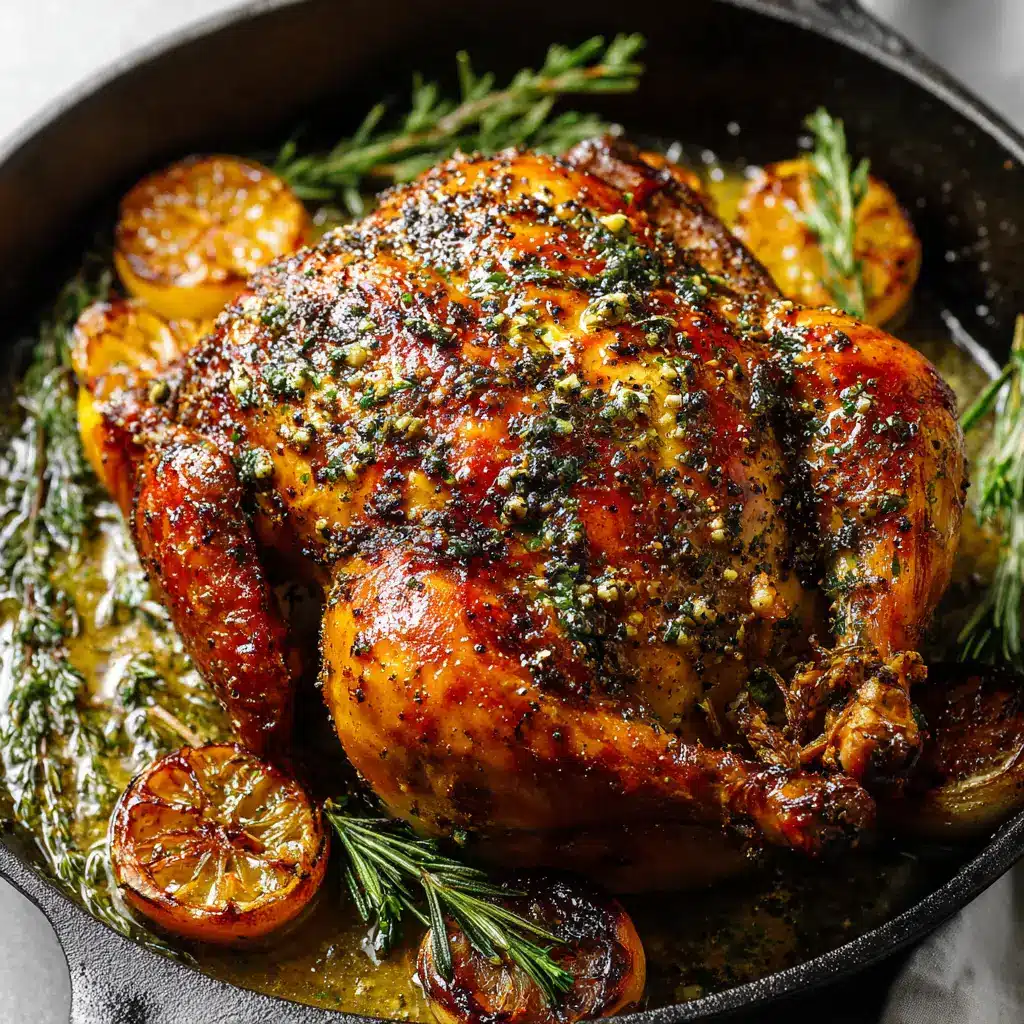
Fresh Rosemary & Thyme: Gather 3-4 fresh rosemary sprigs and 5-6 fresh thyme sprigs. Resting these directly in the pan juices releases their essential oils gently into the surrounding environment.
Unsalted Butter: You will need 3 tbsp (45g) unsalted butter, melted. Brushing this on at the very end creates the iconic, glistening melted butter glaze.
Chopped Green Herbs: Prepare 1 tbsp (4g) of finely chopped green herbs, such as fresh parsley or chives. These are sprinkled on just before serving for a pop of fresh color and flavor.
Equipment Needed
- Dark Cast Iron Skillet: Essential for heat retention and achieving a perfect sear on the bottom of the bird.
- Pastry Brush: Needed to evenly apply the melted butter glaze during the final stages of cooking.
- Digital Meat Thermometer: The only foolproof way to ensure the meat is fully cooked while keeping the breast perfectly juicy.
Step-by-Step Instructions
1. Prepare the Cornish Hen
Remove the hen from its packaging and pat it thoroughly dry using paper towels. Moisture is the enemy of crispy skin, so take your time to dry the cavity and all the natural folds.
Season the bird heavily on all sides with the coarse salt and cracked black pepper. Let the hen sit at room temperature for 30 minutes so the salt can draw out surface moisture.
2. Preheat the Cast Iron Skillet
Place your dark cast iron skillet into the oven and preheat the oven to 425°F (220°C). Heating the pan beforehand ensures an immediate sizzle that kickstarts the fat rendering process.
Once the oven reaches temperature, carefully remove the hot skillet using oven mitts. Add the olive oil to the pan, swirling it carefully to coat the bottom.
3. Assemble the Skillet
Place the seasoned Cornish hen right in the center of the hot skillet. You should hear a distinct, satisfying sizzle as the bird makes contact with the hot iron.
Surround the hen with the separated whole garlic cloves, the halved yellow lemons (cut-side down for charring), and the fresh rosemary and thyme sprigs. Carefully pour the chicken broth into the bottom of the pan, avoiding the skin of the bird.
4. Roast to Perfection
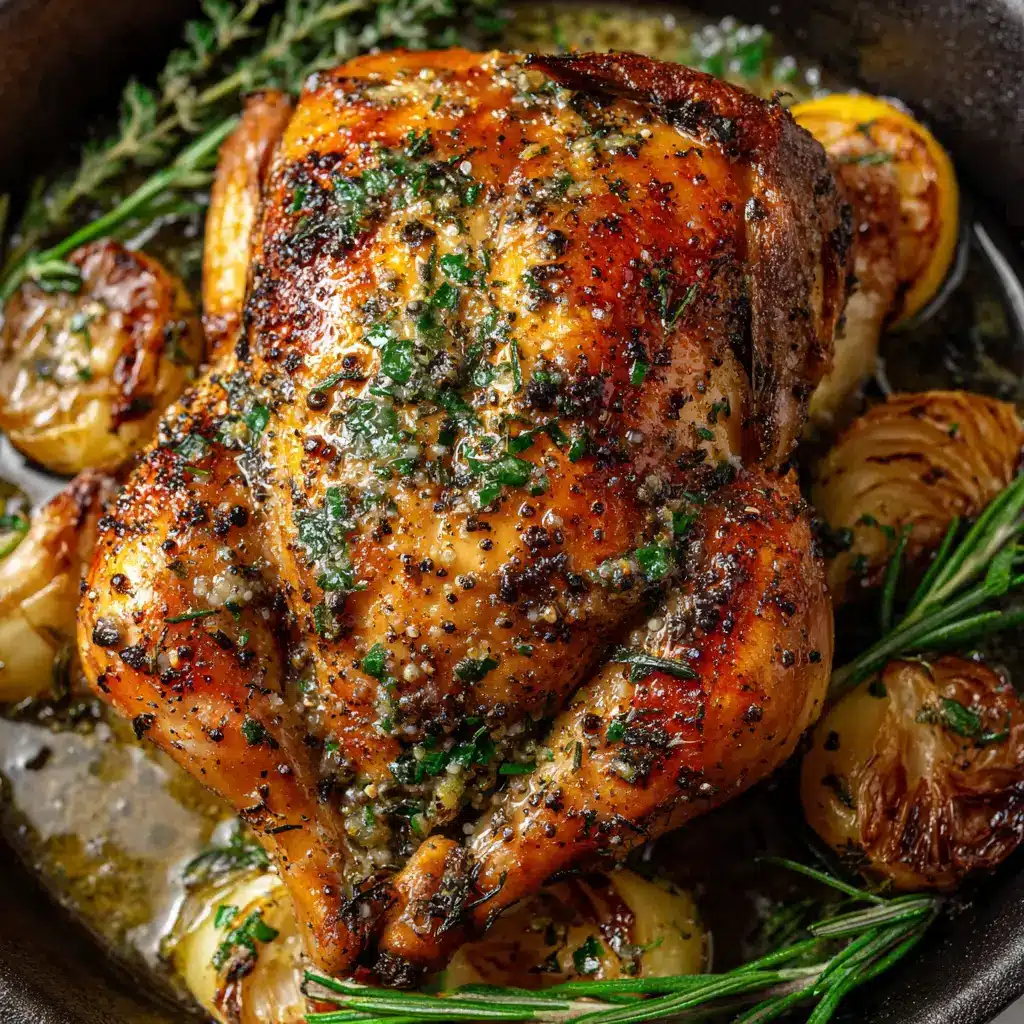
Return the skillet to the oven and roast for 35-40 minutes. Watch for the skin to become deeply golden brown and beautifully blistered.
Check the internal temperature at the thickest part of the thigh; it should register 165°F (74°C). The meat juices in the pan should be bubbling gently around the caramelized garlic.
5. Glaze and Garnish
During the last 5 minutes of roasting, brush the entire surface of the hen generously with the melted butter. This creates that irresistible, glistening melted butter glaze.
Remove the skillet from the oven and let the hen rest in the pan juices for 10 minutes. Finish by heavily speckling the surface with your freshly chopped green herbs before serving.
Expert Tips for Success
- Dry the bird thoroughly: Even a tiny amount of water on the skin will cause steam in the oven, preventing that gorgeous, blistered crust from forming.
- Use high heat: Roasting at 425°F (220°C) is mandatory. It forces the fat to render quickly and crisps the exterior before the delicate meat dries out.
- Don’t skip the resting phase: Allowing the hen to sit for 10 minutes lets the internal juices redistribute, ensuring every slice is incredibly moist.
- Squeeze the charred lemons: Right before eating, use tongs to squeeze the warm, slightly charred lemons over the meat to cut through the richness of the butter glaze.
Storage & Reheating/Freezing
Store any leftover Roasted Cornish Hen in an airtight container in the refrigerator for up to 3-4 days. Be sure to save the pan juices and roasted garlic cloves, as they make an excellent flavorful liquid for reheating.
To reheat, place the meat in a baking dish with a splash of the reserved pan juices and cover with foil. Bake at 350°F (175°C) until warmed through, then uncover for the last 5 minutes to help re-crisp the skin.
You can freeze the cooked meat (removed from the bone) in freezer-safe bags for up to 2 months. Thaw overnight in the refrigerator before using in soups or casseroles.
What to Serve With This
A beautifully roasted bird calls for equally impressive side dishes. Start with a generous helping of Creamy Mashed Potatoes to soak up all those incredible garlic and herb pan juices.
If you prefer a crispy textural contrast, these Homemade Scalloped Potatoes offer a rich, cheesy bite that pairs beautifully with the cracked black pepper on the hen.
For a lighter vegetable accompaniment, Crispy Baked Cauliflower Steaks have a wonderful savory char that mimics the roasted lemon halves.
Add a pop of color and sweetness to your plate with Hot Honey Roasted Carrots. The spicy-sweet glaze is a brilliant match for the savory, heavily salted skin.
Finally, don’t forget the bread to mop up the extra garlic butter! A thick slice of Pesto Parmesan Sourdough is the perfect vehicle for those rich skillet drippings.
Frequently Asked Questions
Yes! You can pat the hen dry, season it with the coarse salt and cracked black pepper, and leave it uncovered in the refrigerator for up to 24 hours. This dry-brining method will actually improve the crispiness of the skin.
There is no need to flip the hen. Preheating the cast iron skillet sears the bottom immediately, while the high 425°F (220°C) oven heat crisps the top skin perfectly without any flipping required.
The most accurate way to check for doneness is using a digital meat thermometer. Insert it into the thickest part of the thigh, being careful not to touch the bone. It is fully cooked when the temperature reaches 165°F (74°C) and the juices run clear.
No, you should roast the Cornish hen uncovered. Covering it traps steam, which will prevent the skin from developing the signature deeply golden, crispy, blistering texture.
Rubbery skin is usually caused by excess moisture. To fix this, always pat the hen completely dry with paper towels before seasoning, and ensure your oven is preheated to a high temperature to properly render the fat.
Closing & Subscribe
This Roasted Cornish Hen is guaranteed to become a centerpiece on your dinner table, delivering picture-perfect results every single time. The deeply golden brown, blistering skin and the glistening herb butter glaze make it a true showstopper.
If you loved this recipe, please leave a comment and a 5-star rating below! Don’t forget to subscribe to our newsletter for more incredible dinner ideas, and pin this recipe to your favorite Pinterest boards.
Recipe Schema
The Ultimate Roasted Cornish Hen with Garlic and Herb Butter
Ingredients
Equipment
Instructions
- Remove the hen from its packaging and pat it thoroughly dry using paper towels. Season the bird heavily on all sides with the coarse salt and cracked black pepper. Let the hen sit at room temperature for 30 minutes.
- Place your dark cast iron skillet into the oven and preheat the oven to 425°F (220°C). Once the oven reaches temperature, carefully remove the hot skillet, add the olive oil, and swirl to coat.
- Place the seasoned Cornish hen in the center of the hot skillet. Surround the hen with the whole garlic cloves, halved yellow lemons (cut-side down), rosemary, and thyme. Pour the chicken broth into the bottom of the pan.
- Return the skillet to the oven and roast for 35-40 minutes until the skin becomes deeply golden brown and beautifully blistered. Ensure the internal temperature reaches 165°F (74°C).
- During the last 5 minutes of roasting, brush the entire surface of the hen generously with the melted butter. Remove from oven, let rest for 10 minutes, and heavily speckle with chopped green herbs before serving.
Notes
Use high heat: Roasting at 425°F (220°C) is mandatory to crisp the exterior before the meat dries out.
Squeeze the charred lemons: Right before eating, squeeze the warm lemons over the meat to cut through the richness.