









There’s nothing quite like the aroma of freshly baked bread, and when you add the savory notes of basil pesto and sharp Parmesan cheese to tangy sourdough, you get something truly special. This Pesto Parmesan Sourdough recipe is your guide to creating a bakery-quality artisan loaf at home. It boasts a beautiful, vibrant swirl, a deliciously cheesy flavor, and that signature crispy, crackly crust every sourdough lover craves. Whether you’re a seasoned baker or just starting your sourdough journey, this recipe breaks down the process into simple, manageable steps.
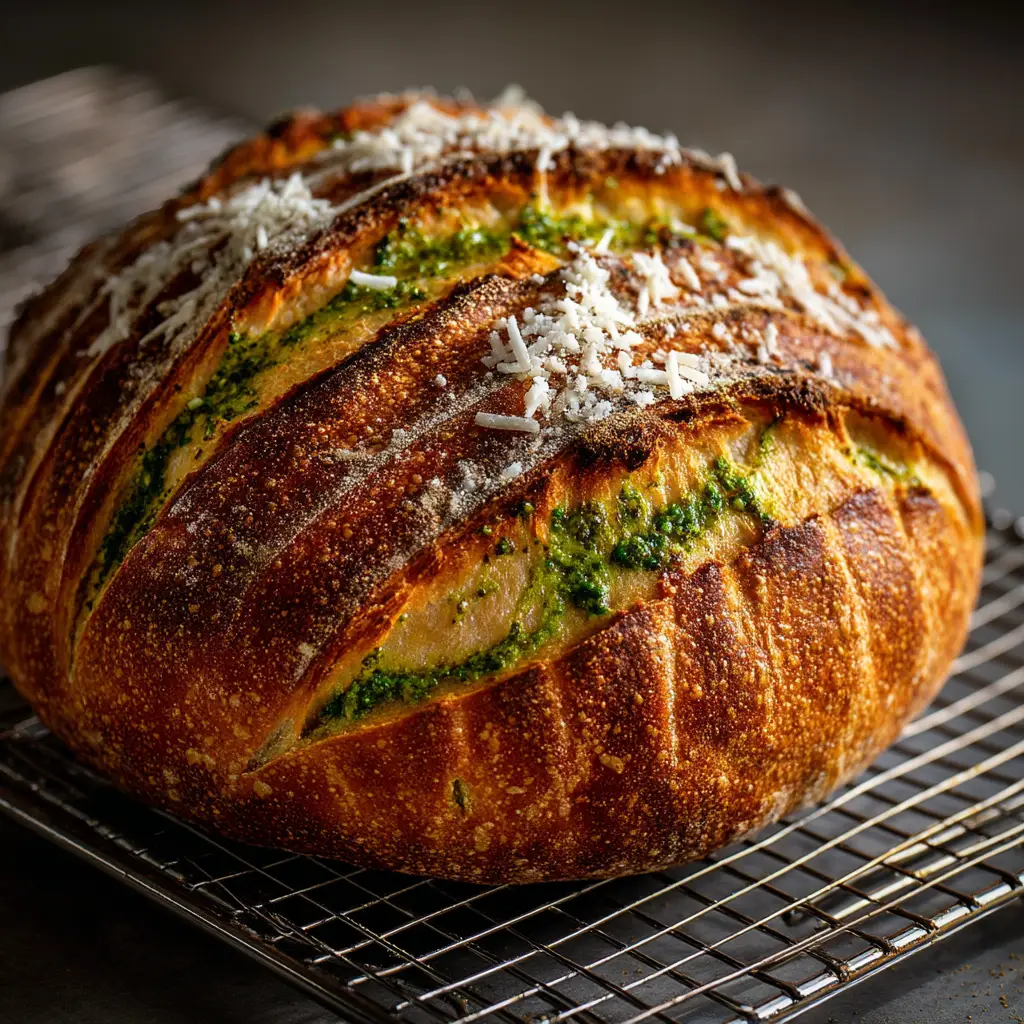
Why This Pesto Parmesan Sourdough is a Must-Bake
Forget bland, store-bought bread. This recipe is a game-changer for your kitchen. We’ve designed it to be not only incredibly delicious but also straightforward.
- Irresistible Flavor: The combination of tangy sourdough, herbaceous pesto, and salty, nutty Parmesan cheese is simply divine.
- Stunning Appearance: The vibrant green pesto swirl makes for a gorgeous presentation, making every slice a work of art.
- That Perfect Crust: We’ll share the secrets to achieving a deeply golden, blistered crust with a satisfying crunch, encasing a soft, chewy crumb.
- Versatile & Delicious: Enjoy a slice on its own, use it for gourmet sandwiches, or serve it alongside your favorite soup or salad. It’s the perfect companion to a hearty bowl of Roasted Tomato Pasta.
Key Ingredients for Success
The quality of your ingredients directly impacts the flavor and texture of your bread. Here’s what you’ll need:
For the Sourdough
- Active Sourdough Starter: Your starter should be bubbly and active, having been fed 4-8 hours prior. This is the heart of your bread, providing the lift and signature tangy flavor.
- Bread Flour: High-protein bread flour provides the structure needed for a chewy, lofty crumb.
- Water: Use filtered water at a lukewarm temperature (around 80°F or 27°C) to encourage fermentation.
- Sea Salt: Fine sea salt controls fermentation and enhances all the flavors in the loaf.
For the Filling
- Pesto: A thick, high-quality pesto works best to prevent it from leaking out of the dough. Homemade or store-bought is fine, just ensure it’s not too oily.
- Parmesan Cheese: Freshly grated Parmesan cheese will melt beautifully into the dough and provide a much better flavor than pre-shredded varieties.
Essential Baking Equipment
While you don’t need a professional bakery, a few key pieces of equipment will make your Pesto Parmesan Sourdough baking experience much smoother and yield better results.
- Digital Kitchen Scale: For accuracy in measuring ingredients, which is crucial in baking.
- Large Mixing Bowl: To mix and ferment your dough.
- Banneton Basket (or a bowl lined with a tea towel): To proof your loaf and help it hold its shape.
- Dough Scraper: For handling the sticky dough and shaping the loaf.
- Dutch Oven: The secret weapon for achieving a perfect, crispy crust by trapping steam as the bread bakes.
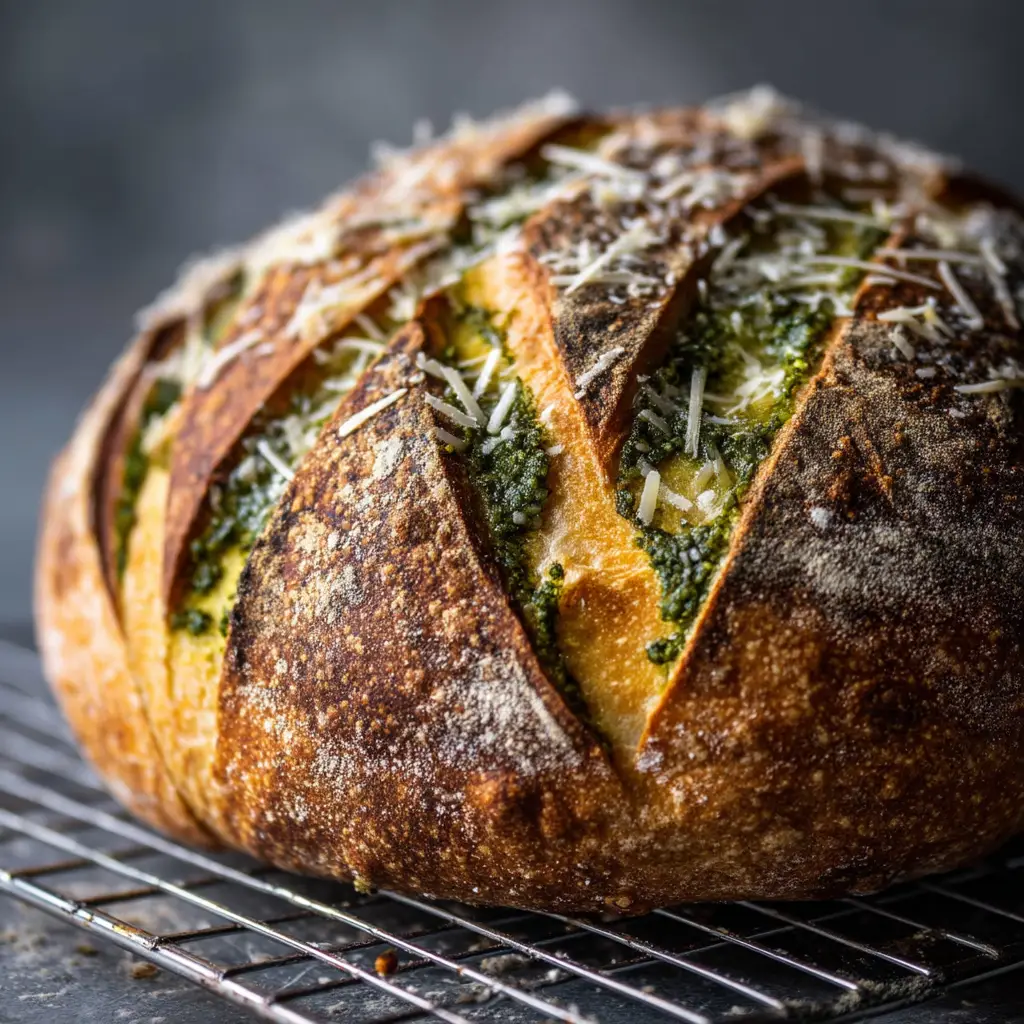
The Ultimate Pesto Parmesan Sourdough Recipe
This recipe will guide you through creating a stunning and delicious loaf. Follow the steps closely to achieve the best results. Sourdough requires patience, but the reward is worth it!
Step 1: Mixing the Dough (Autolyse)
In a large bowl, mix together the bread flour and water until no dry spots remain. Cover the bowl and let the dough rest for about 1 hour. This step, known as the autolyse, allows the flour to fully hydrate, making the dough easier to work with.
Step 2: Adding Starter and Salt
Add the active sourdough starter to the dough and use wet hands to dimple it in. Mix until it’s well incorporated. Let the dough rest for 30 minutes. Then, sprinkle the sea salt over the dough and mix again until the salt is fully dissolved and the dough starts to feel strong.
Step 3: Bulk Fermentation and Folds
Cover the bowl and let the dough rise in a warm place for 4-6 hours. During the first 2 hours, perform a series of 3-4 “stretch and folds” every 30 minutes. To do this, grab a section of the dough, stretch it upwards, and fold it over the center. Rotate the bowl and repeat on all four sides. This builds strength in the dough.
Step 4: Lamination and Shaping
Once the dough has risen by about 50% and looks airy, turn it out onto a lightly floured surface. Gently stretch the dough into a large, thin rectangle. Spread an even layer of pesto over the surface, then sprinkle generously with the grated Parmesan cheese. Carefully fold the dough into a tight log or round boule. Place the shaped loaf, seam-side up, into a floured banneton basket.
Step 5: Cold Proofing
Cover the banneton and place it in the refrigerator for a long, cold proof of 12-18 hours. This develops the classic sourdough flavor and makes the dough easier to score before baking.
Step 6: Baking Your Sourdough
Place your Dutch oven in the oven and preheat to 500°F (260°C) for one hour. Carefully remove the hot Dutch oven from the oven. Gently flip your cold dough from the banneton onto a piece of parchment paper. Score the top of the loaf with a sharp blade or razor to allow steam to escape. Use the parchment paper to lower the dough into the Dutch oven. Cover and bake for 20 minutes. Then, remove the lid, reduce the oven temperature to 450°F (230°C), and bake for another 20-25 minutes, or until the crust is deeply golden brown. Let it cool completely on a wire rack before slicing.
Tips for Success
To ensure your Pesto Parmesan Sourdough turns out perfectly every time, keep these tips in mind.
- Use a Thick Pesto: A runny or oily pesto can create a mess and prevent a good seal, causing the filling to leak during baking.
- Don’t Overproof: Keep a close eye on your dough during bulk fermentation. Overproofed dough will be difficult to shape and may result in a flat loaf.
- Cool Completely: The most important rule of sourdough! Wait at least 4-6 hours before slicing. The internal structure is still setting as it cools, and cutting it too early can result in a gummy texture.
Serving and Pairing Suggestions
This savory bread is incredibly versatile. Enjoy it toasted with a smear of butter, or use it as the base for a fantastic sandwich. It’s the perfect accompaniment to a creamy spinach artichoke dip (coming soon) or a hearty ratatouille soup. You could even use it to build delicious sliders, like these Philly Cheesesteak Sliders.
Absolutely! To ensure the best results and prevent leaking, choose a high-quality, thick pesto that is not overly oily. This will help it stay contained within the dough during baking.
An open crumb is achieved through proper fermentation, high hydration, and gentle handling. Ensure your starter is very active, don’t underproof your dough during bulk fermentation, and be gentle during shaping to preserve the air bubbles.
This can happen if the pesto is too thin or if the dough was over-proofed, causing the layers to merge. Using a thick pesto and ensuring you get a tight roll when shaping the loaf will help maintain a distinct swirl.
This bread is incredibly versatile. It’s fantastic on its own, toasted with butter, or served alongside soups, salads, and pasta dishes. It also makes an excellent base for gourmet sandwiches and bruschetta.
Store your cooled loaf in a bread box or a paper bag at room temperature for up to 3 days. Avoid plastic bags, as they can soften the crust. For longer storage, you can slice the loaf and freeze it in a freezer-safe bag for up to 3 months.
Absolutely! To ensure the best results and prevent leaking, choose a high-quality, thick pesto that is not overly oily. This will help it stay contained within the dough during baking.
An open crumb is achieved through proper fermentation, high hydration, and gentle handling. Ensure your starter is very active, don’t underproof your dough during bulk fermentation, and be gentle during shaping to preserve the air bubbles.
This can happen if the pesto is too thin or if the dough was over-proofed, causing the layers to merge. Using a thick pesto and ensuring you get a tight roll when shaping the loaf will help maintain a distinct swirl.
This bread is incredibly versatile. It’s fantastic on its own, toasted with butter, or served alongside soups, salads, and pasta dishes. It also makes an excellent base for gourmet sandwiches and bruschetta.
Store your cooled loaf in a bread box or a paper bag at room temperature for up to 3 days. Avoid plastic bags, as they can soften the crust. For longer storage, you can slice the loaf and freeze it in a freezer-safe bag for up to 3 months.
Get the Full Recipe
We hope you love this Pesto Parmesan Sourdough recipe. It’s a truly rewarding bake that fills your home with an incredible aroma and your table with delicious, artisan-quality bread. If you try this recipe, please leave a comment below and share your creations with us on Pinterest!
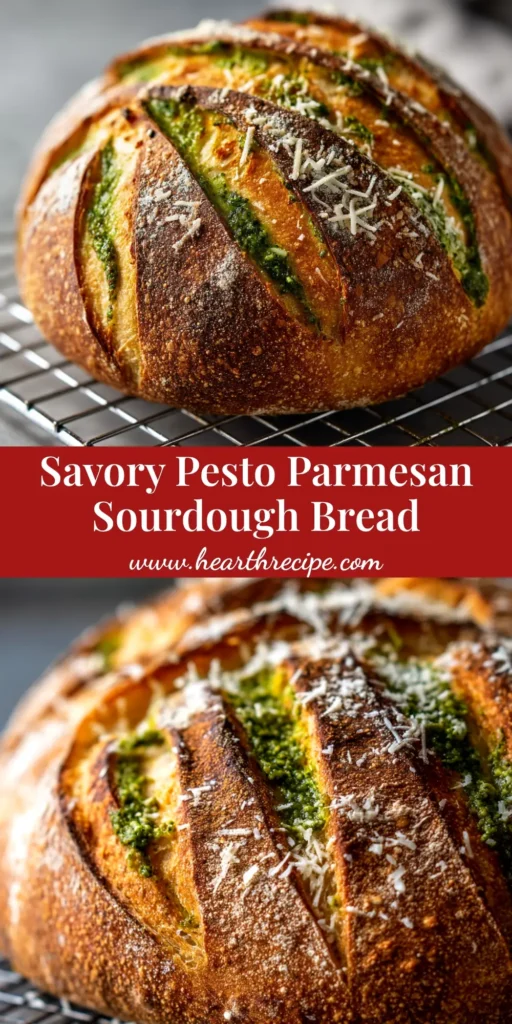
Pesto Parmesan Sourdough: The Ultimate Artisan Loaf
Create a bakery-worthy Pesto Parmesan Sourdough at home! This detailed recipe guides you through making a tangy, cheesy, and herbaceous artisan bread with a stunning pesto swirl and a perfect crispy crust.
Ingredients
Equipment
Instructions
- In a large bowl, mix together the bread flour and water until no dry spots remain. Cover and let rest for 1 hour.
- Add the active sourdough starter and mix until incorporated. Rest for 30 minutes. Add the sea salt and mix again until the dough is strong.
- Cover and let rise for 4-6 hours in a warm place. Perform 3-4 sets of stretch and folds during the first 2 hours.
- Gently stretch the dough into a large rectangle on a lightly floured surface. Spread with pesto and sprinkle with Parmesan cheese. Fold the dough into a tight loaf and place seam-side up in a floured banneton.
- Cover the banneton and refrigerate for 12-18 hours.
- Preheat oven and Dutch oven to 500°F (260°C). Score the cold dough and carefully place it into the hot Dutch oven. Bake covered for 20 minutes.
- Remove the lid, reduce heat to 450°F (230°C), and bake for another 20-25 minutes until deeply golden brown.
- Let the loaf cool completely on a wire rack for at least 4-6 hours before slicing.
Notes
Use a thick, high-quality pesto to prevent it from leaking out during baking.
Ensure the loaf is completely cool before slicing to avoid a gummy texture.
An active, bubbly starter is key to a good rise and tangy flavor.
Pesto Parmesan Sourdough: The Ultimate Artisan Loaf
Ingredients
Equipment
Instructions
- In a large bowl, mix together the bread flour and water until no dry spots remain. Cover and let rest for 1 hour.
- Add the active sourdough starter and mix until incorporated. Rest for 30 minutes. Add the sea salt and mix again until the dough is strong.
- Cover and let rise for 4-6 hours in a warm place. Perform 3-4 sets of stretch and folds during the first 2 hours.
- Gently stretch the dough into a large rectangle on a lightly floured surface. Spread with pesto and sprinkle with Parmesan cheese. Fold the dough into a tight loaf and place seam-side up in a floured banneton.
- Cover the banneton and refrigerate for 12-18 hours.
- Preheat oven and Dutch oven to 500°F (260°C). Score the cold dough and carefully place it into the hot Dutch oven. Bake covered for 20 minutes.
- Remove the lid, reduce heat to 450°F (230°C), and bake for another 20-25 minutes until deeply golden brown.
- Let the loaf cool completely on a wire rack for at least 4-6 hours before slicing.
Notes
Ensure the loaf is completely cool before slicing to avoid a gummy texture.
An active, bubbly starter is key to a good rise and tangy flavor.