


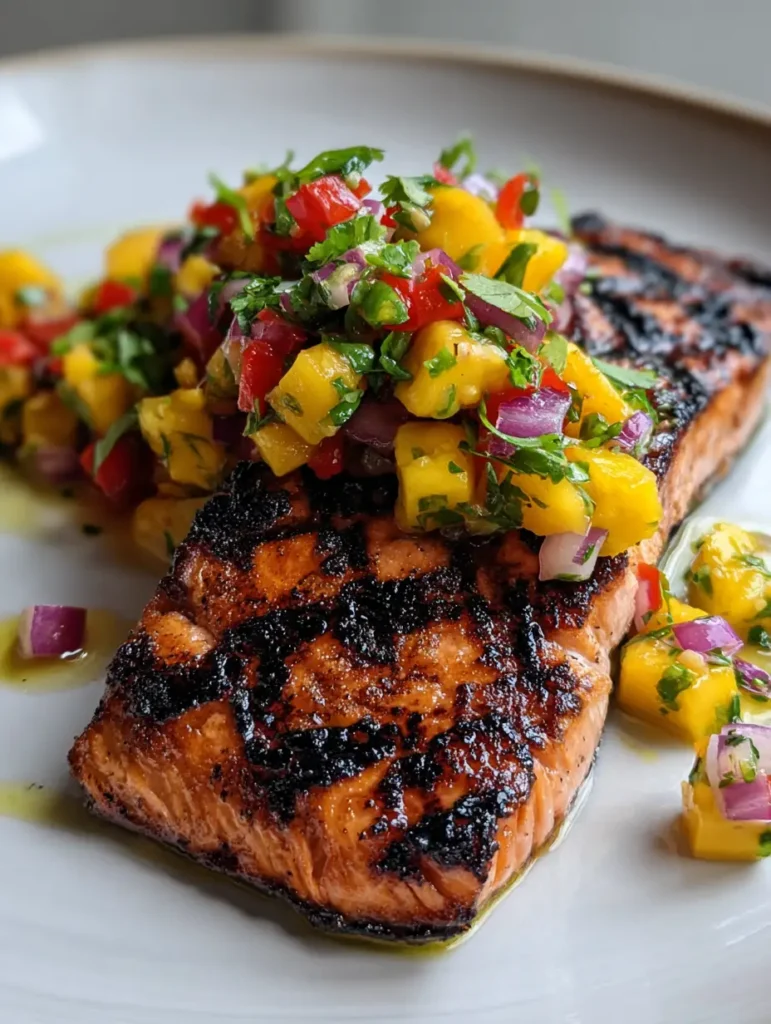
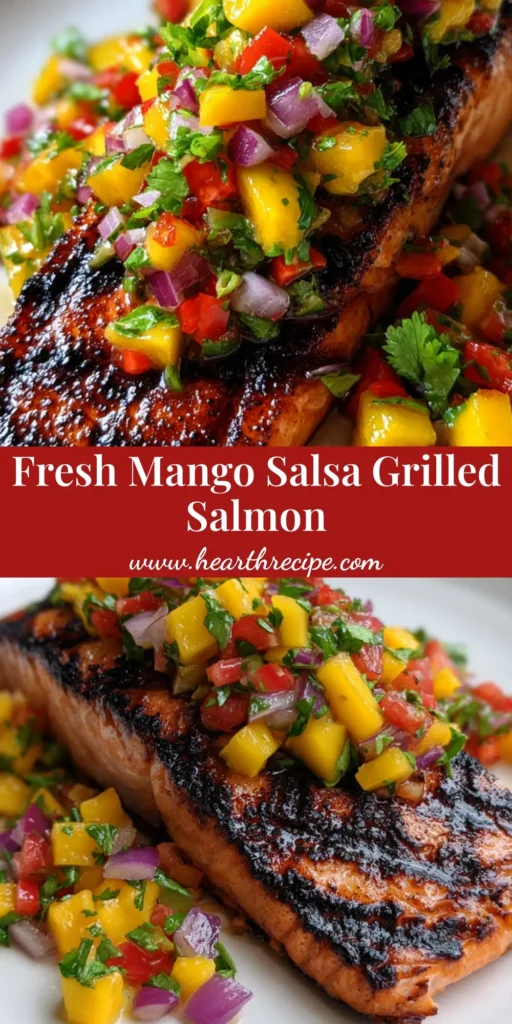
When the sun is high and the grill is hot, nothing satisfies quite like Grilled Salmon with Mango Salsa. This dish isn’t just a meal; it’s a visual symphony of deep, dark charred grill marks contrasting against the moist, flaky pink-orange surface of perfectly cooked fish.
The crown jewel of this recipe is the thick layer of fresh salsa. Imagine bright yellow mango cubes, finely diced red onion, and small bits of red bell pepper, all flecked with chopped green cilantro and a glistening lime juice drizzle.
Whether you are hosting a backyard barbecue or looking for a healthy weeknight dinner, this Grilled Salmon with Mango Salsa delivers restaurant-quality results with the rustic, unedited charm of everyday food photography. It is light, refreshing, and scientifically balanced to provide a hit of acidity against the rich fats of the salmon.
Why This Vibrant Seafood Dish Wins Every Time
- Textural Contrast: You get the satisfying crunch of charred exterior skin and the buttery, melt-in-your-mouth interior of the salmon fillet.
- The Acid-Fat Balance: The natural sugars and citric acid in the mango and lime juice cut directly through the omega-3 richness of the fish.
- Visual Brilliance: Served on a clean white ceramic plate, the colors of the red bell pepper and cilantro pop, making it a social-media-ready masterpiece.
- Nutrient Density: This recipe is packed with high-quality protein and vitamins, making it a guilt-free indulgence for any fitness-conscious cook.
If you enjoy the rich flavors of seafood but want something a bit more delicate on other nights, you might also love our poached salmon with lemon sauce. However, for those who crave the smoke of the flame, let’s dive into the specifics of this grilled version.
The Foundation: Premium Salmon and Fresh Produce
Achieving the perfect Grilled Salmon with Mango Salsa starts with the quality of your ingredients. We aren’t just looking for “salmon”; we are looking for structure and fat content that can withstand high heat.
Center-Cut Salmon Fillets: 1.5 lbs (680g) of salmon, preferably skin-on. The skin acts as a heat shield, ensuring the flesh remains moist while you achieve those deep charred grill marks described in our visual blueprint.
Fresh Kent or Ataulfo Mangos: 2 large mangos (approx. 400g). You need mangos that are ripe but firm enough to hold their shape as “bright yellow cubes” rather than turning into a mash.
Red Bell Pepper: 1 medium pepper (150g). This provides the “small bits of red” that contrast against the mango, adding a mild sweetness and essential crunch.
Red Onion: 1/4 cup (40g) finely chopped. The onion provides a sharp bite that balances the tropical sweetness of the fruit.
Fresh Cilantro: 1/4 cup (10g) chopped green flakes. This is the aromatic backbone of the salsa and provides that essential green fleck seen in the handheld photo reference.
Fresh Lime Juice: 2 tbsp (30ml). This is the “drizzle” that emulsifies the salsa juices and prevents the salmon from feeling too heavy on the palate.
High Smoke Point Oil: 2 tbsp (30ml) of avocado or grapeseed oil. Unlike butter, these oils won’t burn at the high temperatures required to get those dark, professional grill marks.
Foundational Seasoning: 1 tsp (6g) Kosher salt and 1/2 tsp (2g) cracked black pepper. These “invisible” ingredients are scientifically required to draw out the natural flavors of the protein.
Essential Tools for Professional Grilling Results
To replicate the “moist, flaky pink-orange surface” and “deep charred marks,” you need the right gear. A standard outdoor grill (gas or charcoal) is preferred, but a heavy cast-iron grill pan works for indoor cooking.
You will also need a sharp chef’s knife for dicing the mango and red bell pepper into uniform cubes. A thin, flexible metal spatula (fish spatula) is the secret weapon for flipping the fillets without tearing the delicate skin.
If you’re looking for a side dish to prep while the grill heats up, consider these crunchy air fryer veggie chips for a textural counterpoint to the soft mango salsa.
Mastering the Flame: Step-by-Step Instructions
Phase 1: Crafting the Tropical Mango Salsa
The salsa needs time for the flavors to marry. Start by peeling the mangos and slicing the flesh away from the large flat pit. Dice the fruit into 1/2-inch (1.25cm) bright yellow cubes.
In a medium glass bowl, combine the mango cubes with the finely diced red onion and red bell pepper. Add the chopped cilantro flakes and pour over the fresh lime juice drizzle. Toss gently with a spoon to avoid bruising the fruit.
Cover the bowl and let it sit at room temperature for at least 20 minutes. This allows the lime juice to macerate the onions, softening their raw bite and creating a light syrup with the mango juices.
Phase 2: Preparing the Salmon for the Sear
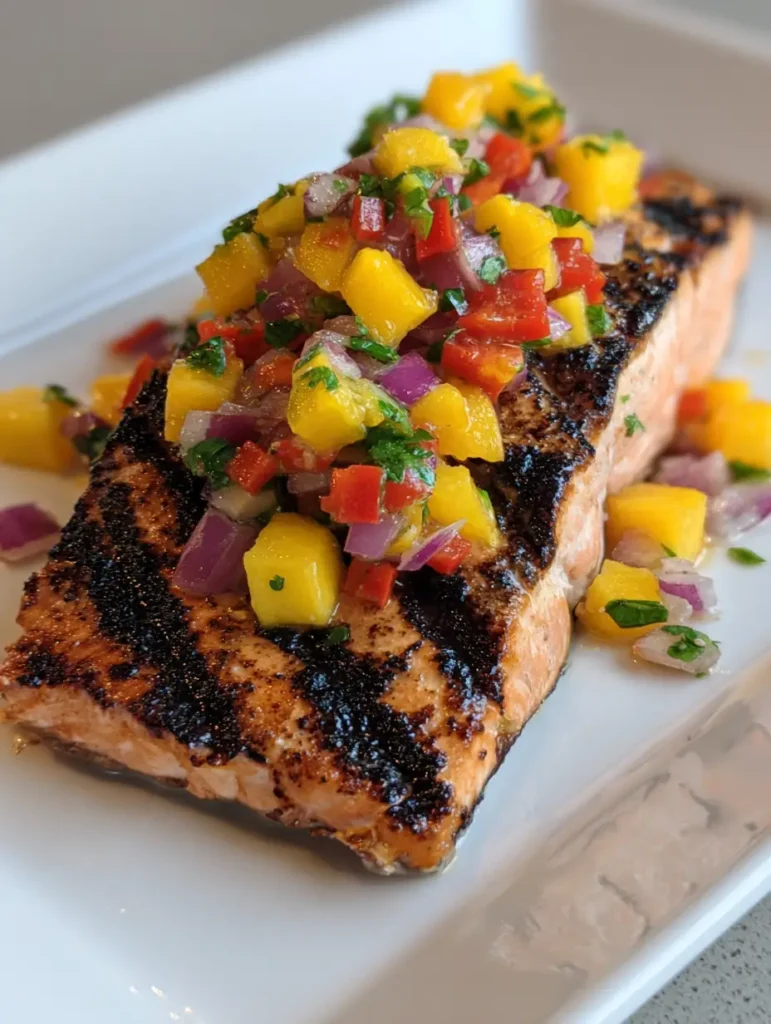
Pat the salmon fillets extremely dry with paper towels. Any moisture on the surface of the fish will create steam, preventing the formation of those “deep, dark charred grill marks” we are aiming for.
Rub the flesh side of the salmon with the avocado oil. Season generously with Kosher salt and black pepper. The oil acts as a heat conductor, ensuring the Maillard reaction occurs rapidly once the fish hits the metal grates.
Preheat your grill to high heat (approximately 450°F / 230°C). Clean the grates thoroughly with a wire brush and wipe them with an oil-soaked paper towel to create a non-stick surface.
Phase 3: The Art of the Char
Place the salmon fillets on the grill, flesh-side down first. Do not move them for at least 3-4 minutes. This patience is what creates the “handheld smartphone photo” look—clean, distinct lines of char.
Use your fish spatula to gently lift a corner. If the fish resists, wait another minute. Once it releases naturally, flip the fillets to the skin side. Reduce the grill heat to medium.
Cook for another 4-5 minutes until the salmon is opaque but still slightly translucent in the very center. This ensures the “moist, flaky pink-orange surface” rather than a dry, chalky texture.
Expert Tips for the Perfect Salmon Texture
- The Room Temp Secret: Take your salmon out of the fridge 15 minutes before grilling. A cold fillet will seize up on a hot grill, leading to uneven cooking.
- Skin-Side Strategy: Always finish the cooking on the skin side. This allows the fat under the skin to render, essentially frying the skin into a crisp cracker texture.
- Mango Ripeness Test: Give your mango a gentle squeeze; it should have the same give as a ripe avocado. If it’s too hard, the salsa will be tart and crunchy; too soft, and it will be mushy.
- Internal Temperature: For a moist, restaurant-style finish, pull the salmon off the grill when the internal temperature hits 125°F (52°C). It will carry-over cook to a perfect 130-135°F (55-57°C).
Storage, Reheating, and Meal Prep Advice
The Grilled Salmon with Mango Salsa is best enjoyed immediately while the fish is hot and the salsa is chilled. However, you can store leftovers in an airtight container for up to 2 days.
Keep the salsa and the salmon in separate containers. Reheat the salmon gently in a 300°F (150°C) oven covered with foil to prevent drying out. Never microwave salmon if you want to preserve that flaky texture!
The leftover mango salsa is incredibly versatile. Try it the next day over spinach and white cheddar chicken burgers for a tropical twist on a classic lunch.
What to Serve With Your Grilled Salmon
To keep the meal light and vibrant, serve this dish alongside some Greek lemon potatoes. The citrus notes in the potatoes perfectly complement the lime drizzle on the salmon.
For a refreshing beverage pairing, nothing beats a cold glass of tropical pineapple sangria. The fruit-forward profile of the drink mirrors the flavors in the mango salsa, creating a cohesive dining experience.
Frequently Asked Questions
Yes, but ensure it is completely thawed and dried thoroughly with paper towels. Frozen salmon often contains more moisture, so the drying step is critical to achieving a good sear.
The key is a clean, screaming hot grill and patting the salmon completely dry. Use an oil with a high smoke point like avocado oil on the fish, and do not attempt to flip the fillet until it naturally releases from the grates.
No, because the addition of red onion, lime juice, and cilantro provides enough savory and acidic notes to balance the sugar, making it the perfect foil for fatty fish.
Yes, leaving the skin on protects the delicate flesh from the direct heat of the grill. Even if you don’t plan to eat the skin, it helps keep the salmon moist and flaky.
Ataulfo (Honey) mangos are excellent because they are less fibrous and have a smaller pit, making them easy to dice into perfect bright yellow cubes. Kent mangos are also a great choice for their sweetness.
The Perfect Grilled Salmon with Mango Salsa Recipe Card
Grilled Salmon with Mango Salsa: The Ultimate Vibrant Summer Seafood Masterpiece
Ingredients
Equipment
Instructions
- In a medium bowl, toss together the mango cubes, red bell pepper, red onion, cilantro, and lime juice.
- Let the salsa sit at room temperature for 20 minutes to allow the flavors to meld and the onions to soften.
- Preheat your grill to high heat (450°F / 230°C) and oil the grates thoroughly.
- Pat salmon dry, rub with oil and seasonings. Place flesh-side down on the grill for 3-4 minutes until deep charred marks form.
- Flip the salmon to the skin side and cook for 4-5 more minutes until the surface is flaky pink-orange and moist.
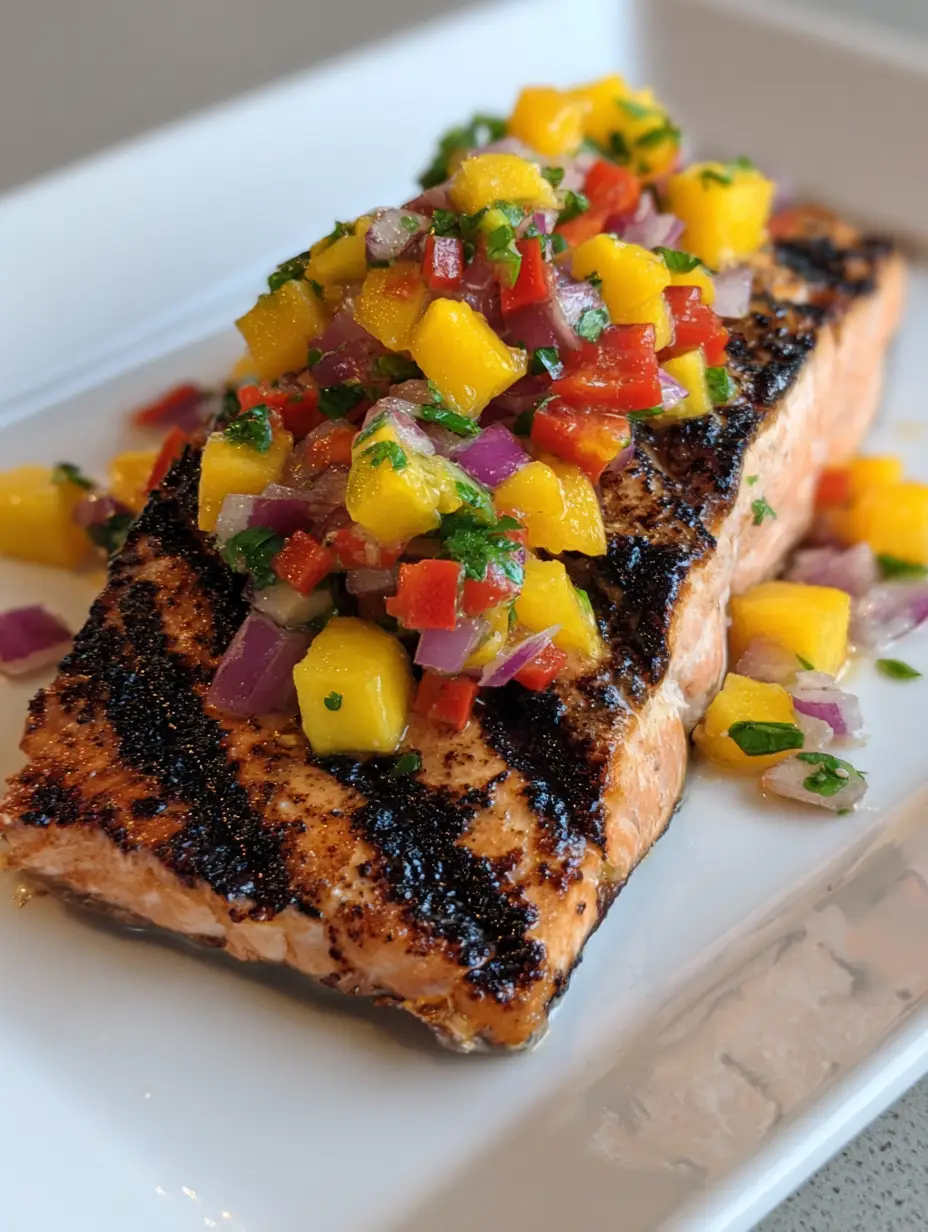
- Place the grilled salmon on a white ceramic plate and top with a thick layer of the prepared mango salsa.
Notes
Pull the salmon at 125°F (52°C) for the most moist results.
Join the Hearth Recipe Community
This Grilled Salmon with Mango Salsa is the recipe you’ll return to all summer long. Its combination of smoky char and tropical sweetness is a proven crowd-pleaser that looks as good as it tastes.
Did you make those deep grill marks? Show us your results! Leave a comment below and let us know how your salsa turned out. Don’t forget to follow us on Pinterest for more culinary inspiration and visual recipe blueprints. Happy grilling!
Looking for more seafood inspiration? Check out our decadent creamy seafood lasagna for your next special occasion.