





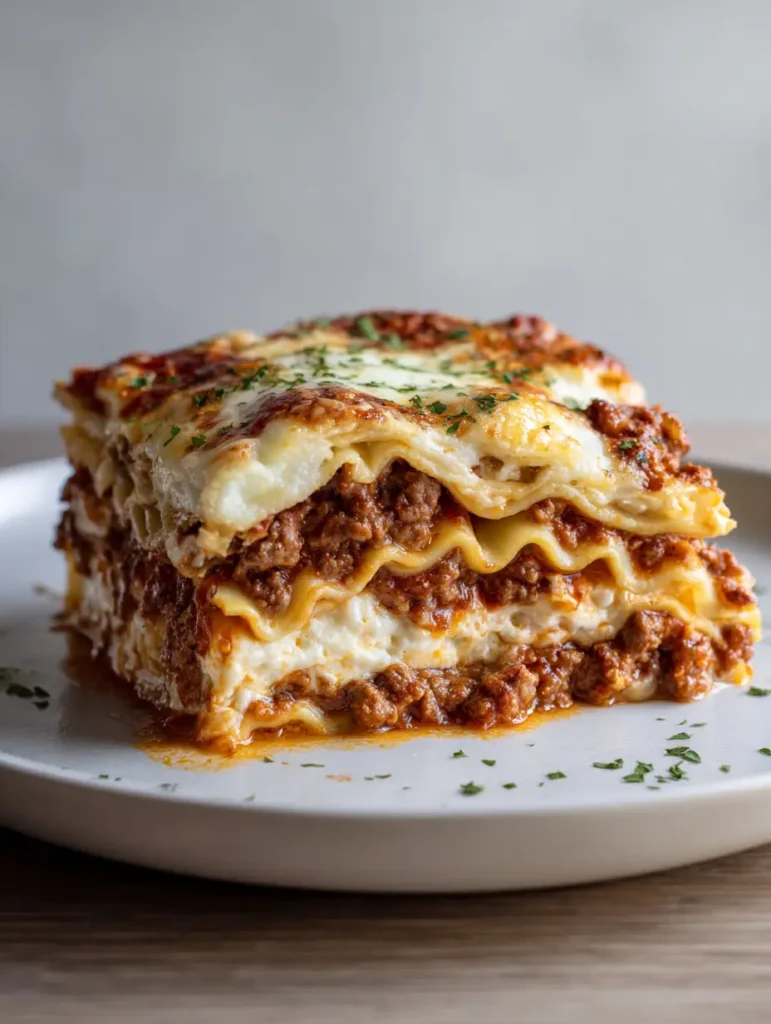
When it comes to quintessential family dinners, few dishes command the table quite like a San Giorgio Lasagna Recipe. This isn’t just a meal; it’s a towering architectural feat of Italian-American culinary tradition, built on a foundation of wide, rippled-edge pasta and a sauce that has simmered to a concentrated perfection. The hallmark of a truly authentic San Giorgio preparation is the visual drama of the cross-section, where distinct, opaque white layers of ricotta meet a dense, dark red meat ragu.
In this guide, we are recreating the iconic version seen in classic kitchens: a thick, multi-layered slice with glistening oil droplets and a heavy blanket of mozzarella. We are targeting that specific, sought-after amber carbonization on the cheese crust—the kind that provides a slight crunch before yielding to the tender, rippled pasta beneath. Whether you are a seasoned home cook or a weekend kitchen warrior, mastering this San Giorgio Lasagna Recipe will elevate your Sunday dinner game to legendary status.
Why This Multi-Layered Masterpiece Defines Comfort Food
- Rippled Pasta Architecture: The use of classic San Giorgio noodles with their distinct rippled edges isn’t just for show; those ridges act as structural “shelves” that lock in the heavy meat ragu and ricotta mixture.
- The Perfect Meat Texture: By browning the ground beef into a fine-crumb consistency, we ensure every single bite has an even distribution of protein and savory depth without large, distracting chunks.
- Artisanal Cheese Crust: We utilize a specific high-heat finishing technique to achieve deep amber carbonized patches on the mozzarella, mimicking the results of a professional deck oven.
- Dense Ragu Concentration: Unlike watery sauces that bleed into the cheese, this recipe focuses on a reduced, dark red tomato ragu that stays exactly where you put it, even when sliced hot.
- Visual Finishing: A final dusting of fine green dried parsley flecks provides a color contrast that makes the golden-brown cheese surface pop for a photo-ready finish.
The Anatomy of Ingredients for a Sturdy, Flavorful Lasagna
San Giorgio Lasagna Noodles: You will need 1 box (1 lb / 450g) of these wide, rippled-edge pasta sheets. They provide the essential thickness and structural integrity required for a towering multi-layer slice.
Lean Ground Beef: 1.5 lbs (680g) of 90/10 ground beef is ideal for creating that “fine-crumb” texture. The lower fat content prevents the lasagna from becoming overly greasy while still providing enough fat for those signature glistening oil droplets.
Whole Milk Ricotta Cheese: 30 oz (850g) of high-quality ricotta forms the opaque white layers. Whole milk is non-negotiable here for the creamy, thick mouthfeel that resists drying out in the oven.
Low-Moisture Mozzarella: 4 cups (450g) of shredded mozzarella. We specifically use low-moisture cheese to achieve the amber carbonization and bubbly stretch without releasing excess water.
Crushed Tomatoes and Tomato Paste: 28 oz (800g) of crushed tomatoes and 6 oz (170g) of paste. This combination creates the dense, dark red ragu that characterizes a professional-grade San Giorgio Lasagna Recipe.
Large Eggs: 2 large eggs are mixed into the ricotta. This is the “culinary glue” that ensures your ricotta layers stay thick and distinct rather than running into the meat sauce.
Dried Parsley: 2 tsp (2g) of fine dried parsley. This is strictly for the visual aesthetic, providing the classic “flecked” look across the bubbly cheese surface.
Grated Parmesan Cheese: 1/2 cup (50g) of salty parmesan. This adds a savory “umami” kick to the ricotta mixture and helps with the browning of the top crust.
Foundational Seasonings: 1 tbsp (15ml) extra virgin olive oil, 3 cloves of minced garlic, 1 tsp (6g) kosher salt, and 1/2 tsp (1g) black pepper. These invisible ingredients are scientifically required to build the base flavor profile of the ragu.
Essential Kitchen Tools for This Build
To achieve the side-view cross-section perfection of a San Giorgio Lasagna Recipe, you need more than just a pan. A deep-dish 9×13 inch (23×33 cm) ceramic or glass baking dish is essential to accommodate the height of the multiple layers. Using a shallow pan will result in overflow and a messy presentation.
A heavy-bottomed Dutch oven or large skillet is required for the ragu to ensure the beef browns into a fine crumb rather than steaming. Finally, a sharp offset spatula or a dedicated lasagna server is the secret to getting that clean, side-view slice onto the plate without the layers sliding apart.
Engineering the Dense Red Meat Ragu
Browning the Beef to Fine Crumbs
Heat 1 tbsp (15ml) of olive oil in your Dutch oven over medium-high heat. Add the 1.5 lbs (680g) of ground beef and immediately begin breaking it apart with a wooden spoon or meat masher.
The goal is to eliminate any large chunks. Continue to cook and stir until the beef is fully browned and has reached a fine-crumb consistency. If there is excessive liquid, do not drain it all; leave about 1 tbsp of fat to carry the flavor of the garlic.
Building the Dark Red Tomato Base
Add the minced garlic to the fine-crumb beef and sauté for 60 seconds until fragrant. Stir in the tomato paste, coating the meat thoroughly; this “fries” the paste, deepening the color to a dark, rust-red.
Pour in the crushed tomatoes, salt, and pepper. Reduce the heat to low and simmer, uncovered, for 30-40 minutes. This reduction is vital to achieving the “dense” ragu texture seen in the Midjourney visual, ensuring it doesn’t soak into the pasta too much.
Preparing the Opaque Ricotta Foundation
The Bind and Blend Technique
In a medium mixing bowl, combine the 30 oz (850g) of whole milk ricotta, the two eggs, and the grated parmesan. Use a whisk to blend until the mixture is completely smooth and opaque white.
The addition of the eggs is a professional secret for the San Giorgio Lasagna Recipe. It creates a semi-solid custard texture once baked, which allows for those beautiful, distinct white lines in your final cross-section slice.
Handling the Rippled Noodles
Boil the San Giorgio noodles in heavily salted water for 2 minutes less than the package directions (usually about 8 minutes). They should be very “al dente” as they will finish cooking by absorbing moisture from the ragu.
Drain the noodles and lay them flat on parchment paper. Never stack them while wet, or the rippled edges will tear, ruining the architectural integrity of your lasagna layers.
Assembly: Building the Perfect Cross-Section
Layering for Height and Stability
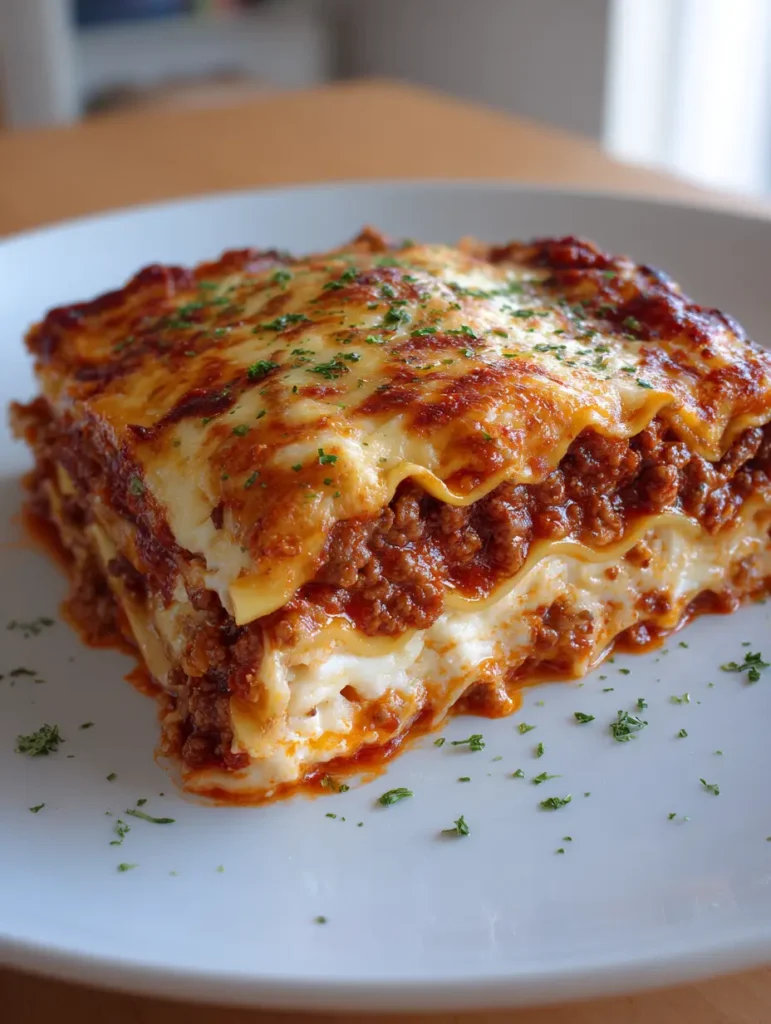
Spread 1/2 cup (120ml) of the meat ragu on the bottom of your 9×13 dish to prevent sticking. Lay three or four rippled-edge noodles across the sauce, slightly overlapping them to create a solid pasta floor.
Spread a thick, even layer of the ricotta mixture over the noodles, followed by a generous layer of the dense meat ragu. Repeat this process until you have 4-5 layers of pasta. The “thick, multi-layered” look comes from consistency in your spreading—aim for 1/4 inch (6mm) thickness for each cheese and meat layer.
Achieving the Amber Carbonized Crust
Finish the top with a final layer of pasta, a thin spread of ragu, and a heavy blanket of the 4 cups (450g) of mozzarella. Sprinkle the fine green dried parsley flecks evenly across the top before it goes into the oven.
Bake at 375°F (190°C) for 45 minutes covered with foil. Remove the foil and bake for an additional 15 minutes. For the final 2-3 minutes, switch to the broiler. Watch closely until you see large patches of deep amber carbonization and glistening oil droplets forming on the surface.
Expert Tips for Success
- The Resting Rule: You must let the lasagna rest for at least 20-30 minutes before slicing. This allows the proteins in the ricotta and the starches in the pasta to set, ensuring your cross-section stays upright.
- Preventing Noodle Stick: If you aren’t using the noodles immediately, toss them in a tiny amount of olive oil to keep the rippled edges from fusing together.
- Contrast Control: If your ragu looks too bright red, add a teaspoon of balsamic vinegar. The acid and sugar help darken the sauce to that “dark red” professional look.
- Cheese Geometry: Do not use fresh buffalo mozzarella for the top; it has too much water. Stick to “low-moisture part-skim” to get those specific carbonized spots.
Storage, Reheating, and Freezing
This San Giorgio Lasagna Recipe actually tastes better the next day as the flavors continue to meld. Store leftovers in an airtight container in the refrigerator for up to 4 days. For long-term storage, the lasagna slices can be frozen individually for up to 3 months.
To reheat, place a slice in the oven at 350°F (175°C) covered with foil for 20 minutes. This prevents the top from burning further while ensuring the middle is hot. Avoid the microwave if possible, as it can make the rippled pasta edges chewy rather than tender.
What to Serve With This Classic Lasagna
To balance the richness of this thick, multi-layered dish, pair it with a crisp green salad or some light appetizers. For a fun twist on sides, try serving it alongside some air fryer veggie chips for a crunchy contrast. If you’re hosting a larger Italian feast, a side of Italian meatballs in extra sauce is always a crowd-pleaser.
For those who love a bit of heat with their cheese, a drizzle of garlic hot honey sauce over the carbonized crust is a modern gourmet touch. If you prefer more traditional sides, consider some Greek lemon potatoes to add a citrusy brightness to the meal.
Frequently Asked Questions
Absolutely. You can assemble the lasagna and refrigerate it overnight before baking. This often results in even better flavor and cleaner slices as the noodles have time to settle.
Yes, for this specific multi-layered recipe, boiling the noodles al dente (about 8 minutes) ensures the rippled edges are tender and helps the layers set properly without absorbing too much moisture from the sauce.
The secret is to use low-moisture mozzarella and finish the lasagna under the broiler for the last 2-3 minutes of cooking. This creates the deep golden-brown patches and glistening oil droplets.
The most important factor is letting the lasagna rest for 20-30 minutes after taking it out of the oven. Use a sharp, thin-bladed knife and an offset spatula to lift the slice directly from the center.
A watery lasagna usually comes from not simmering the ragu long enough or using high-moisture ricotta. Ensure your meat sauce is reduced to a dense consistency and use eggs in your ricotta mixture to bind the cheese layers.
The Authentic San Giorgio Lasagna Recipe
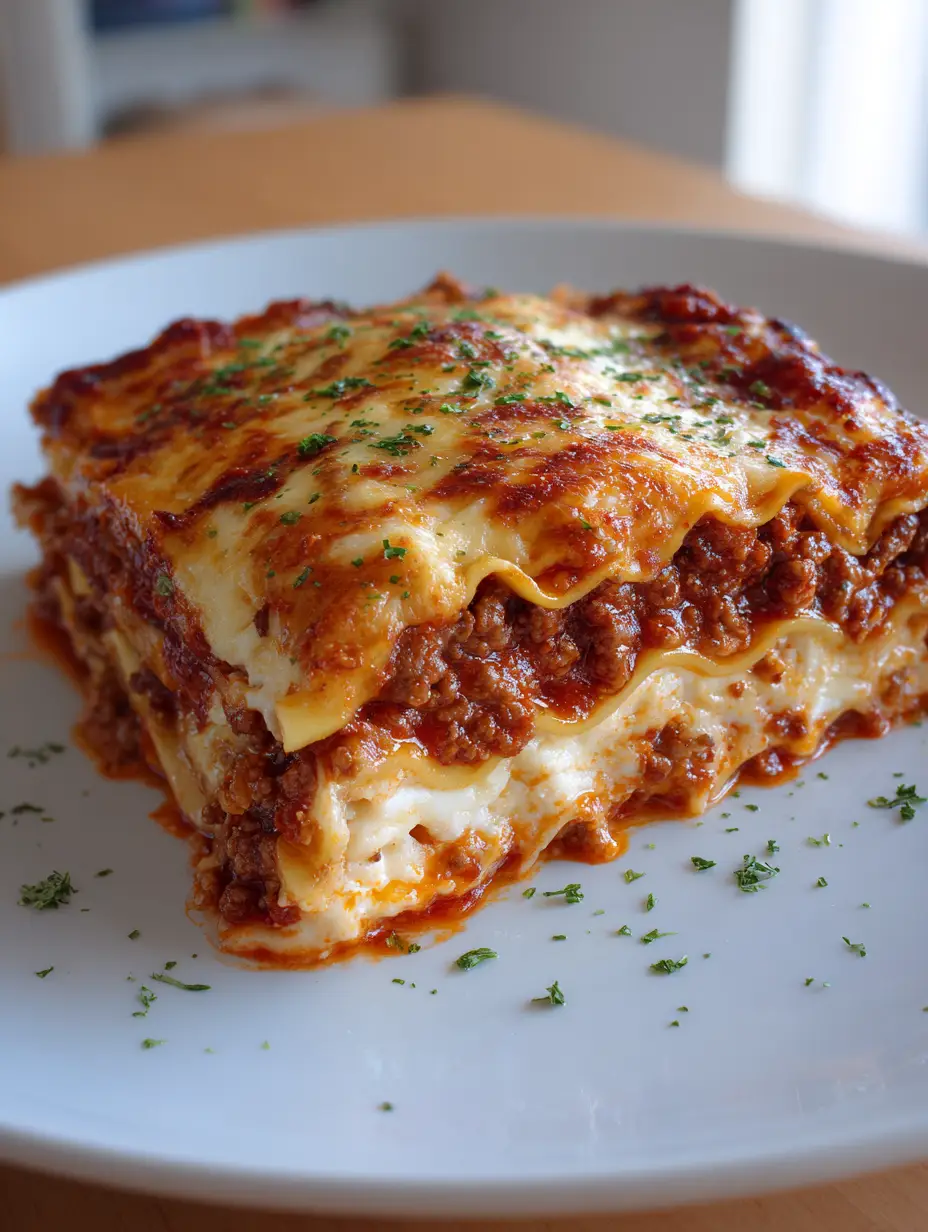
San Giorgio Lasagna Recipe: The Ultimate Classic Multi-Layered Comfort
Ingredients
Equipment
Instructions
- In a Dutch oven, brown ground beef over medium-high heat until it reaches a fine-crumb texture. Drain excess fat if necessary.
- Stir in garlic, tomato paste, and crushed tomatoes. Simmer on low for 30-40 minutes until dense and dark red.
- Whisk ricotta, eggs, and parmesan until smooth and opaque white.
- Cook rippled noodles in salted water until al dente. Drain and lay flat on parchment paper.
- Layer sauce, noodles, ricotta mixture, and ragu in a 9x13 dish, repeating for 4-5 layers.
- Top with mozzarella and parsley. Bake at 375°F (190°C) covered for 45 mins, then uncovered for 15 mins. Broil for 2-3 minutes for amber carbonization.
Notes
Use whole milk ricotta for the best structural stability in the cross-section.
Bring the Italian-American Tradition Home
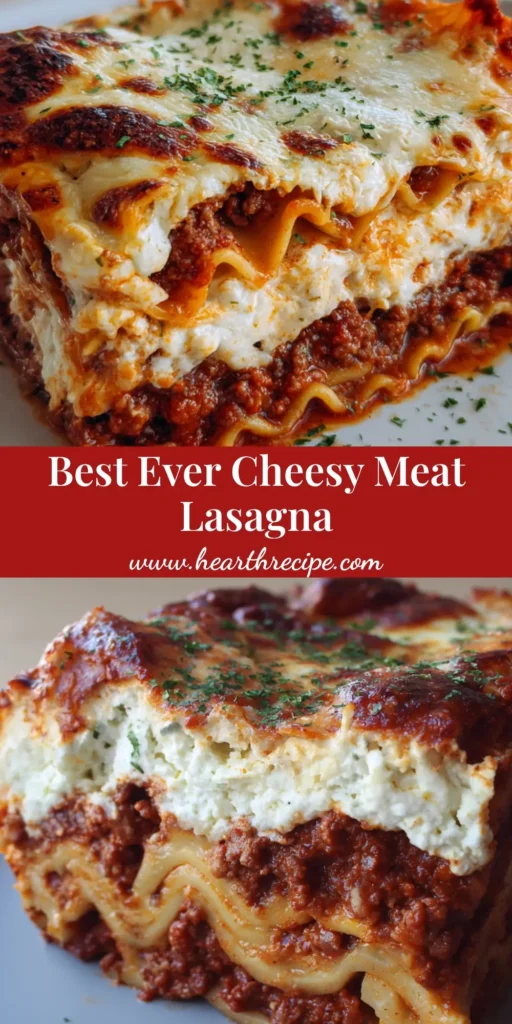
The beauty of the San Giorgio Lasagna Recipe lies in its texture—the way the rippled pasta meets the creamy ricotta and the savory, fine-crumb beef. It is a visual and sensory experience that brings people to the table and keeps them there. By following these specific steps for ragu density and cheese carbonization, you are creating a professional-grade dish that looks exactly like a gourmet food photograph.
We would love to see your results! Leave a comment below and let us know how your layers turned out. Don’t forget to sign up for our newsletter for more deep-dive recipes, and share your masterpiece to Pinterest to inspire other home cooks!