





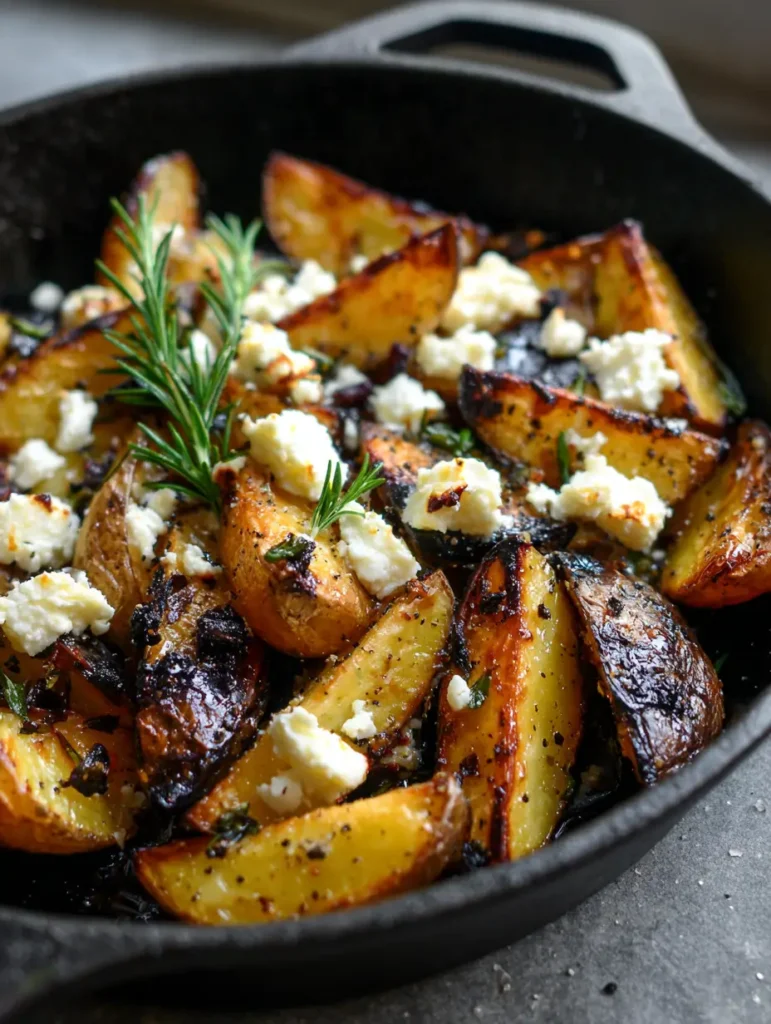
There is a specific culinary magic that happens when high-heat roasting meets the bright, acidic punch of Mediterranean citrus. These Greek Lemon Potatoes are not your average side dish; they are a masterclass in texture, featuring thick-cut wedges with blistered skins and deep golden-brown, charred crispy edges that crackle upon impact. If you have been searching for that authentic taverna-style result—where the potato is creamy on the inside but intensely caramelized on the outside—this cast iron method is your solution.
Imagine pulling a rustic black cast iron skillet from a 425°F (220°C) oven, the scent of toasted rosemary and lemon-infused olive oil filling your kitchen. The potatoes glisten under a light sheen of citrus glaze, punctuated by the sharp bite of cracked black pepper and the cooling creaminess of large white chunks of crumbled feta cheese. This recipe bridges the gap between simple home cooking and professional food photography aesthetics, delivering a dish that looks as incredible as it tastes.
By using a specific two-stage cooking process—part braise, part roast—we ensure the potatoes absorb every drop of lemon-garlic infusion before the high heat of the cast iron creates those signature charred edges. This is the ultimate comfort food for anyone who appreciates the bold, herbaceous flavors of Greece.
Why These Mediterranean Roasted Wedges Are Superior
- The Dual-Textured Finish: We achieve a soft, fondant-like interior contrasted by a rugged, charred exterior that holds its crunch even under a lemon glaze.
- Lemon-Infused Emulsion: Unlike recipes that result in “soggy” potatoes, our technique uses an emulsified lemon-olive oil glaze that clings to the blistered skins.
- Layered Herb Profile: By using both dried rosemary needles during the roasting process and fresh rosemary sprigs for the final garnish, we create a complex aromatic depth.
- The Feta Factor: The addition of cold, creamy feta against the hot, roasted potatoes provides a temperature and texture contrast that is quintessential to Greek cuisine.
The Essential Pantry Staples for Vibrant Greek Lemon Potatoes
To achieve the specific visual and flavor profile described in our blueprint, every ingredient serves a structural or chemical purpose. Using the right potato and fat source is non-negotiable for the perfect char.
Yukon Gold Potatoes: 2.5 lbs (1.1kg). We use Yukon Golds for their naturally buttery yellow flesh and thin skins that blister beautifully under high heat without becoming tough.
Extra Virgin Olive Oil: 1/2 cup (120ml). This is the vehicle for flavor and the key to the Maillard reaction; ensure you use a high-quality oil for that authentic glistening sheen.
Fresh Lemon Juice: 1/3 cup (80ml). The acid tenderizes the potato starch during the initial cooking phase and provides the bright, signature tang of Greek Lemon Potatoes.
Dried Rosemary Needles: 1 tbsp (2g). These are tossed with the potatoes early on, allowing their oils to infuse into the fat as they roast in the oven.
Crumbled White Feta Cheese: 1/2 cup (75g). Use a high-quality sheep’s milk feta in brine for the creamiest texture and the most authentic salty punch.
Chicken or Vegetable Broth: 1/2 cup (120ml). This “invisible” ingredient is vital; it allows the potatoes to steam and soften before the liquid evaporates, leaving only the oil to fry the edges.
Fresh Rosemary Sprigs: 3-4 sprigs. These provide the vibrant green visual contrast and a fresh, piney aroma that hits the table just before serving.
Garlic Cloves: 4 cloves, minced. Garlic provides the savory backbone that balances the sharp acidity of the lemon-infused olive oil glaze.
Kosher Salt and Cracked Black Pepper: To taste. High-quality cracked black pepper is visible on the surface of the potatoes, adding both visual texture and a mild heat.
Professional Culinary Tools for the Perfect Roast
To replicate the rustic, handheld smartphone photo look, the vessel matters as much as the heat. A 12-inch (30cm) cast iron skillet is the preferred tool because its heat retention is unparalleled, ensuring the bottom of each wedge gets that deep golden-brown crust.
If you don’t have cast iron, a heavy-rimmed baking sheet will work, but you may need to increase the cooking time by 5-10 minutes to achieve the same level of blistered skin. You will also need a sharp chef’s knife for those consistent “thick-cut” wedges and a large mixing bowl to ensure every potato is thoroughly coated in the lemon-infused glaze.
Step-by-Step Instructions for the Ultimate Char
Preparing the Citrus Infusion
Preheat your oven to 425°F (220°C). In a small bowl, whisk together the olive oil, lemon juice, minced garlic, and dried rosemary needles. This creates an emulsion that ensures the potatoes are flavored from the inside out, rather than just on the surface.
Achieving the Perfect Thick-Cut Wedge
Wash your Yukon Gold potatoes but leave the skins on; the skin is essential for the “blistered” look. Cut each potato into thick, uniform wedges—usually 6 to 8 pieces per potato depending on size. Uniformity is key for even roasting and ensures no pieces burn while others remain raw.
The Braise-and-Roast Technique
Place the wedges into your cast iron skillet. Pour the lemon-oil mixture and the broth over the potatoes. Season generously with salt and cracked black pepper. Toss with your hands to ensure every surface is glistening. Arrange them so at least one flat side of each wedge is in direct contact with the skillet bottom.
Monitoring Visual and Sensory Cues
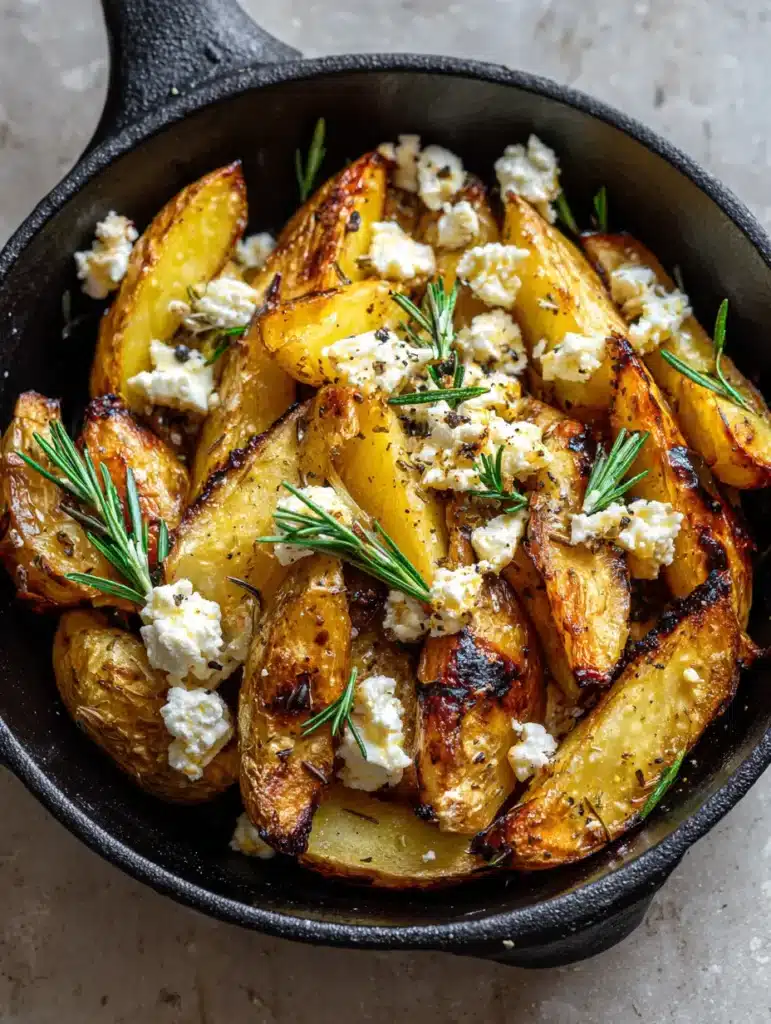
Slide the skillet into the oven. Roast for 40-45 minutes. At the 25-minute mark, use a spatula to flip the potatoes. You are looking for the liquid to have mostly evaporated, leaving the potatoes to sizzle in the remaining lemon-infused olive oil. Look for “charred crispy edges” and “deep golden brown” surfaces as your cue for doneness.
The Final Aesthetic Flourish
Once the potatoes are fork-tender with a crackling exterior, remove them from the oven. While still screaming hot, scatter the large creamy white chunks of crumbled feta cheese over the top. The residual heat will soften the feta slightly without melting it completely. Garnish with fresh rosemary sprigs and an extra pinch of cracked black pepper.
Expert Tips for Success
- Don’t Crowd the Skillet: If the potatoes are piled on top of each other, they will steam rather than roast. Use a larger pan or two pans if necessary to ensure those charred edges.
- The Broth Secret: Using broth instead of just water adds a layer of umami that makes these Greek Lemon Potatoes taste like they came from a high-end restaurant.
- High Heat is Mandatory: Don’t be afraid of the 425°F (220°C) temperature. The high heat is what creates the blistered skins seen in the midjourney prompt.
- Acid Balance: If your lemons are particularly large or tart, taste your emulsion. You want a sharp tang, but it shouldn’t be overwhelming.
Storage, Reheating, and Freezing Advice
These potatoes are best enjoyed fresh from the skillet while the edges are at their crispiest. However, if you have leftovers, store them in an airtight container in the refrigerator for up to 4 days.
To reheat and regain that crunch, avoid the microwave. Instead, toss them back into a hot skillet or an air fryer at 350°F (175°C) for 5-7 minutes. We do not recommend freezing roasted potatoes, as the cellular structure of the potato changes upon thawing, resulting in a grainy texture.
What to Serve with Greek Lemon Potatoes
These vibrant potatoes are a versatile side dish that pairs beautifully with Mediterranean proteins. They are the perfect companion to a poached salmon with lemon sauce, where the citrus notes complement each other perfectly.
For a heartier meal, serve them alongside Italian meatballs or even as a base for spinach white cheddar chicken burgers. If you’re looking for a snack-heavy spread, try pairing these with air fryer cheese tortellini for a fusion of textures.
Frequently Asked Questions
Fresh lemon juice is highly recommended. Bottled juice often has preservatives and lacks the bright, floral aroma of fresh citrus, which is the heart of this dish.
High-quality feta has a high melting point; it will soften and become creamy when added to the hot potatoes but should remain in distinct, visible chunks for that authentic texture.
While a baking sheet works, cast iron provides superior heat retention and distribution, which is the most reliable way to get that deep mahogany, charred crust on the potato surfaces.
Yukon Gold potatoes are ideal because they hold their shape well and have thin skins that blister beautifully, whereas Russets may become too mealy when braised in lemon and broth.
The most common reason is crowding the pan or using too much liquid. Ensure the potatoes are in a single layer and the broth has fully evaporated before the end of cooking so the olive oil can fry the edges.
The Ultimate Greek Lemon Potatoes Recipe
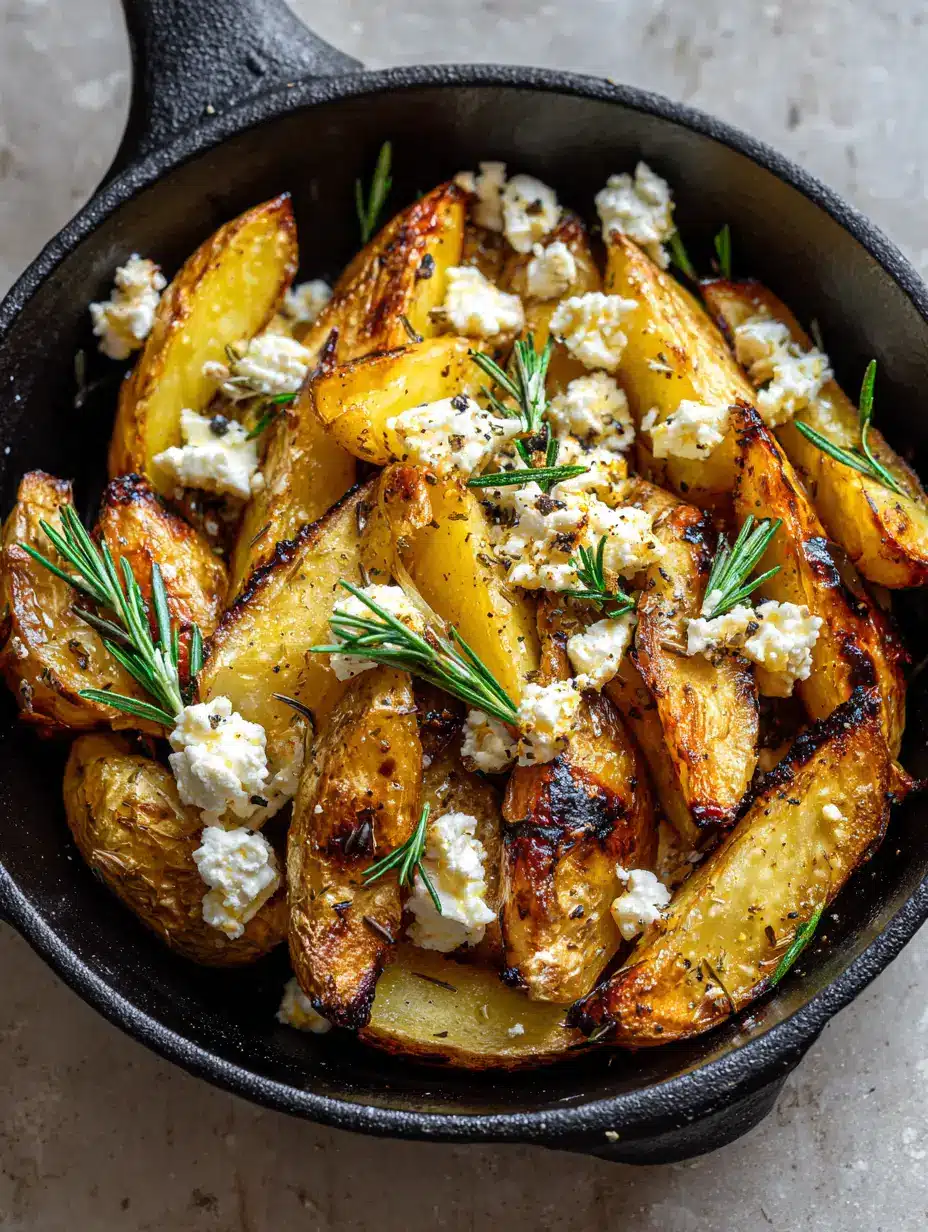
Greek Lemon Potatoes with Crispy Charred Edges and Feta
Ingredients
Equipment
Instructions
- Preheat your oven to 425°F (220°C).
- Whisk together olive oil, lemon juice, broth, minced garlic, and dried rosemary needles until emulsified.
- Place thick-cut potato wedges in a cast iron skillet. Pour the emulsion over them, season with salt and cracked black pepper, and toss to coat every surface.
- Roast for 25 minutes until the liquid begins to evaporate and the potatoes soften.
- Flip the wedges with a spatula. Continue roasting for 15-20 minutes until the edges are deep golden brown and charred, and skins are blistered.
- Remove from oven. Immediately scatter feta chunks and fresh rosemary sprigs over the hot potatoes.
Notes
Use sheep's milk feta for the best flavor profile.
Bring the Flavors of Greece Home
Mastering Greek Lemon Potatoes is about embracing the balance of fat, acid, and high-heat caramelization. By following this cast iron method, you ensure every wedge is a perfect bite of crispy, citrus-infused heaven. Whether you are hosting a dinner party or prepping a simple weeknight meal, this dish is guaranteed to be the star of the table.
If you enjoyed this recipe, please leave a comment below and let us know how your charred edges turned out! Don’t forget to sign up for our newsletter for more culinary deep-dives and share this recipe to Pinterest so others can find the secret to the perfect Greek roast.