



The Beef Tenderloin Roast is widely considered the crown jewel of holiday dining, offering a buttery texture and sophisticated flavor profile that few other cuts can match. When prepared correctly, this roast presents a striking visual contrast: a deep, mahogany-colored herb crust surrounding a perfectly uniform, vibrant medium-rare pink center.
In this guide, we dive deep into the culinary science of achieving that professional finish, ensuring every slice is glistening with natural juices and seasoned to perfection. By focusing on high-heat searing and precise temperature control, you can replicate the handheld smartphone photo aesthetic of a rustic, high-end bistro right in your own kitchen.
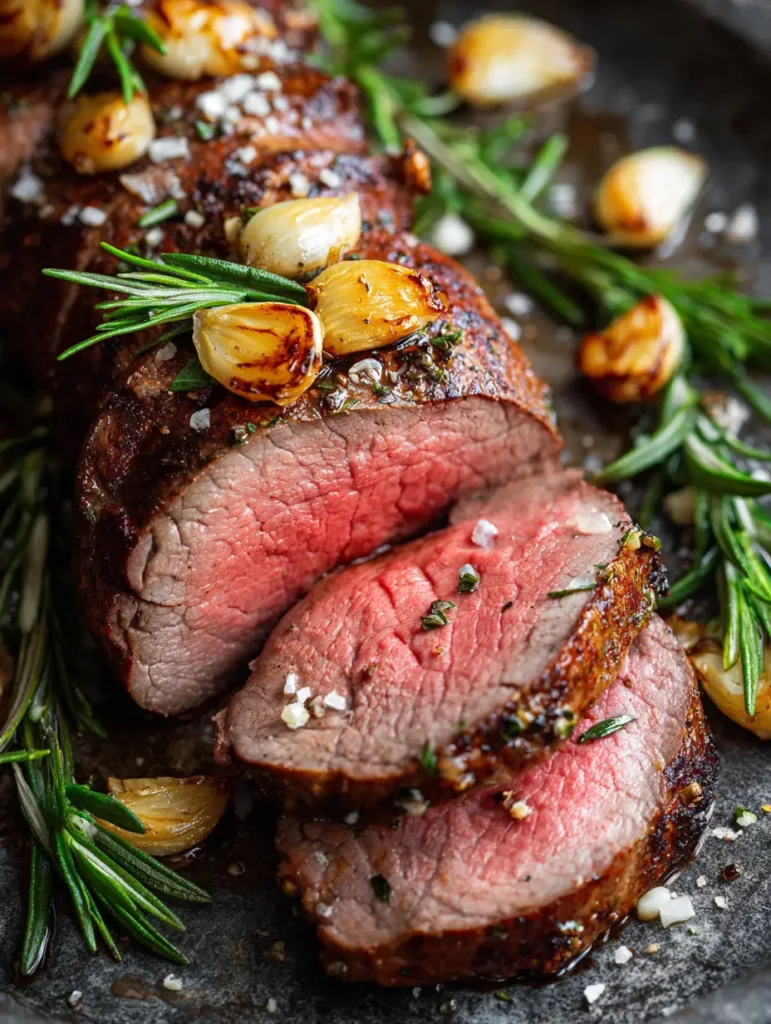
Presented on a dark, rustic slate platter, the medallions of this roast are accented by golden, whole roasted garlic cloves and aromatic sprigs of rosemary. The final touch of coarse sea salt and cracked black pepper caught in the soft daylight creates a sensory experience that begins long before the first bite.
Why This Succulent Roast Defines Culinary Excellence
- Unrivaled Texture: The tenderloin is the most non-strenuous muscle of the cow, resulting in meat so soft it can almost be cut with a fork.
- Maillard Reaction Mastery: Our searing technique ensures a dark, savory crust that provides a complex flavor profile to the mild beef.
- Aromatic Depth: The combination of whole roasted garlic and fresh rosemary infuses the natural meat juices with earthy, pungent notes.
- Visual Precision: Sliced into thick medallions, the medium-rare center provides a professional, “picture-perfect” presentation for any dinner party.
Premium Elements for the Ultimate Beef Tenderloin Roast
4 to 5 lbs (1.8 to 2.3 kg) Center-Cut Beef Tenderloin: Often called the Chateaubriand, this uniform thickness is essential for even cooking and achieving that edge-to-edge pink interior. Ensure it is trimmed of silver skin and tied with kitchen twine to maintain a cylindrical shape.
2 tbsp (30 ml) High-Smoke Point Oil: Use avocado or grapeseed oil for the initial sear; these oils can withstand the high heat required to develop a dark crust without burning or smoking excessively. This foundational step is what creates the “unedited” rustic look of the crust.
1 head (approx. 10-12 cloves) Whole Garlic Cloves: We keep the cloves whole and peel them just enough to expose the flesh, allowing them to soften and turn golden brown in the pan. They become sweet, spreadable gems that complement the savory beef medallions perfectly.
6-8 Sprigs Fresh Rosemary: Fresh herbs are non-negotiable for this recipe as they provide the essential oils that perfume the meat during the roasting phase. The vibrant green sprigs also serve as the primary visual garnish against the dark meat.
2 tbsp (30 g) Unsalted Butter: Added during the final stages of searing, the butter bastes the meat, helping the rosemary and garlic flavors penetrate the exterior while adding a glossy sheen to the surface.
2 tbsp (12 g) Coarse Sea Salt and 1 tbsp (7 g) Cracked Black Pepper: These “visible grains” are crucial for both texture and flavor. The coarse nature of the salt ensures it doesn’t just dissolve but provides a satisfying crunch against the tender meat.
Essential Tools for Professional Results
To achieve the dark, seared outer crust and precise medium-rare center, you will need a heavy-bottomed 12-inch (30cm) cast-iron skillet or a stainless steel roasting pan. These materials retain heat efficiently, which is necessary for the Maillard reaction to occur rapidly without overcooking the interior.
A digital instant-read meat thermometer is your most important ally in this process. Because a Beef Tenderloin Roast is such a lean and expensive cut, there is very little margin for error; pulling the meat at exactly 125°F (52°C) is the secret to a perfect medium-rare result.
Finally, a dark slate serving platter or a rustic wooden board provides the ideal backdrop for the “top-down” presentation. Using a sharp carving knife is essential to create clean, thick medallions without tearing the delicate fibers of the roasted beef.
Mastering the Sear: Step-by-Step Instructions
Preparation and Seasoning Strategy
Remove the beef from the refrigerator at least 60 minutes before cooking to allow it to reach room temperature. This ensures the center cooks at the same rate as the exterior, preventing a “grey ring” of overcooked meat under the crust.
Pat the meat extremely dry with paper towels; any surface moisture will create steam, which prevents a dark sear. Generously coat the entire surface with the coarse sea salt and cracked black pepper, pressing the seasoning into the meat so it adheres firmly.
The High-Heat Sear and Aromatic Infusion
Heat your oil in the cast-iron skillet over high heat until it begins to shimmer and faint wisps of smoke appear. Carefully place the tenderloin in the pan, searing each side for 3-4 minutes until a dark, mahogany crust forms.
Lower the heat to medium-high and add the butter, whole garlic cloves, and rosemary sprigs to the pan. Use a large spoon to continuously pour the foaming, herb-infused butter over the roast for 2 minutes, a technique known as “arrosé” that builds deep flavor layers.
The Controlled Roast and Temperature Cues
Transfer the entire skillet (or move the meat and aromatics to a pre-heated roasting pan) into a 425°F (220°C) oven. Roast for 15-20 minutes, or until your digital thermometer registers 125°F (52°C) for medium-rare or 135°F (57°C) for medium.
Keep a close eye on the garlic cloves; they should be golden and soft. If they begin to darken too quickly, tuck them slightly under the curve of the roast to protect them from the direct oven heat.
The Critical Resting Phase
Transfer the Beef Tenderloin Roast to a cutting board and tent it loosely with aluminum foil. Let the meat rest for at least 15 minutes; this allows the muscle fibers to relax and reabsorb the natural meat juices.
If you slice the meat too early, the juices will run out onto the board, leaving the medallions dry and gray rather than juicy and pink. During this time, the internal temperature will carry over by about 5 degrees, reaching the ideal 130°F (54°C) for a perfect medium-rare center.
Expert Tips for a Flawless Presentation
- Uniformity Matters: If your tenderloin has a very thin “tail” end, tuck it under itself and tie it with twine so the entire roast is of equal thickness.
- Slicing Technique: Always slice the beef against the grain into 1.5-inch (4cm) thick medallions to ensure maximum tenderness in every bite.
- The Slate Aesthetic: Arrange the medallions overlapping slightly on a dark platter, then scatter the roasted garlic cloves and fresh rosemary sprigs around the meat.
- The Final Garnish: Right before serving, sprinkle an additional pinch of coarse sea salt over the sliced surfaces to make the pink meat “pop” visually.
Optimizing Storage and Reheating
Leftover roast can be stored in an airtight container in the refrigerator for up to 3 days. To maintain the medium-rare texture, avoid the microwave; instead, reheat slices in a pan over low heat with a splash of beef broth or butter.
For long-term storage, you can freeze the cooked roast for up to 2 months. Thaw slowly in the refrigerator overnight before reheating gently to preserve the delicate structure of the tenderloin medallions.
Perfect Pairings for a Grand Feast
To complement the rich, savory notes of the beef, serve this roast alongside tangy Greek lemon potatoes which provide a bright acidity that cuts through the fat. For an added texture contrast, a bowl of crunchy air-fryer veggie chips offers a modern, light alternative to traditional heavy sides.
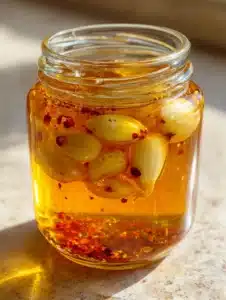
If you want to experiment with bold flavors, a side of garlic hot honey sauce can be drizzled sparingly over the medallions for a sweet-and-spicy kick. Finish the evening with a glass of refreshing pineapple sangria to cleanse the palate after such a decadent meal.
Frequently Asked Questions
While possible, fresh rosemary is highly recommended for this recipe. Fresh sprigs provide essential oils that create a fragrant basting butter and provide a much better visual garnish for the final presentation.
The secret is a high-heat sear in a cast-iron skillet with a high-smoke point oil before the roast ever enters the oven. This develops the crust rapidly (Maillard reaction) while keeping the interior raw for the slow roasting phase.
You should let the roast rest for at least 15 to 20 minutes. Resting allows the juices to redistribute throughout the meat, ensuring that the medallions remain moist and pink when sliced.
Yes, tying the roast every 1-2 inches with kitchen twine is essential. It helps the meat maintain a uniform cylindrical shape, which ensures that the center cooks evenly from end to end.
For a perfect medium-rare result, remove the beef from the oven when the internal temperature reaches 125°F (52°C). During the resting period, the temperature will rise to the ideal 130°F-135°F (54°C-57°C).
The Ultimate Beef Tenderloin Roast Recipe
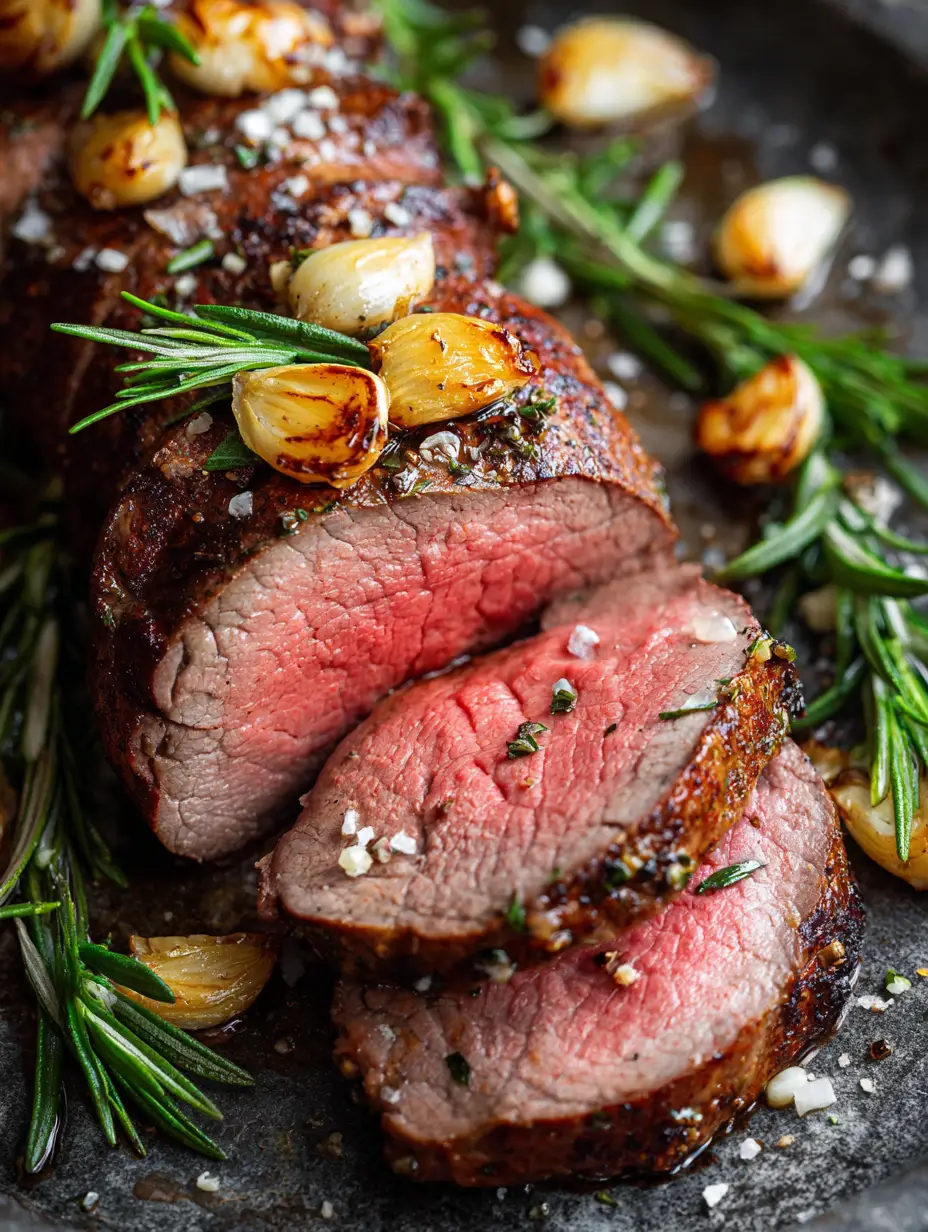
Beef Tenderloin Roast with Roasted Garlic and Fresh Rosemary
Ingredients
Equipment
Instructions
- Bring the beef tenderloin to room temperature for 60 minutes. Pat completely dry with paper towels.
- Generously coat the beef with coarse sea salt and cracked black pepper, pressing the spices into the meat.
- Heat oil in a cast-iron skillet over high heat. Sear the beef for 3-4 minutes per side until a dark mahogany crust forms.
- Lower heat to medium-high. Add butter, garlic, and rosemary. Spoon the foaming butter over the meat for 2 minutes.
- Transfer the skillet to a 425°F (220°C) oven. Roast for 15-20 minutes until the internal temperature reaches 125°F (52°C).
- Remove from oven and tent loosely with foil. Let the roast rest for 15 minutes before carving.
- Slice into thick medallions and serve on a slate platter with the roasted garlic and fresh rosemary.
Notes
Always slice against the grain for maximum tenderness.
Share Your Culinary Success!
The Beef Tenderloin Roast is more than just a meal; it is a centerpiece that brings people together. We hope this guide helps you achieve that perfect medium-rare center and aromatic herb crust that looks as good as it tastes.
If you enjoyed this recipe, please leave a comment below and share your photos with us! Don’t forget to follow our Pinterest page for more gourmet inspiration and holiday menu ideas. Sign up for our newsletter to receive the latest recipes directly in your inbox.