



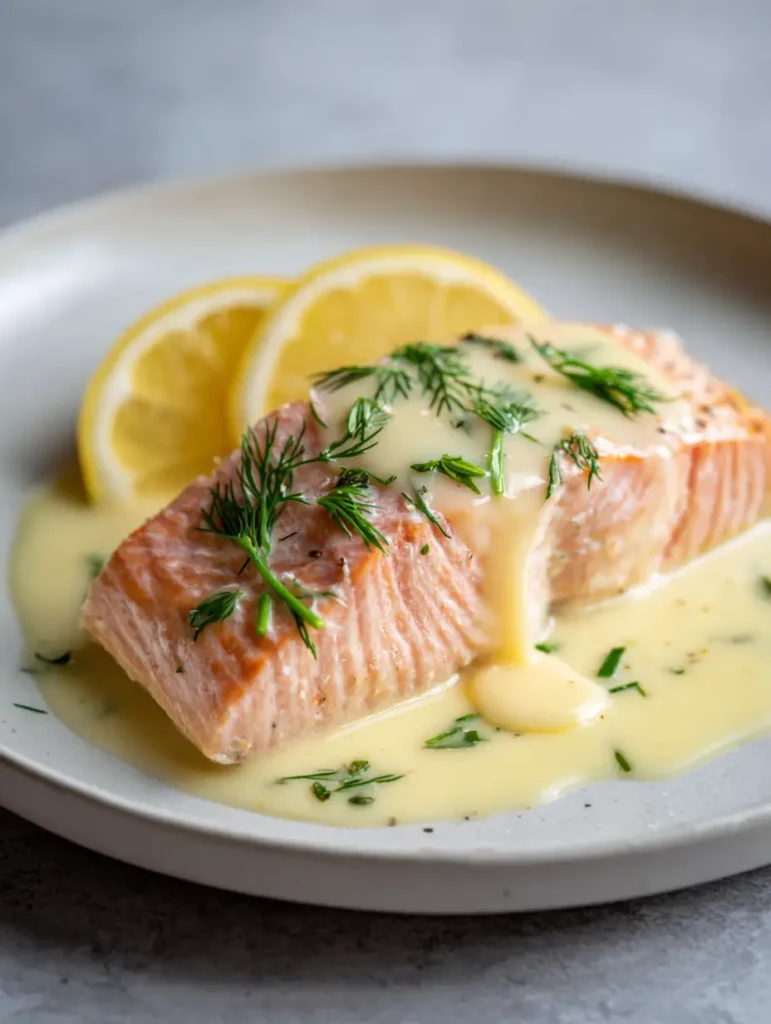
There is something inherently sophisticated about a perfectly Poached Salmon with Lemon Sauce. It is a dish that relies on the beauty of simplicity and the precision of temperature. When done correctly, the salmon transforms into a soft, pale pink masterpiece that yields to the slightest pressure of a fork.
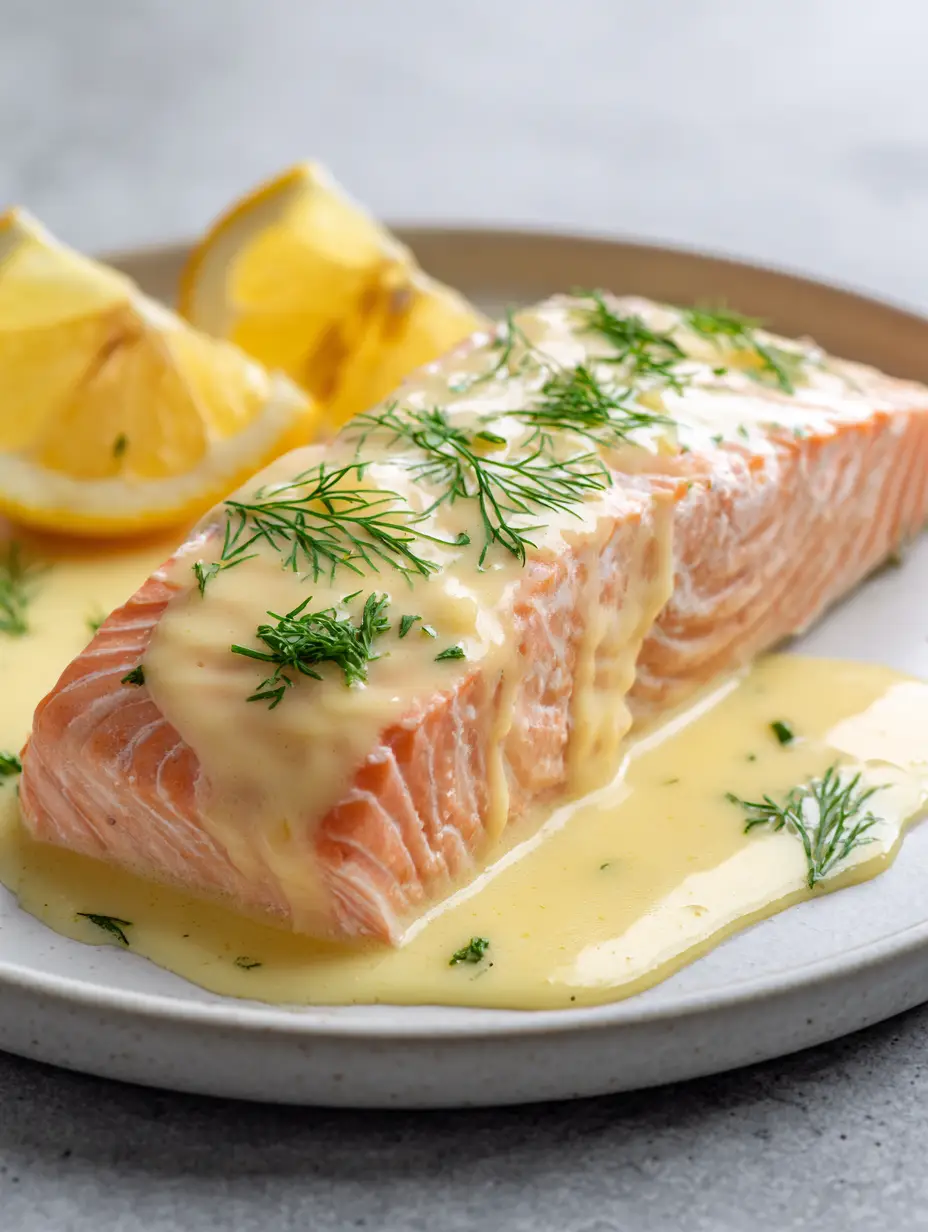
This recipe is designed to help you recreate the exact visual appeal of a high-end bistro dish right in your own kitchen. We are aiming for a moist, tender, flaky texture without a single sear mark, allowing the natural flavors of the fish to shine through. The crowning glory is a thick, glossy, pale-yellow lemon cream sauce that pools elegantly at the base of the fillet.
Whether you are hosting a formal dinner party or looking for a refined weeknight meal, this Poached Salmon with Lemon Sauce delivers on every level. The soft natural daylight of a summer afternoon is the perfect setting to enjoy this vibrant, citrus-forward entree.
Why This Silky Poached Salmon with Lemon Sauce Works
- Unrivaled Texture: By avoiding high-heat searing, the protein fibers in the salmon remain relaxed, resulting in a “melt-in-your-mouth” consistency.
- Visual Elegance: The contrast between the pale pink fish, the vibrant green dill sprigs, and the glossy yellow sauce creates a restaurant-quality presentation on a simple white ceramic plate.
- Aromatic Depth: The poaching liquid is infused with aromatics that penetrate the flesh of the fish, ensuring every bite is seasoned from the inside out.
- Luxurious Finish: The lemon cream sauce is reduced until it achieves a thick, velvety coating power that clings beautifully to the tender flakes of the salmon.
The Anatomy of a Perfect Poached Salmon with Lemon Sauce
To achieve the result seen in professional culinary photography, we must select our ingredients with a forensic eye. Every component serves a visual and structural purpose. We aren’t just making dinner; we are engineering a sensory experience.
Center-Cut Salmon Fillets: You will need 2 (6oz / 170g) center-cut salmon fillets, skin removed. This specific cut ensures even thickness, which is vital for the uniform pale pink color we desire.
Dry White Wine: 1/2 cup (120ml) of Sauvignon Blanc or Pinot Grigio adds the necessary acidity to the poaching liquid. This helps denature the proteins gently and adds a sophisticated top note to the fish.
Heavy Cream: 3/4 cup (180ml) of high-fat heavy cream is the foundation of our sauce. It provides the “thick, glossy” texture required to pool at the base of the fish without running off the plate.
Fresh Lemon: You will need 1 large lemon. Half will be juiced for the sauce, while the other half must be sliced into thin half-moons to be tucked against the side of the fillet as per our visual blueprint.
Fresh Dill: 4-5 small sprigs of fresh green dill are essential for the garnish. Dill’s feathery texture adds a delicate visual element that complements the flaky nature of the poached fish.
Cold Unsalted Butter: 2 tbsp (30g) of cold butter, whisked into the sauce at the very end, provides that signature “glossy” finish. This technique, known as monter au beurre, is the secret to a professional sheen.
Aromatic Base: 1 small shallot, thinly sliced, and 1 tsp (5g) of whole white peppercorns. We use white peppercorns instead of black to ensure the poaching liquid and sauce remain pristine and free of dark specks.
Essential Equipment for Precision Poaching
Achieving a “no-sear” finish requires the right tools to manage gentle heat distribution. You don’t need a professional kitchen, but a few specific items will make the process foolproof.
A wide, shallow sauté pan or a deep skillet is preferred over a pot. This allows the salmon fillets to sit in a single layer without being crowded, ensuring the poaching liquid covers them exactly halfway—a technique known as shallow poaching.
You will also need a fine-mesh strainer to ensure the lemon sauce is perfectly smooth. This removes any shallot bits or peppercorns, resulting in that “pale-yellow” uniform appearance described in our visual prompt. Finally, a flexible fish spatula is indispensable for lifting the delicate, flaky fillets onto the white ceramic plate without breaking them.
Step-by-Step: Engineering the Perfect Poached Salmon
1. Preparing the Aromatic Poaching Bath
In your wide skillet, combine the white wine, 1 cup (240ml) of water, sliced shallots, white peppercorns, and a pinch of salt. Bring the mixture to a gentle simmer over medium heat.
Look for “smiling” bubbles—tiny bubbles that barely break the surface. If the liquid is boiling aggressively, the salmon will become tough and lose its characteristic soft pink hue.
2. The Gentle Poaching Process
Season your salmon fillets lightly with fine sea salt. Carefully lower them into the simmering liquid. The liquid should come up about halfway the side of the fish.
Cover the pan with a tight-fitting lid or a piece of parchment paper cut to fit (a cartouche). This traps the steam, cooking the top of the fish gently while the bottom poaches in the liquid.
Poach for 6-8 minutes. Use a thermometer to check for an internal temperature of 125°F (52°C) for medium-rare or 130°F (54°C) for a firmer, flakier texture. The fish should look opaque and pale pink, with no golden or brown edges.
3. Reducing the Glossy Lemon Cream Sauce
While the salmon rests on a warm plate, strain 1/4 cup (60ml) of the poaching liquid into a small saucepan. Add the heavy cream and bring to a simmer over medium-high heat.
Reduce the mixture by half until it is thick enough to coat the back of a spoon. This should take about 5 minutes. Lower the heat to low and whisk in the lemon juice.
Remove from heat and whisk in the cold butter one cube at a time. The sauce will transform into a thick, glossy, pale-yellow emulsion. Taste and add salt if necessary, ensuring the flavor is bright and citrusy.
4. Plating for Forensic Accuracy
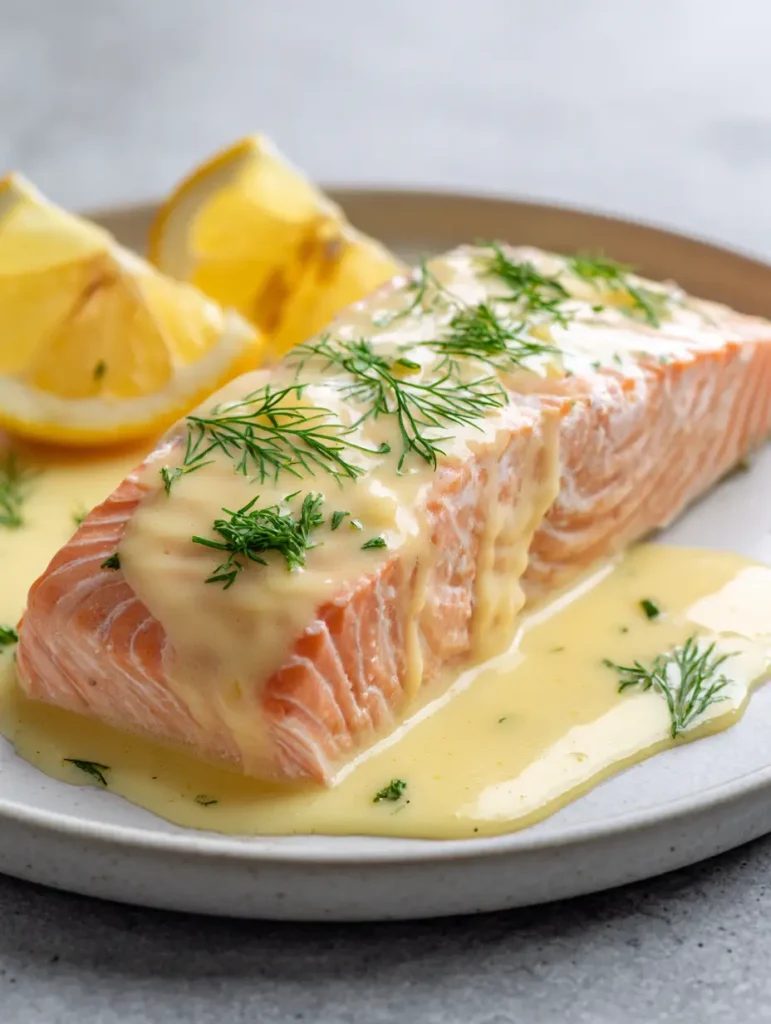
Place a single poached salmon fillet in the center of a plain white ceramic plate. Ensure the fish is positioned horizontally for the best visual impact.
Generously drizzle the lemon cream sauce over the center of the fillet. Allow it to pool slightly at the base, creating a luxurious foundation for the fish.
Garnish with several small sprigs of fresh green dill across the top. Tuck two thin half-moon lemon slices against the side of the fillet, mirroring the natural curves of the fish. The result should look like a handheld smartphone photo taken in soft daylight.
Expert Tips for Success
- Temperature Control: Never let the poaching liquid reach a rolling boil. High heat causes the albumin (the white protein) to leach out of the salmon, creating unappealing white clumps on the surface.
- The “Gloss” Factor: If your sauce looks dull, whisk in an extra teaspoon of cold butter. The emulsion is what creates that reflective, glossy surface seen in professional food photography.
- Salmon Selection: Look for “center-cut” fillets. Tail pieces are too thin and will overcook before the sauce is even started, leading to a dry texture rather than a flaky one.
- Resting is Key: Let the salmon rest for 2-3 minutes before saucing. This allows the juices to redistribute, ensuring the fish stays moist when the guest breaks into it with a fork.
Storage, Reheating, and Freezing
Poached Salmon with Lemon Sauce is best enjoyed immediately to preserve the delicate texture of the fish and the emulsion of the sauce. However, if you have leftovers, store the fish and sauce in separate airtight containers in the refrigerator for up to 2 days.
To reheat, do not use a microwave, as it will turn the salmon rubbery. Instead, place the fish in a pan with a splash of water, cover, and warm over very low heat. Re-warm the sauce separately in a small pan, whisking constantly to prevent the cream from breaking.
Freezing is not recommended for this dish. The cellular structure of poached fish does not hold up well to freezing, and the cream-based lemon sauce will likely separate and lose its glossy texture upon thawing.
What to Serve with Poached Salmon
To keep the meal elegant and balanced, pair this salmon with sides that can soak up that incredible lemon cream sauce. These Greek Lemon Potatoes offer a wonderful starchy contrast that echoes the citrus notes of the fish.
If you prefer a lighter pairing, a simple bed of sautéed greens or even some Air Fryer Veggie Chips can add a surprising and delightful crunch to the plate. For a more indulgent meal, serve the salmon atop a portion of Lemon Ricotta Spaghetti to double down on the creamy, bright flavors.
For those looking for a diverse menu, consider starting the evening with Blueberry Brie Jalapeno Poppers for a sweet and spicy appetizer that sets the stage for the refined main course.
Frequently Asked Questions About Poaching Salmon
It is best made fresh because it is an emulsion. If it sits too long or is reheated too aggressively, the butter may separate and lose its glossy finish.
This specific recipe with a warm lemon cream sauce is intended to be served warm. However, plain poached salmon is often served chilled in salads.
You can substitute with a tablespoon of white wine vinegar or simply use extra lemon juice in the water to provide the necessary acidity.
Center-cut Atlantic or King salmon fillets are best. They have a higher fat content which remains moist during the poaching process, ensuring a flaky texture.
Those clumps are albumin, a protein that pushes out when salmon is cooked too quickly or at too high a temperature. Keep your poaching liquid at a very gentle simmer to avoid this.
Poached Salmon with Lemon Sauce Recipe
Poached Salmon with Lemon Sauce: The Ultimate Flaky Dinner Recipe
Ingredients
Equipment
Instructions
- In a wide pan, combine wine, water, shallot, and peppercorns. Bring to a bare simmer over medium heat until tiny bubbles form.
- Season salmon with salt and place in the liquid. Cover and poach for 6-8 minutes until internal temperature reaches 130°F (54°C). The salmon should be pale pink and flaky.
- Strain 1/4 cup of poaching liquid into a small pot. Add heavy cream and reduce by half over medium-high heat until thick.
- Stir in lemon juice. Remove from heat and whisk in cold butter until the sauce is glossy and pale-yellow.
- Place salmon on a white plate, drizzle with sauce, and garnish with dill and lemon wedges.
Notes
Use white peppercorns to keep the sauce pristine and free of black specks.
Closing and Call to Action
Mastering the Poached Salmon with Lemon Sauce is a milestone for any home cook. It teaches the value of patience, temperature control, and the art of the emulsion. The result is a dish that is as visually stunning as it is delicious—a true testament to the beauty of fresh ingredients handled with care.
If you enjoyed this recipe, please leave a comment below and let us know how your poaching turned out! Don’t forget to sign up for our newsletter for more culinary blueprints and forensic recipe guides. Please share your creations on Pinterest and tag us so we can see your beautiful work!