







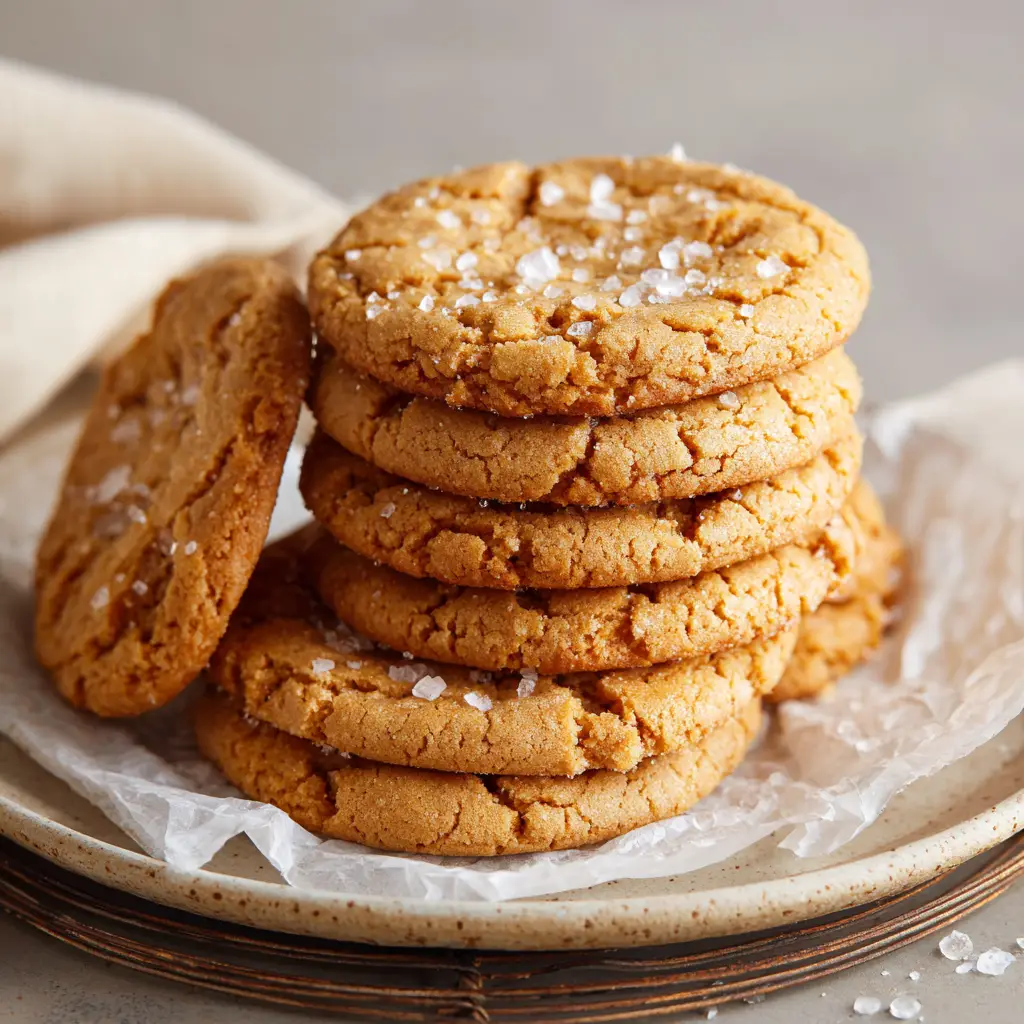
If you have been searching for the ultimate balance of sweet and savory, these freshly baked Salted Honey Cookies are about to become your new obsession. The magic lies in the contrasting textures that make every single bite an absolute dream. Imagine sinking your teeth into a soft, chewy, slightly glossy blonde center that gently gives way to a golden brown, crinkled crisp edge.
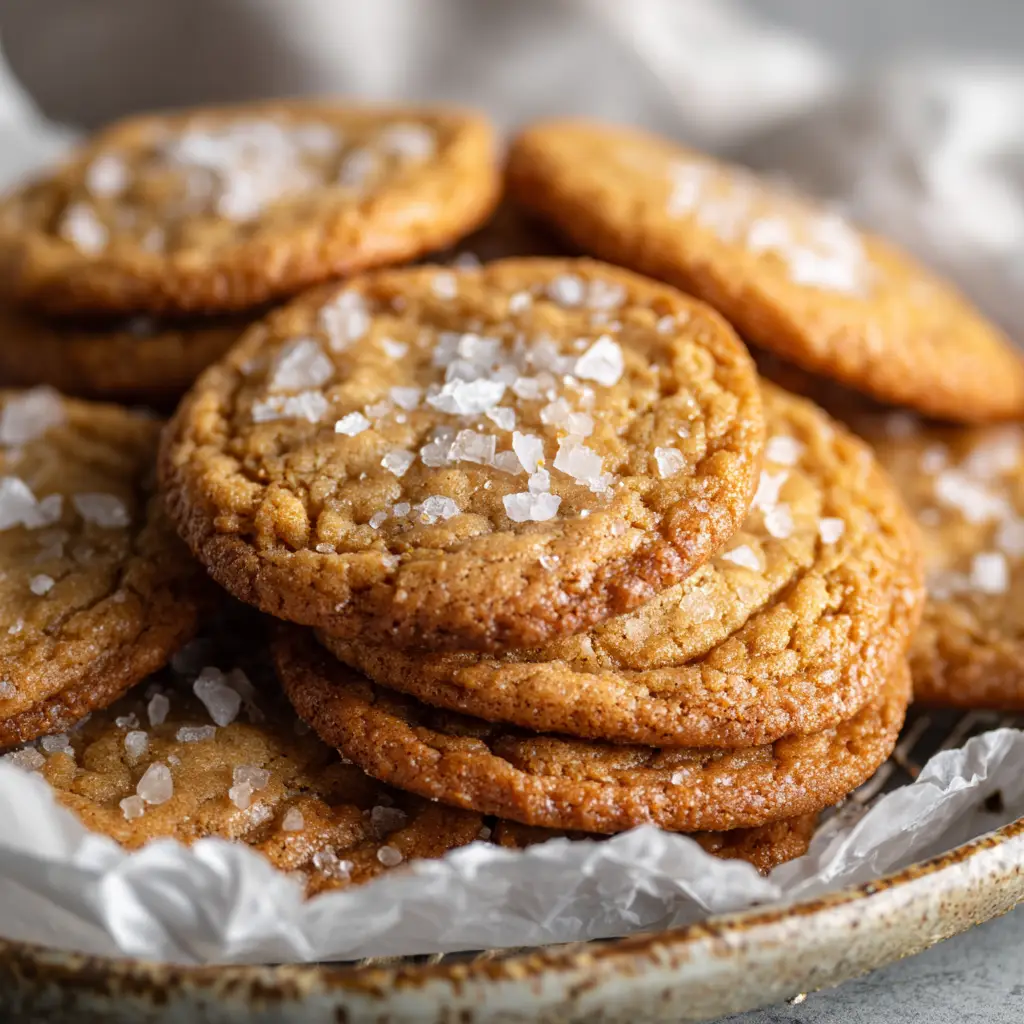
The secret to that incredible texture is the honey itself, acting as an invert sugar that locks in moisture while promoting beautiful caramelization. Generously sprinkled with large, translucent flakes of coarse sea salt right out of the oven, these cookies offer a sophisticated flavor profile. That sudden pop of salinity cuts through the rich, floral sweetness of the dough perfectly.
Whether you are stacking them on a wire cooling rack for a weekend bake sale or serving them warm on a rustic ceramic plate, these Salted Honey Cookies are a feast for the eyes and the palate. Let us dive deep into the culinary science behind achieving that picture-perfect crinkled edge and glossy center.
Why These Salted Honey Cookies Outshine the Rest
Not all cookies are created equal, and this specific recipe relies on exact culinary science to achieve a bakery-level masterpiece. By meticulously balancing the fat, sugars, and leavening agents, we create a multi-textural experience.
- Unmatched Textural Contrast: You get the satisfying crunch of golden brown crisp edges paired flawlessly with a soft, chewy, slightly glossy blonde center.
- Complex Flavor Profile: The floral notes of high-quality honey mingle with rich butter and vanilla, while the coarse flaky sea salt garnish provides a sharp, savory contrast.
- Visual Perfection: Thanks to a specific mixing and baking technique, these cookies naturally develop those highly sought-after crinkled edges.
- Extended Freshness: The natural humectant properties of honey ensure that these cookies stay incredibly soft and chewy for days after baking.
The Science Behind the Perfect Blonde Cookie Dough
To achieve the exact visual and textural results required for flawless Salted Honey Cookies, you cannot take shortcuts with your ingredients. Every single element in this recipe serves a distinct, scientific purpose.
Unsalted Butter: Using 1/2 cup (113g) of unsalted butter allows us to control the exact sodium levels in the dough. The butter must be softened to room temperature so it can properly aerate when creamed with the sugars.
Pure Liquid Honey: The star of the show requires 1/4 cup (85g) of high-quality liquid honey. Honey acts as a humectant, trapping moisture to guarantee a glossy center, while its natural sugars promote rapid browning on the edges.
Granulated Sugar: We use 1/2 cup (100g) of white granulated sugar to encourage spreading and create those iconic crisp edges. The white sugar also keeps the dough light enough to maintain a beautiful blonde cookie base.
Light Brown Sugar: Adding just 1/4 cup (50g) of packed light brown sugar introduces a hint of molasses. This contributes to the chewiness without turning the dough too dark.
Large Egg & Egg Yolk: You need 1 whole large egg (50g) and 1 additional egg yolk (18g) at room temperature. The extra yolk provides the necessary fat and emulsification to keep the center of the cookie rich, dense, and soft.
Pure Vanilla Extract: A generous 2 teaspoons (10ml) of pure vanilla extract enhances the floral notes of the honey. It rounds out the sweetness and adds depth to the overall flavor.
All-Purpose Flour: Exactly 1 3/4 cups (210g) of all-purpose flour provides the necessary gluten structure. It is sturdy enough to hold the crinkled edges but light enough to keep the center tender.
Baking Soda: We use 1/2 teaspoon (3g) of baking soda to interact with the acidic nature of the honey. This reaction causes the dough to puff up and then collapse, forming the signature crinkles.
Coarse Flaky Sea Salt: A high-quality finishing salt, like Maldon, is absolutely non-negotiable. You will need about 1 tablespoon (15g) to generously sprinkle translucent flakes over the hot cookies.
Essential Tools for Golden Brown Crisp Edges
Professional bakers know that the right equipment is just as important as the ingredients. To bake perfect Salted Honey Cookies, you will need a few standard but critical tools.
First, a heavy-duty aluminum baking sheet is essential for even heat distribution. Dark-coated pans will cause the bottoms to burn before the blonde center finishes baking.
You will also need crinkled white parchment paper to prevent sticking and insulate the bottom of the cookies. A standard 2-tablespoon spring-loaded cookie scoop ensures every dough ball is completely uniform, which is vital for even baking.
Finally, a sturdy wire cooling rack is required to stop the residual cooking process. Moving the cookies to a rack allows air to circulate, setting the crisp edges while keeping the center chewy.
Master the Dough: Step-by-Step to Chewy, Glossy Centers
Creating these Salted Honey Cookies requires a methodical approach to mixing and baking. Follow these sensory cues carefully to ensure your cookies turn out beautifully crinkled and perfectly balanced.
Creaming the Fat and Sugars
In the bowl of a stand mixer fitted with a paddle attachment, combine the softened butter, granulated sugar, and light brown sugar. Beat them together on medium-high speed for exactly 3 minutes.
You are looking for a visual change: the mixture should turn pale blonde and look visibly fluffy. This aeration process creates tiny air pockets that the baking soda will later expand.
Incorporating the Liquid Gold
Once the butter and sugars are creamed, pour in the honey and vanilla extract. Beat on medium speed for 1 minute, scraping down the sides of the bowl with a rubber spatula.
Next, add the room-temperature whole egg and the extra egg yolk. Mix just until the yellow streaks disappear. Do not overmix at this stage, or you risk introducing too much air, which can cause the cookies to deflate entirely.
Whisking the Dry Ingredients
In a separate medium bowl, whisk together the all-purpose flour, baking soda, and a pinch of fine kosher salt. Whisking ensures the leavening agent is evenly distributed throughout the flour.
Turn your mixer to the lowest speed and gradually add the dry ingredients to the wet ingredients. Stop mixing the second you no longer see dry pockets of flour to avoid developing tough gluten strands.
The Crucial Chilling Process
Cover the mixing bowl tightly with plastic wrap and place it in the refrigerator for at least 45 minutes. Chilling allows the flour to fully hydrate and solidifies the butter.
Cold dough spreads much slower in the oven. This controlled spread is exactly how you achieve a thick, soft center surrounded by thin, caramelized, and crisp edges.
Baking and Creating the Signature Crinkle
Preheat your oven to 350°F (175°C). Line two large baking sheets with parchment paper. Use your cookie scoop to portion out 2-tablespoon-sized mounds of chilled dough, spacing them 3 inches apart.
Bake for 10-12 minutes. At the 8-minute mark, open the oven and carefully lift the baking sheet a few inches, then let it drop onto the oven rack. This “pan-banging” forces the puffed cookies to deflate, creating those gorgeous crinkled edges.
Remove the cookies when the edges are a deep golden brown but the centers still look slightly blonde, puffy, and underbaked. They will continue to cook on the hot pan.
The Finishing Touch: Salting and Cooling
The very second the baking sheet comes out of the oven, generously sprinkle each cookie with large, translucent flakes of coarse sea salt. The salt will adhere perfectly to the hot, glossy surface.
Allow the cookies to rest on the baking sheet for 5 minutes to firm up. Finally, transfer them to a wire cooling rack using a thin metal spatula to cool completely.
Expert Bakery Secrets for Flawless Salted Honey Cookies
Even the most meticulously crafted recipes can benefit from a few insider tricks. Keep these expert tips in mind to troubleshoot and perfect your cookie game.
- Measure Flour by Weight: Using a digital kitchen scale to measure exactly 210g of flour prevents a dense, dry cookie. If you must use measuring cups, use the spoon-and-level method.
- Do Not Swap the Honey: The specific chemical makeup of honey provides the glossy center. Substituting maple syrup or agave will drastically alter the texture and spread.
- Watch the Oven Closely: Honey burns faster than regular sugar. Keep a close eye on the cookies during the last two minutes of baking to prevent the golden brown edges from turning black.
- Room Temperature Matters: Using cold eggs will cause the creamed butter to curdle. Always submerge cold eggs in a bowl of warm water for 5 minutes before using them.
Preserving That Soft Chewy Texture for Days
Because of the honey in the dough, these Salted Honey Cookies boast an incredibly long shelf life. To keep them fresh, allow them to cool completely before storing them in an airtight container at room temperature.
They will remain soft and chewy for up to 5 days. If you want to revive that fresh-from-the-oven warmth, simply pop a cookie in the microwave for 8-10 seconds before enjoying.
You can also freeze the unbaked cookie dough balls. Flash-freeze the mounds on a baking sheet, then transfer them to a freezer-safe zip-top bag for up to 3 months. Bake straight from frozen, adding an extra 1-2 minutes to the total baking time.
Elevate Your Dessert Spread
While these Salted Honey Cookies are phenomenal on their own with a tall glass of cold milk, they also shine as part of a larger dessert table. Curating a varied selection of treats guarantees there is something for everyone.
For a beautiful contrast of flavors and textures, try pairing them with delicate, crisp French almond cookies. The nutty profile of the almond pairs wonderfully with the sweet, floral honey.
If you prefer a brighter, more acidic counterpart, setting out a plate of zesty lemon sugar cookies is a brilliant move. The citrus will act as a palate cleanser after the rich, salty-sweet honey cookies.
To keep the honey theme going strong, you can also bake a batch of spiced salted honey cinnamon cookies. The warm spices make for a fantastic autumnal pairing.
Finally, for the chocolate lovers in the room, contrasting the blonde cookie base with some decadent gluten free chocolate cookies ensures your dessert spread hits every single craving.
Common Questions About Baking with Honey
It is not recommended. Honey acts as an invert sugar, which is scientifically responsible for creating the soft, chewy, and slightly glossy center of these cookies. Substituting it will alter both the texture and the spread.
Remove the cookies when the edges are a deep golden brown but the centers still look slightly pale, puffy, and underbaked. They will continue to set on the hot baking sheet as they cool.
Yes. Chilling the dough for at least 45 minutes allows the all-purpose flour to fully hydrate and solidifies the butter. This prevents the cookies from spreading into flat puddles while baking.
A large, translucent flaky sea salt, like Maldon, is best. Avoid standard table salt, as it will dissolve into the cookie and make the dough far too salty. Flaky salt sits on top for a perfect savory crunch.
If your cookies are too puffy, you may have skipped the pan-banging step. Dropping the baking sheet on the oven rack at the 8-minute mark forces the dough to deflate, creating those signature crinkles.
Grab Your Whisk: The Ultimate Salted Honey Cookies Recipe
Now that you understand the culinary mechanics behind the crinkly edges and glossy centers, it is time to put on your apron. This recipe delivers the exact visual and sensory experience you crave.
Follow the measurements precisely, do not skip the chilling step, and remember to have your flaky sea salt ready the moment they leave the oven. Happy baking!
Irresistible Salted Honey Cookies for a Chewy, Crispy Bite
Ingredients
Equipment
Instructions
- In the bowl of a stand mixer fitted with a paddle attachment, combine the softened butter, granulated sugar, and light brown sugar. Beat on medium-high speed for exactly 3 minutes until pale blonde and fluffy.
- Pour in the honey and vanilla extract. Beat on medium speed for 1 minute, scraping down the sides. Add the room-temperature whole egg and the extra egg yolk, mixing just until the yellow streaks disappear.
- In a separate bowl, whisk together the all-purpose flour, baking soda, and a pinch of kosher salt. Gradually add to the wet ingredients on low speed, stopping as soon as no dry pockets of flour remain.
- Cover the mixing bowl tightly with plastic wrap and place it in the refrigerator for at least 45 minutes to hydrate the flour and control spreading.
- Preheat your oven to 350°F (175°C). Line two large baking sheets with parchment paper. Scoop 2-tablespoon-sized mounds of chilled dough, spacing them 3 inches apart. Bake for 10-12 minutes.
- At the 8-minute mark, open the oven, lift the baking sheet a few inches, and drop it onto the oven rack to deflate the cookies and create crinkled edges. Remove when edges are golden brown but centers are slightly blonde and puffy.
- Immediately sprinkle each hot cookie generously with large, translucent flakes of coarse sea salt. Let rest on the pan for 5 minutes before transferring to a wire cooling rack.
Notes
Tip 2: Baking sheets must be cooled completely between batches to prevent the dough from spreading too fast.

Share Your Masterpiece and Join Our Baking Community!
There is nothing quite like the satisfaction of pulling a tray of perfectly crinkled Salted Honey Cookies out of the oven. The sweet aroma of vanilla and caramelized honey is guaranteed to draw everyone into the kitchen.
If you loved this recipe, please leave a star rating and a comment below to let me know how yours turned out! Do not forget to subscribe to our newsletter for more bakery-style recipes delivered straight to your inbox.
Love this recipe? Be sure to pin it to your favorite dessert boards and share it with your friends on Pinterest!