

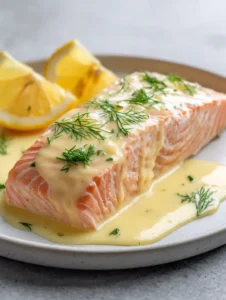



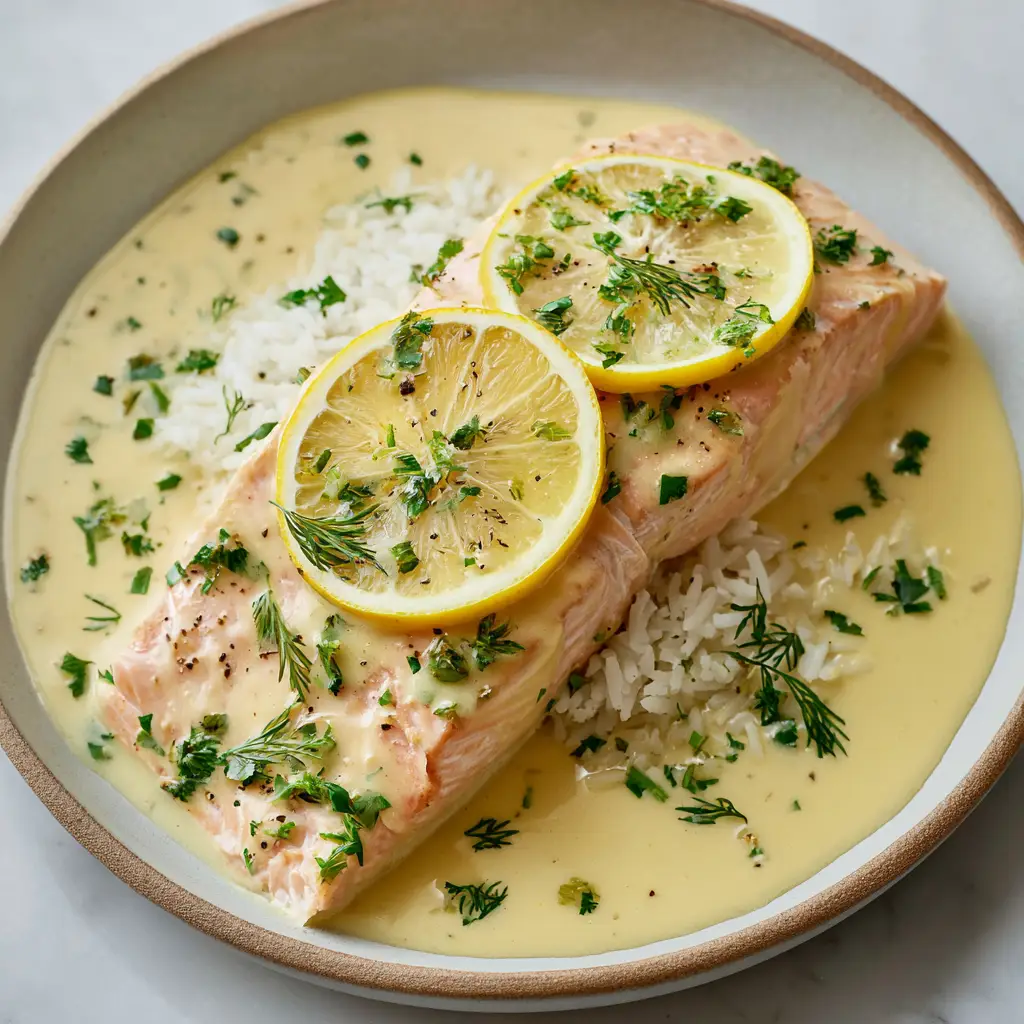
There is nothing quite as elegant yet approachable as a beautifully prepared Poached Salmon. When gently cooked in an aromatic bath, the fish transforms into a culinary masterpiece with a tender, flaky light pink texture. This technique ensures the salmon remains incredibly moist, providing the perfect canvas for rich, bright flavor profiles.
In this recipe, we pair the delicate fish with a smooth, glossy pale yellow lemon sauce that generously coats every bite. Served over a small bed of fluffy white rice, this Poached Salmon offers a deeply satisfying contrast of textures and temperatures. The bright green garnishes and translucent citrus rounds add a final layer of sensory perfection to this restaurant-quality dish.
Unlocking the Textures of this Tender Seafood Masterpiece
- Unmatched Moisture Retention: Gently simmering the fish at a low temperature prevents the proteins from seizing, guaranteeing a moist, melt-in-your-mouth bite every single time.
- Vibrant Emulsified Finish: The glossy pale yellow lemon sauce acts as an exquisite flavor bridge, cutting through the natural richness of the fish with bright, buttery acidity.
- Visual and Textural Contrast: The combination of finely minced bright green fresh dill, dry parsley flakes, and thin translucent round slices of fresh lemon provides a stunning visual pop against the simple ceramic plate.
- Absorbent Grain Base: Serving the fish over slightly visible fluffy white rice ensures that not a single drop of that luxurious citrus emulsion goes to waste.
The Culinary Building Blocks for Your Fish and Rice
Fresh Center-Cut Salmon Fillets: You will need two 6 oz (170g) portions of high-quality fish. Opt for skinless fillets to ensure even cooking and seamless presentation on the plate.
Long-Grain White Rice: Measure out 1 cup (200g) of raw rice to create the fluffy, absorbent bed for the dish. Thoroughly rinsing the grains removes excess starch, keeping them distinct and light.
Dry White Wine and Water: Combine 2 cups (470ml) of water with 1/4 cup (60ml) of crisp white wine. This forms your foundational court bouillon, infusing the fish with delicate aromatic notes as it cooks.
Cold Unsalted Butter: You will need 2 tbsp (30g) of chilled butter cut into small cubes. The cold temperature is scientifically necessary to slowly emulsify into the hot liquid, creating a thick, glossy pale yellow lemon sauce.
Fresh Lemon: Reserve 1 tbsp (15ml) of freshly squeezed juice for the sauce’s bright acidity. Additionally, cut two thin, translucent round slices of fresh lemon to act as the crowning garnish.
Vibrant Herb Blend: Prepare 1 tbsp (3g) of finely minced bright green fresh dill alongside 1 tsp (1g) of dried parsley flakes. These herbs provide a necessary earthy contrast to the rich buttery coating.
Essential Tools for Gentle Stovetop Cooking
To execute this delicate Poached Salmon, you will need a wide, shallow skillet with a tight-fitting lid. This shape allows the fillets to sit flat, ensuring they are submerged evenly in the flavorful simmering liquid.
A wide slotted spatula is equally critical for this preparation. Because the fish becomes incredibly tender and slightly broken when perfectly cooked, a specialized spatula prevents the fillet from falling apart during the transfer to the plate.
Step-by-Step Guide to Flawless Fish and Emulsified Sauce
Preparing the Bed of Grains
Begin by rinsing 1 cup (200g) of long-grain white rice under cold water until the runoff is completely clear. Transfer the rinsed grains to a small saucepan with 1.5 cups (350ml) of water and a pinch of salt.
Bring the pot to a rapid boil, then immediately reduce the heat to the lowest setting and cover with a tight lid. Let it steam undisturbed for 15 minutes until all liquid is absorbed, yielding a perfectly fluffy white rice base.
Infusing the Stovetop Bath
In your wide skillet, combine 2 cups (470ml) of water, 1/4 cup (60ml) of dry white wine, and a heavy pinch of kosher salt. Bring this mixture to a gentle simmer over medium heat.
You want to see small, champagne-like bubbles barely breaking the surface. A rolling boil will agitate the delicate proteins and ruin the smooth texture of your fish.
Achieving the Perfect Flaky Pink Center
Gently lower your salmon fillets into the simmering liquid, ensuring they are at least halfway submerged. Cover the skillet tightly and let the fish poach for exactly 6 to 8 minutes.
Carefully monitor the visual cues: the salmon reveals a tender, flaky light pink texture where slightly broken when it reaches an internal temperature of 135°F (57°C). Use your slotted spatula to carefully transfer the cooked fillets to a clean plate and tent with foil.
Whisking the Rich Citrus Emulsion
Increase the stovetop heat to high and boil the remaining poaching liquid until it reduces down to about 2 tablespoons (30ml). Remove the skillet completely from the heat source.
Briskly whisk in 1 tbsp (15ml) of lemon juice, followed immediately by your 2 tbsp (30g) of cold unsalted butter, adding one cube at a time. The rapid agitation and cold fat will magically bind the liquid into a smooth, glossy pale yellow lemon sauce.
Plating for Maximum Visual Appeal
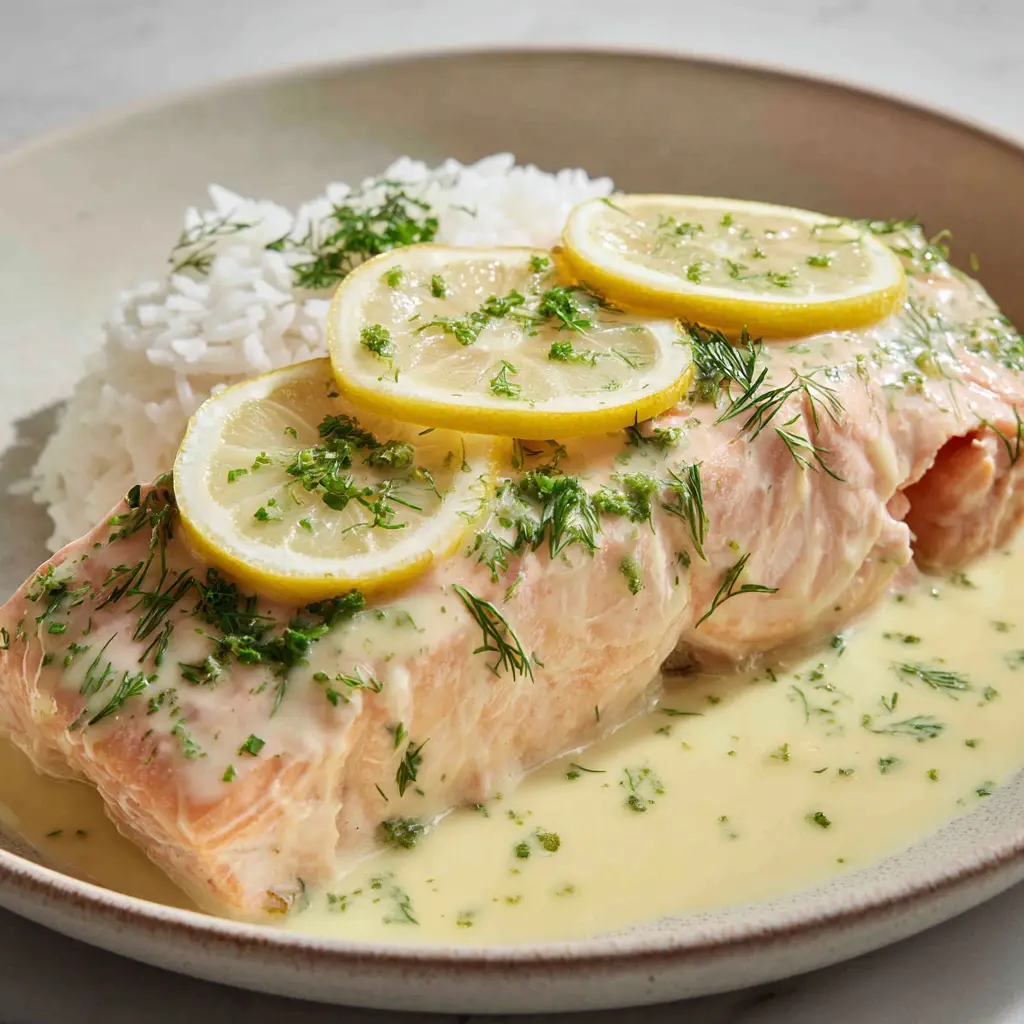
Select a simple ceramic plate and spoon down a small bed of your fluffy white rice. Carefully rest the thick, moist poached salmon fillet directly on top of the grains, leaving the edges of the rice slightly visible underneath.
Generously ladle the warm citrus butter emulsion over the fish, allowing it to cascade down the sides. Finally, garnish the peak of the fillet with your two thin, translucent round slices of fresh lemon, and scatter the entire dish with the minced fresh dill and parsley flakes.
Pro Strategies for Restaurant-Quality Results
- Mind the Temperature: Never allow your poaching liquid to reach a rolling boil. A harsh boil will cause the muscle fibers to contract rapidly, expelling a white protein called albumin and resulting in dry fish.
- Butter Temperature is Crucial: If your butter is warm, it will melt into an oily slick rather than emulsifying. Always use ice-cold butter cubes for a truly glossy sauce.
- Rest the Fish: Letting the cooked fillet rest under foil for two minutes allows the internal juices to redistribute, ensuring a perfectly moist bite.
- Check for Doneness Early: Start checking your fish at the 5-minute mark. You want an opaque exterior with a slightly translucent, light pink core for the best mouthfeel.
Maximizing Freshness for Leftover Seafood
Store any remaining Poached Salmon and rice in separate airtight glass containers in the refrigerator for up to two days. Keeping the components isolated prevents the rice from becoming overly saturated with the citrus sauce.
To reheat without drying out the delicate fish, place the salmon in a covered skillet over medium-low heat with a splash of water. Steam it gently for 3-4 minutes until just warmed through, avoiding the harsh radiation of a microwave.
Inspired Pairings to Complete Your Menu
While this dish stands beautifully on its own, expanding your meal with complementary flavors elevates the dining experience. If you love bold, zesty profiles, our chipotle honey salmon bowls offer an incredible variation for your weekly meal prep.
For those hosting a larger dinner party, consider serving this delicate seafood alongside a hearty, comforting side like our broccoli cheese rice casserole. If you have extra seafood on hand and want a fun appetizer, you cannot go wrong with our crispy, savory salmon patties. Additionally, if pasta is your preferred side, the bright acidity of this fish pairs beautifully with a simple lemon garlic shrimp pasta.
Resolving Common Fish Cooking Queries
Yes, but you must completely thaw the fillets in the refrigerator overnight before poaching. Cooking from frozen will drastically alter the cooking time and often results in an unevenly cooked, tough exterior.
It is highly recommended to use skinless fillets for this specific presentation. Removing the skin ensures the fish sits flat, cooks evenly, and absorbs the maximum amount of flavor from the aromatic broth.
Poached Salmon is done when the internal temperature reaches 135°F (57°C). Visually, the fish should reveal a tender, flaky light pink texture when gently pressed or slightly broken with a fork.
That white substance is called albumin, a liquid protein naturally found in the fish. If your poaching liquid is at a rolling boil rather than a gentle simmer, the rapid heat causes the muscle fibers to contract quickly, squeezing the albumin out to the surface.
A broken or oily sauce occurs when the butter is too warm or the heat is too high. Always remove the skillet from the heat source entirely before briskly whisking in ice-cold cubes of butter to create a stable emulsion.
The Ultimate Citrus Butter Seafood Recipe Card
Perfectly Tender Poached Salmon with Glossy Lemon Sauce
Ingredients
Equipment
Instructions
- Rinse 1 cup (200g) of long-grain white rice until water runs clear. Simmer in 1.5 cups (350ml) of water with a pinch of salt for 15 minutes in a covered saucepan until fluffy.
- In a wide skillet, combine 2 cups (470ml) water, 1/4 cup (60ml) white wine, and a pinch of salt. Bring to a very gentle simmer with tiny bubbles.
- Gently place the salmon fillets in the simmering liquid. Cover tightly and poach for 6 to 8 minutes until the internal temperature reaches 135°F (57°C) and the flesh is light pink and flaky.
- Remove the fish. Boil the remaining poaching liquid on high until reduced to 2 tbsp (30ml). Remove from heat. Whisk in 1 tbsp (15ml) lemon juice, then vigorously whisk in 2 tbsp (30g) cold butter cubes until a glossy pale yellow emulsion forms.
- Place the fish over a small bed of the fluffy white rice. Generously pour the glossy lemon sauce over the top. Garnish with two thin slices of fresh lemon, minced dill, and parsley flakes.
Notes
Never allow the poaching liquid to reach a rolling boil, as it will dry out the fish.

Join Our Community of Home Chefs
If you successfully master this incredibly tender Poached Salmon, we want to hear about your culinary triumph! Leave a star rating and a comment below detailing how your glossy lemon emulsion turned out.
Do not forget to subscribe to our newsletter for more restaurant-quality techniques delivered straight to your inbox. Be sure to share your beautiful plate photos and save this recipe to Pinterest so you always have it on hand!