







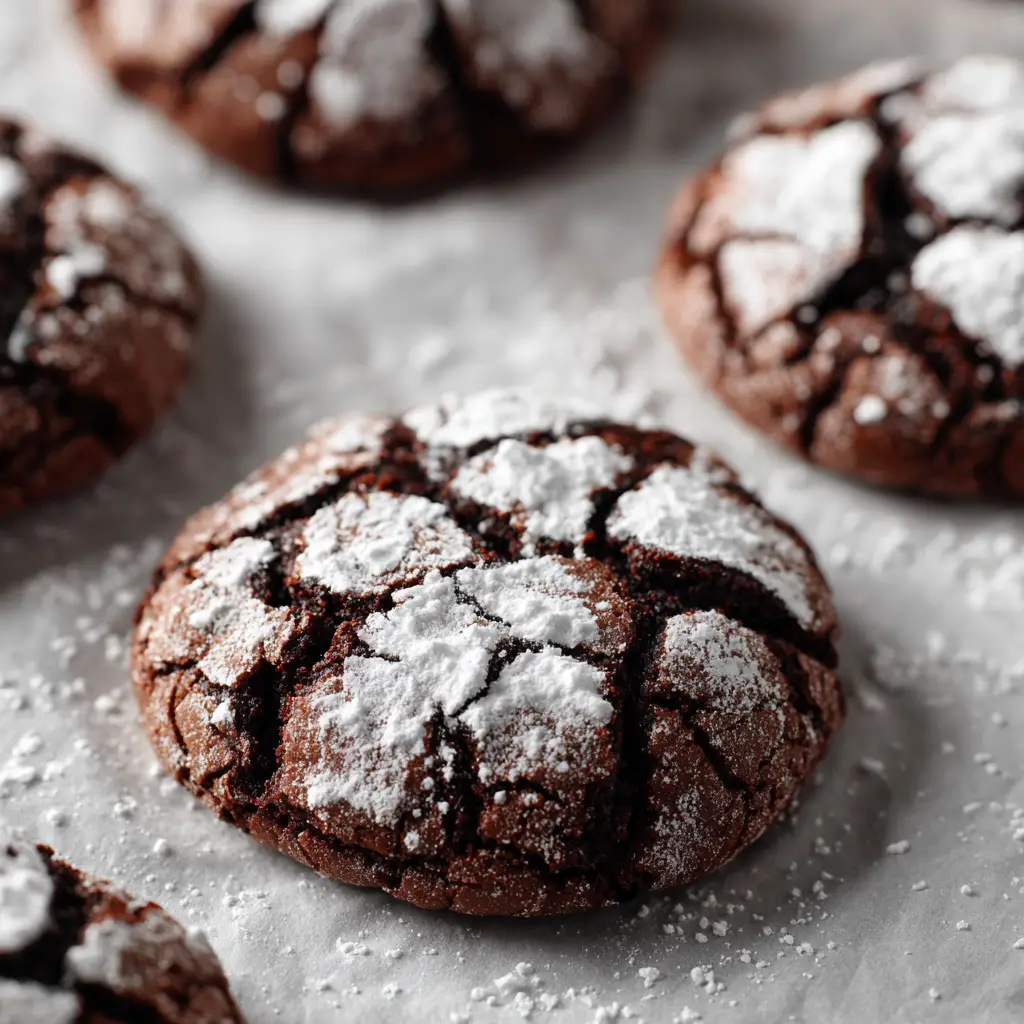
There is something inherently magical about pulling a tray of freshly baked Chocolate Crinkle Cookies out of the oven. The visual contrast alone is enough to make your mouth water before you even take a bite. These cookies feature a deep, dark brown, dense, and fudgy baked chocolate base that promises an intense cocoa experience. The surface is generously dusted with a thick, uneven layer of bright white powdered sugar, striking a beautiful, snowy contrast.
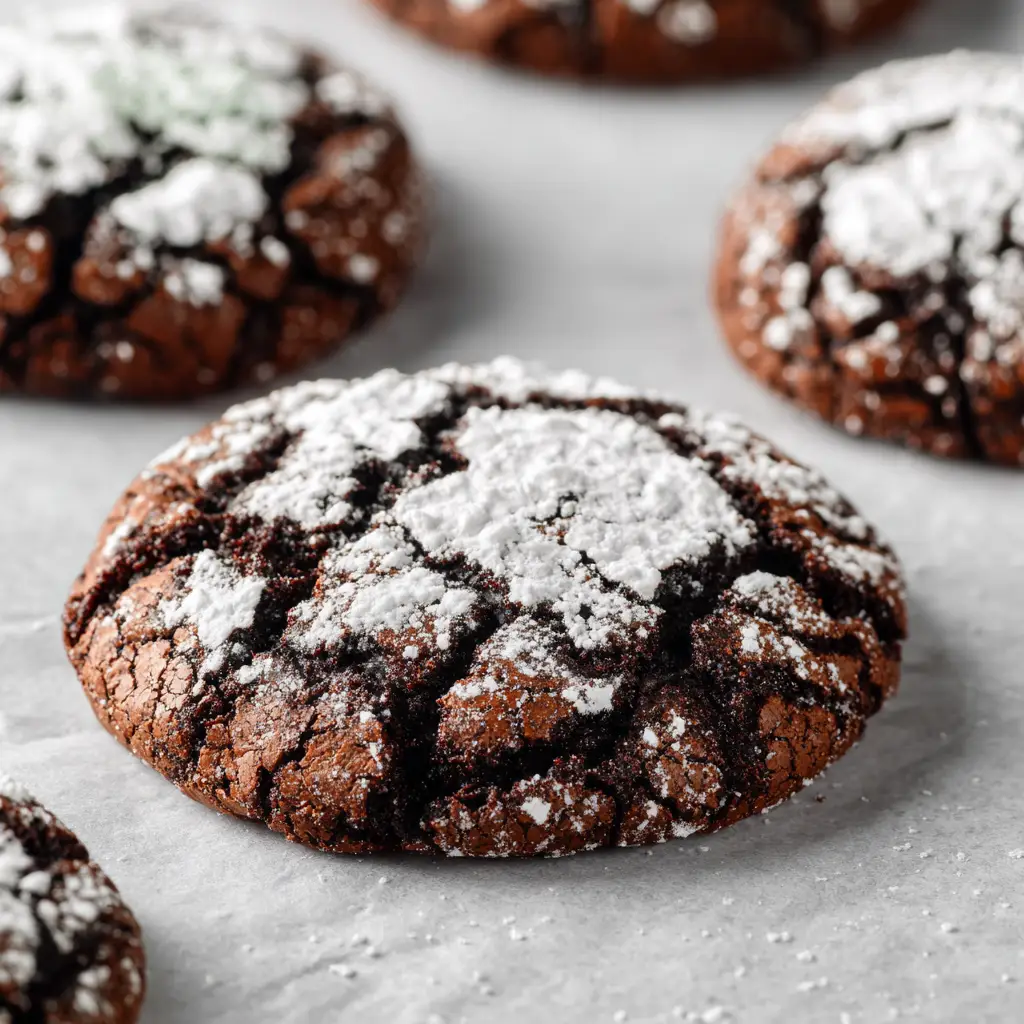
As they bake, the cookies expand, breaking up that heavy powdered sugar coating with deep, natural cracks. These crevices beautifully expose the moist, dark chocolate interior, signaling a perfect bake. The edges are slightly firm to the touch, providing a satisfying initial bite, while the centers remain unimaginably soft and chewy.
If you have been searching for a bakery-quality cookie that delivers on both texture and visual appeal, this is the ultimate recipe. By utilizing specific culinary techniques—like double-rolling your cookie dough and choosing the right type of cocoa—you can achieve that picture-perfect crinkle every single time.
Why You’ll Love This Recipe
- Unmatched Fudgy Texture: Unlike cakey alternatives, this recipe is engineered with the perfect fat-to-flour ratio to guarantee a moist, brownie-like center.
- Flawless Visual Appeal: The deep, natural cracks exposing the dark chocolate interior look incredibly professional and rustic.
- No Melted Sugar Coating: A secret double-coating technique ensures your bright white powdered sugar stays thick and vivid, never melting into the dough.
- Intense Chocolate Flavor: By blooming the cocoa powder, we unlock a deeply rich, almost espresso-like chocolate profile.
- Make-Ahead Friendly: The dough requires chilling, making it the perfect prep-ahead dessert for holidays and dinner parties.
The Science of the Perfect Crinkle
Achieving the quintessential crinkle cookie is an exercise in culinary science. The magic happens when the exterior of the cookie dries out and sets quickly in the hot oven. As the leavening agents activate, the soft interior continues to expand, tearing the set exterior and creating those iconic, snowy fault lines.
To force this reaction, chilling the dough is absolutely mandatory. Cold dough takes longer to spread, giving the surface sugar time to dry and crack rather than just melting away. It also concentrates the flavors, resulting in a much deeper, richer chocolate profile.
Furthermore, the heavy white powdered sugar coating is often the most frustrating part for home bakers. Powdered sugar tends to absorb moisture from the dough, disappearing in the oven. The solution? A preliminary roll in granulated sugar creates an invisible moisture barrier, preserving the bright white powdered sugar layer perfectly.
Ingredients & Substitutions
Unsweetened Dutch-Process Cocoa Powder: This is the crucial foundation for achieving that deep, dark brown, dense, and fudgy baked chocolate base. Dutch-process cocoa is neutralized, offering a smoother, more intense flavor and darker color than standard natural cocoa.
All-Purpose Flour: You will need 1 cup (120g) of all-purpose flour to provide the exact amount of structure needed. Too much flour will result in a dry, cake-like texture, while too little will cause the cookies to spread into flat puddles.
Baking Powder: We rely on 1 teaspoon (4g) of baking powder to encourage the cookies to puff up and spread outward in the oven. This chemical leavening is what physically tears the powdered sugar coating to form deep, natural cracks.
Salt: A mere 1/2 teaspoon (3g) of fine sea salt enhances the overall flavor profile. It suppresses bitterness from the dark cocoa and elevates the sweet and buttery notes.
Unsalted Butter: Using 1/2 cup (113g) of melted unsalted butter provides the necessary fat for a chewy, fudgy center. Melted butter specifically encourages a denser, brownie-like crumb rather than an airy one.
Granulated Sugar (For the Dough): We use 1/2 cup (100g) of granulated sugar inside the dough to help tenderize the cookie and create slightly firm, crispy edges. It also assists in the spread of the cookie as it melts.
Light Brown Sugar: Adding 1/2 cup (100g) of firmly packed light brown sugar brings essential molasses and moisture to the dough. This is the secret to ensuring the centers stay incredibly soft and chewy for days.
Large Eggs: Two large eggs (about 100g total), brought to room temperature, act as the binding agent. They provide structure and additional moisture to the thick dough.
Pure Vanilla Extract: A generous 2 teaspoons (10ml) of high-quality pure vanilla extract rounds out the chocolate flavors. Vanilla acts similarly to salt in dessert, elevating the primary flavors.
Granulated Sugar (For Rolling): You need 1/4 cup (50g) of granulated sugar to create a primary moisture barrier on the outside of the dough balls. This essential step stops the dough from absorbing the final snowy coating.
Powdered Sugar (For Rolling): A heavy 1 cup (120g) of powdered (confectioners’) sugar creates the thick, uneven layer of bright white coating. Be extremely generous when rolling to ensure a stark contrast against the dark chocolate interior.
Equipment Needed
Creating these perfect cookies does not require a complicated kitchen setup. First, you will need a standard light-colored aluminum baking pan. Light pans reflect heat evenly, preventing the bottoms of your cookies from scorching before the centers finish baking.
You will also want to line your baking pan with a sheet of high-quality parchment paper. This prevents the powdered sugar from sticking and burning onto the pan. A medium-sized cookie scoop (about 1.5 tablespoons capacity) is vital for ensuring perfectly uniform dough balls that bake at the exact same rate.
Finally, utilize two separate shallow bowls for your rolling station. One bowl will hold your granulated sugar, and the second will hold your heavily sifted powdered sugar.
Step-by-Step Instructions
1. Whisk the Dry Ingredients
In a medium mixing bowl, combine 1 cup (120g) of all-purpose flour, 1/2 cup (42g) of Dutch-process cocoa powder, 1 teaspoon (4g) of baking powder, and 1/2 teaspoon (3g) of fine salt. Use a whisk to vigorously blend these together. Ensuring the baking powder is evenly distributed is critical for even, natural cracks across every cookie.
2. Mix the Wet Ingredients
In a separate, larger bowl, whisk together the 1/2 cup (113g) of melted unsalted butter, 1/2 cup (100g) granulated sugar, and 1/2 cup (100g) light brown sugar. Whisk for about one minute until the mixture looks glossy and slightly thickened. Add the two large, room-temperature eggs and the 2 teaspoons (10ml) of vanilla extract, whisking until the batter is completely smooth and cohesive.
3. Combine to Form the Dough
Pour the dry flour and cocoa mixture into the wet ingredients. Switch to a silicone spatula or wooden spoon to gently fold the mixture together. Stop mixing the exact moment you no longer see streaks of dry flour to prevent overworking the gluten. The resulting dough will be exceptionally sticky, dense, and resemble thick brownie batter.
4. Chill the Dough Thoroughly
Cover the bowl tightly with plastic wrap, pressing it down slightly to prevent air exposure. Place the bowl in the refrigerator to chill for an absolute minimum of 2 hours, or ideally overnight. You want the dough to be incredibly firm to the touch; this chilling process is what guarantees a thick cookie with a fudgy center rather than a flat, crispy one.
5. Prepare the Rolling Station
Once the dough is properly chilled, preheat your oven to 350°F (175°C). Line your light baking pan with a sheet of parchment paper. Pour the remaining 1/4 cup (50g) of granulated sugar into one small, shallow bowl, and the 1 cup (120g) of powdered sugar into a second bowl.
6. Scoop and Double Roll
Using your cookie scoop, portion out the firm dough into 1.5-tablespoon-sized balls. Roll the dough briefly between your palms to smooth the edges. First, drop the dough ball into the granulated sugar, tossing it until fully coated. Next, immediately transfer it to the powdered sugar bowl. Roll it around generously until it is encased in a thick, uneven layer of bright white powdered sugar. Do not shake off the excess.
7. Bake to Visual Perfection
Place the heavily coated dough balls onto the prepared baking pan, spacing them about 2 inches (5cm) apart. Bake on the middle rack for exactly 11 to 12 minutes. You are looking for specific visual cues: the surface should be broken up by deep, natural cracks exposing the moist dark chocolate interior, and the edges should look slightly firm and set. The centers will still look underbaked and soft.
8. Cool and Set
Remove the pan from the oven immediately. Leave the cookies to rest on the hot baking pan for 5 minutes; the residual heat will gently finish cooking the chewy centers. After 5 minutes, carefully transfer the cookies to a wire cooling rack to cool completely. The contrast between the neutral background of the parchment and the striking cookies will be stunning.
Expert Tips for Success
- Sift Your Cocoa Powder: Dutch-process cocoa is notoriously lumpy. Sifting it alongside your flour ensures there are no pockets of bitter, dry cocoa hiding in your baked cookies.
- Do Not Skip the Granulated Sugar: This is the ultimate baker’s secret. The granulated sugar layer creates a moisture shield so the heavy white powdered sugar coating stays completely pristine and intact during the baking process.
- Patience with Chilling: If your dough feels soft while scooping, pop it back in the fridge for 20 minutes. Warm dough spreads too fast, resulting in thin cookies that lack deep, dramatic cracks.
- Underbake for Fudginess: To achieve edges that are slightly firm with soft, chewy centers, you must pull them from the oven while the centers still look slightly gooey. They will firm up perfectly as they cool on the baking sheet.
- Pack on the Powdered Sugar: When rolling the final coating, press the powdered sugar gently into the dough. A generous, thick, uneven layer is what creates the best visual contrast once baked.
Storage & Reheating/Freezing
To keep these chocolate crinkle cookies incredibly soft and chewy, store them in an airtight container at room temperature. They will retain their moist, dark chocolate interior for up to 5 days. Be sure to place a layer of wax or parchment paper between stacked cookies to prevent the powdered sugar coating from smudging.
If you wish to freeze the baked cookies, allow them to cool completely before placing them in a freezer-safe zip-top bag. They can be frozen for up to 3 months. Thaw them at room temperature for an hour before serving. However, for the most striking visual appearance, it is best to freeze the unbaked dough balls. Roll the pre-scooped dough balls in the sugars immediately before baking straight from frozen, adding 1-2 minutes to the total bake time.
What to Serve With This
These rich, dense cookies are practically begging to be paired with complementary flavors and beverages. A cold glass of whole milk is traditional, but if you want to elevate your dessert table, there are several incredible pairings to consider.
For an elegant dessert spread, serve these chocolate cookies alongside a silky earl grey panna cotta. The floral notes of the tea beautifully cut through the intense fudginess of the dark chocolate base. Alternatively, if you are hosting a festive gathering, these look magnificent plated next to white chocolate raspberry fudge and vibrant raspberry coconut magic bars.
If you are serving a hearty dinner beforehand, such as a decadent steak au poivre, these crinkle cookies provide the ideal, fuss-free chocolate finish to a heavy meal. You can also mix up your cookie platter by pairing them with dark chocolate orange shortbread cookies to highlight different textural contrasts.
For a grand holiday dessert buffet, surround your crinkle cookies with slices of lemon blueberry pound cake and decadent caramel brownie cheesecake. The stark white and dark brown contrast of the crinkle cookies will visually anchor the table, making it impossible for your guests to resist.
Frequently Asked Questions
Yes! You can portion the dough into balls and freeze them in an airtight container for up to 3 months. When ready to bake, roll the frozen dough balls in granulated and powdered sugar, and simply add 1-2 minutes to your overall baking time.
While you can use natural cocoa powder, Dutch-process is highly recommended for this recipe. It is neutralized, resulting in the deep, dark brown color and intensely rich, smooth chocolate flavor associated with bakery-style crinkle cookies.
The cookies are done when the edges look slightly firm and the powdered sugar coating has broken up with deep cracks revealing the dark chocolate interior. The centers will still look incredibly soft and slightly underbaked, but will firm up as they cool on the hot pan.
Powdered sugar melts when it absorbs moisture from the dough. To prevent this, always double-roll your cookie dough: first in granulated sugar to create a moisture barrier, and then generously in the powdered sugar.
Cookies fail to crack properly if the dough isn’t chilled enough, or if your baking powder is expired. Thoroughly chilled dough allows the exterior to set in the hot oven before the interior expands, naturally tearing the surface to create deep cracks.
Closing & Subscribe
These dark chocolate crinkle cookies are a triumph of texture and flavor, combining a brownie-like fudgy center with an irresistibly cracked, sugary exterior. Master the simple double-rolling technique, and you will have a stunning, bakery-worthy dessert in your repertoire that impresses every time.
If you baked a batch of these beautiful cookies, I would love to hear about it! Please leave a comment and a 5-star rating below to let me know how they turned out. Do not forget to subscribe to our weekly newsletter for more incredibly detailed, foolproof recipes delivered straight to your inbox.

Recipe Card
Decadent Dark Chocolate Crinkle Cookies
Ingredients
Equipment
Instructions
- In a medium mixing bowl, vigorously whisk together the all-purpose flour, Dutch-process cocoa powder, baking powder, and fine sea salt until evenly distributed.
- In a larger bowl, whisk the melted unsalted butter, granulated sugar, and light brown sugar for about one minute until glossy. Add the eggs and vanilla extract, whisking until smooth.
- Fold the dry ingredients into the wet ingredients using a silicone spatula. Stop mixing as soon as no dry streaks remain to prevent overworking the dense dough.
- Cover the bowl tightly with plastic wrap and chill in the refrigerator for a minimum of 2 hours, or until incredibly firm.
- Preheat your oven to 350°F (175°C). Line a baking pan with parchment paper. Place the granulated sugar and powdered sugar into two separate shallow bowls.
- Scoop 1.5-tablespoon-sized balls of dough. Roll first in the granulated sugar to create a moisture barrier, then roll generously in the powdered sugar until heavily coated.
- Place the coated dough balls 2 inches apart on the baking pan. Bake for 11 to 12 minutes until deep cracks expose the dark interior and edges are slightly firm.
- Allow the cookies to rest on the hot baking pan for 5 minutes before transferring them to a wire rack to cool completely.
Notes
Tip 2: Do not skip rolling in granulated sugar first; it keeps the powdered sugar layer bright white and prevents melting.
Tip 3: The dough must be thoroughly chilled to ensure the cookies crack deeply rather than spreading flat.