









There is nothing quite like slicing into a freshly baked loaf of Pesto Parmesan Sourdough. Picture a thick slice of artisan sourdough bread resting against a whole rustic loaf on a wooden cutting board. The room fills with the aroma of toasted garlic, sharp cheese, and sweet basil.
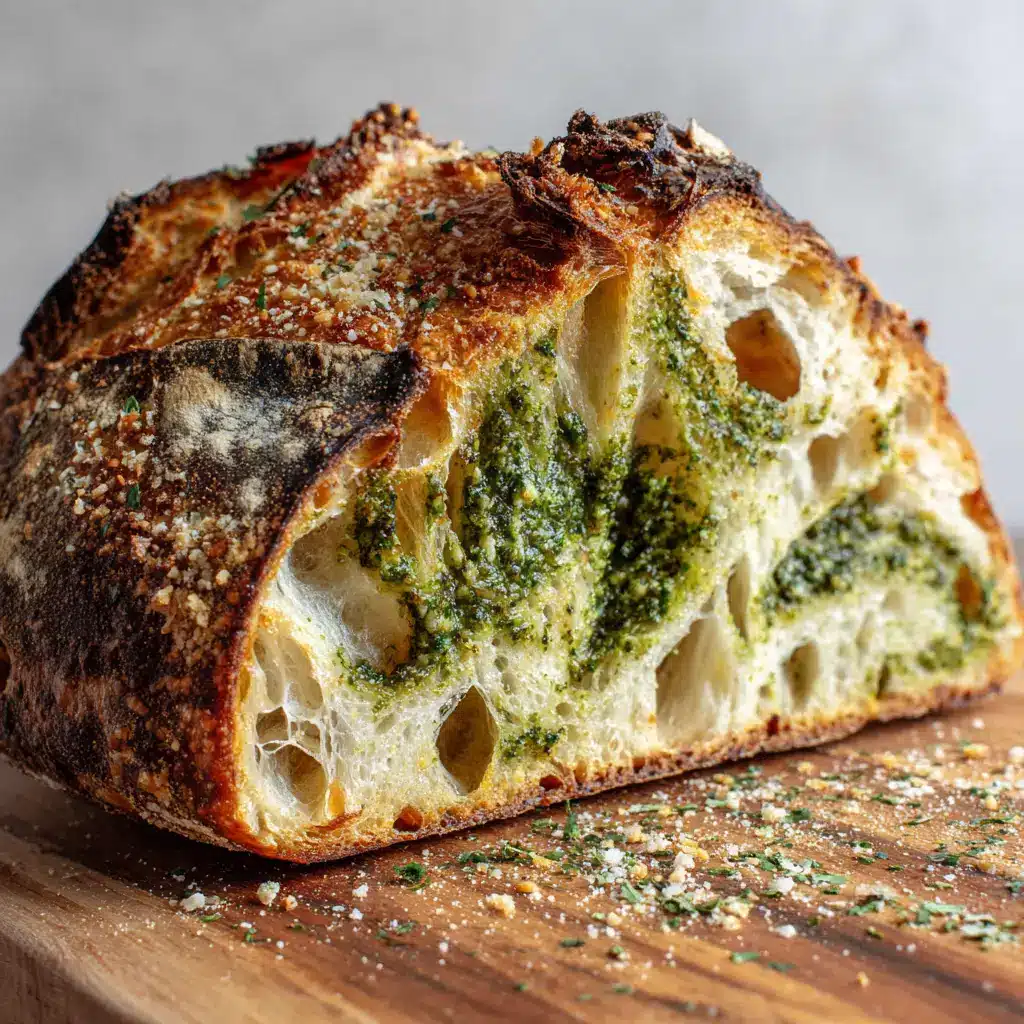
This isn’t your average loaf of bread. The crumb is beautifully chewy and open, featuring thick, vibrant dark green swirls of basil pesto baked right into the dough. Every bite offers pockets of melted, semi-translucent parmesan cheese that contrast perfectly with the tangy sourdough base.
If you love a bread with serious texture, this recipe delivers. The crust bakes up thick, blistered, and golden-brown in a hot Dutch oven. Best of all, it features a crusted layer of baked parmesan cheese and tiny green herb flakes right on top!
Why You’ll Love This Recipe
- Vibrant Pesto Swirls: Lamination folds trap thick, dark green swirls of basil pesto inside the dough for a stunning visual and flavor punch.
- Melted Cheese Pockets: Cubed parmesan creates gooey, semi-translucent pockets and golden toasted cheese bits embedded throughout the crumb.
- Blistered, Chewy Crust: A cold overnight fermentation ensures a naturally blistered golden-brown crust with a professional artisan chew.
- Crispy Cheese Topping: A heavy dusting of grated parmesan and green herbs right before baking forms an irresistible savory cheese crust.
Ingredients & Substitutions
To achieve this bakery-level Pesto Parmesan Sourdough, you need the right balance of foundational bread ingredients and flavorful mix-ins. Precise hydration is key when adding oily ingredients like pesto.
Active Sourdough Starter: You will need 1/2 cup (100g) of bubbly, active sourdough starter. This foundational ingredient provides the essential wild yeast for the rise and the signature tangy flavor.
Bread Flour: Use 3 3/4 cups (450g) of high-protein bread flour. The higher gluten content is scientifically required to trap the fermentation gases and create that open, chewy bread crumb.
Warm Water: You need 1 1/3 cups (325ml) of filtered warm water. This provides approximately 72% hydration, which is the perfect sweet spot for an open crumb that can still support heavy inclusions.
Fine Sea Salt: Add 2 tsp (10g) of fine sea salt. Salt tightens the gluten network for structural integrity and dramatically enhances the flavor of the wheat.
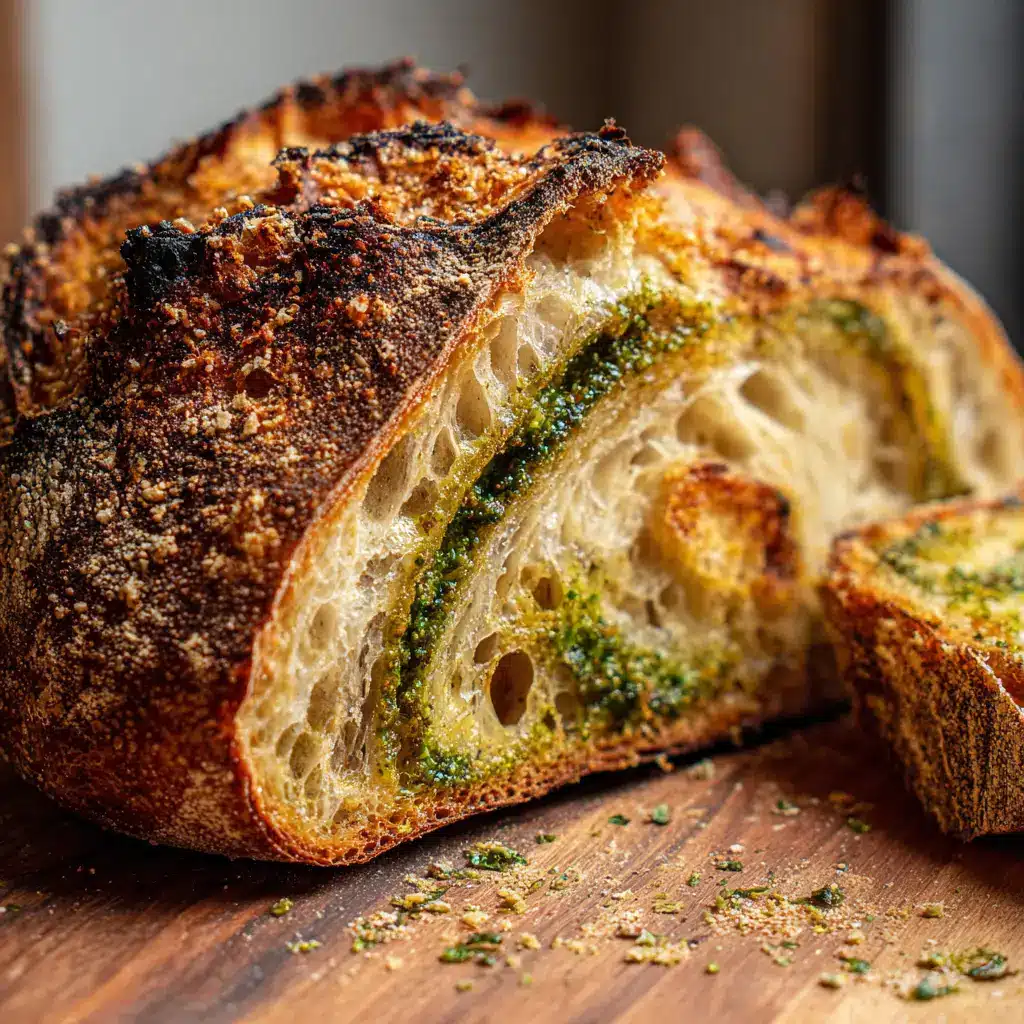
Thick Basil Pesto: Use 1/3 cup (80g) of thick, high-quality basil pesto. Drain any excess oil before using so the moisture doesn’t weigh down the dough, ensuring vibrant green swirls.
Cubed Parmesan Cheese: Measure out 1 cup (100g) of semi-hard parmesan cheese cut into small cubes. These cubes melt during baking, creating the semi-translucent pockets and toasted cheese bits embedded in the bread.
Grated Parmesan Cheese: You’ll need 1/4 cup (30g) of finely grated parmesan. This is sprinkled onto the scored dough just before baking to create the crusted layer of baked cheese on top.
Dried Green Herbs: Use 1 tsp (2g) of dried parsley or Italian seasoning. Scattering these tiny green herb flakes over the top enhances the rustic, artisanal visual appeal of the crust.
Equipment Needed
- Cast Iron Dutch Oven: Essential for trapping steam to create a thick, blistered golden-brown crust.
- Digital Kitchen Scale: Crucial for accurate metric measurements, guaranteeing proper dough hydration.
- Banneton (Proofing Basket): Helps the loaf maintain its structure during the long overnight cold retard.
- Bread Lame or Razor Blade: Needed to cleanly score the dough, controlling the oven spring.
Step-by-Step Instructions
1. Mix the Dough and Autolyse
In a large mixing bowl, whisk together the warm water and active sourdough starter until the liquid looks milky. Add the bread flour and mix by hand until a shaggy, stiff dough forms with no dry spots remaining. Cover the bowl with a damp towel and let it rest for 45 minutes.
This resting period, called the autolyse, hydrates the flour and kickstarts gluten development. It is a critical invisible step to ensure an open, chewy crumb.
2. Add Salt and Bulk Fermentation
After the rest, sprinkle the fine sea salt over the dough. Dimple the salt into the dough with wet fingers, then knead gently for 3-5 minutes until the salt is fully absorbed and the dough feels smooth. Cover the bowl and let the dough rest in a warm spot (about 75°F or 24°C) for 4 to 5 hours.
3. Perform Stretch and Folds
During the first 2 hours of bulk fermentation, perform a series of stretch and folds every 30 minutes. Grab the edge of the dough, pull it upward until you feel resistance, and fold it over the center. Rotate the bowl and repeat four times per session.
This technique builds incredible structural strength. You will visually notice the dough becoming smoother and more elastic after each set.
4. Lamination and Adding Inclusions
Turn the dough out onto a lightly misted countertop. Gently stretch the dough outward from the center into a large, thin rectangle, being careful not to tear it. Spread the thick basil pesto evenly over the surface, creating the base for your vibrant dark green swirls.
Scatter the cubed parmesan cheese evenly across the pesto layer. Fold the right third of the dough toward the center, then fold the left third over that. Roll the dough up from the bottom into a tight package to trap the cheese pockets.
5. Final Shaping and Cold Retard
Let the folded dough rest for 30 minutes. Gently shape it into a tight, round boule or an oval batard, creating surface tension by pulling the dough toward yourself on the counter. Place the shaped loaf seam-side up into a rice-flour dusted banneton.
Cover the banneton with a plastic bag and place it in the refrigerator for 12 to 16 hours. This cold retard slows down fermentation, which is scientifically necessary to develop complex flavor and a blistered crust.
6. Score, Top, and Bake
Preheat your oven with a Dutch oven inside to 450°F (230°C) for one hour. Turn the cold dough out onto a piece of parchment paper. Using a bread lame, score a deep expansion cut down the side of the dough.
Lightly mist the top of the dough with water. Evenly coat the surface with the grated parmesan cheese and the tiny green herb flakes. Use the parchment paper to carefully lower the dough into the scorching hot Dutch oven.
7. The Perfect Bake
Cover the Dutch oven with its lid and bake for 20 minutes. The trapped steam inside the pot allows the dough to rise rapidly and forms the thick crust. After 20 minutes, remove the lid.
Continue baking uncovered for another 20 to 25 minutes. Watch for essential visual cues: the crust should turn a deep golden-brown with visible blisters, and the crusted layer of baked parmesan cheese should look dark and crispy.
Remove the rustic loaf from the oven and transfer it to a wire rack. As it cools, you will hear the crust crackle! Let it cool for at least 2 hours before slicing to allow the crumb to set and prevent it from becoming gummy.
Expert Tips for Success
- Drain Your Pesto: Excess olive oil in your pesto will sabotage your dough structure. Strain it in a fine mesh sieve to ensure thick, vibrant green pesto swirls.
- Use Block Parmesan: Pre-shredded cheese contains anti-caking agents that prevent melting. Cube your own semi-hard parmesan to achieve those perfect melted, semi-translucent pockets.
- Don’t Skip the Steam: Baking covered in a Dutch oven is strictly required. Steam keeps the crust pliable so the bread can rise fully before setting into a blistered golden-brown crust.
- Patience Before Slicing: Slicing a hot loaf destroys the crumb. Let it cool completely so the interior moisture redistributes, maintaining that chewy, open bread crumb.
Storage & Reheating/Freezing
Store your Pesto Parmesan Sourdough cut-side down on a wooden cutting board at room temperature for up to 3 days. Do not wrap the whole loaf in plastic, or the crispy baked parmesan cheese crust will become soft and soggy.
For longer storage, cut the bread into thick slices and place them in an airtight freezer bag for up to 3 months. Reheat frozen slices directly in the toaster until the golden toasted cheese bits sizzle and the crumb is warmed through.
What to Serve With This
This savory sourdough loaf is the ultimate companion for cozy, comforting meals. Dip a thick slice into a hearty bowl of tuscan-sausage-and-potato-soup or creamy-chicken-parmesan-soup for an unforgettable flavor pairing.
If you prefer sandwiches, the chewy crumb makes a fantastic, sturdy base. Pile it high with a scoop of homemade-ham-salad for a quick and satisfying lunch.
Serving this bread for dinner? It is spectacular sliced thick and served alongside a slice of garlic-parmesan-chicken-meatloaf. Don’t forget to round out your meal with some sweet italian-almond-ricotta-cookies for dessert!
Frequently Asked Questions
Yes, high-quality store-bought pesto works perfectly. Just make sure to stir it well and drain any pooling oil at the top of the jar so the excess moisture doesn’t weigh down the bread crumb.
To prevent leakage, use thick basil pesto and drain off any excess olive oil through a fine-mesh sieve. Keep your lamination folds tight, ensuring the pesto is securely trapped inside the dough before shaping.
Slicing hot sourdough allows trapped steam to escape too rapidly, which makes the crumb gummy and destroys the chewy, open texture. Always let the loaf cool on a wire rack for at least 2 hours before slicing.
If your grated parmesan cheese topping is burning before the bread finishes baking, your oven might run slightly hot, or the lid of your Dutch oven was removed too soon. You can lightly tent the top of the bread with aluminum foil during the final 10 minutes.
A blistered crust requires two key factors: a long, cold fermentation (overnight in the fridge) and a highly humid baking environment. Always use a preheated, covered Dutch oven to trap steam during the first 20 minutes of baking.
Closing & Subscribe
This Pesto Parmesan Sourdough is truly a showstopper that tastes just as incredible as it looks. From the melted cheese pockets to the blistered crust, it is a baking project that yields highly rewarding results!
Did you try baking this rustic sourdough loaf? Drop a comment below and let us know how your crispy baked parmesan crust turned out! Don’t forget to subscribe to our newsletter and pin this recipe to your favorite Pinterest baking board using the image below.
Recipe Card
The Ultimate Pesto Parmesan Sourdough Bread Recipe
Ingredients
Equipment
Instructions
- Whisk water and starter together. Mix in bread flour until a shaggy dough forms. Cover and rest for 45 minutes.
- Dimple the salt into the dough. Knead for 3-5 minutes until smooth. Cover and let rest in a warm spot for 4-5 hours.
- During the first 2 hours, perform a set of stretch and folds every 30 minutes to build structural strength.
- Stretch the dough into a thin rectangle. Spread the thick basil pesto evenly and scatter the cubed parmesan cheese. Fold and roll the dough tightly.
- Shape the dough into a tight boule. Place seam-side up in a dusted banneton. Cover and refrigerate for 12-16 hours.
- Preheat a Dutch oven to 450F (230C). Turn the dough onto parchment, score deeply, mist with water, and top with grated parmesan and herb flakes.
- Bake covered for 20 minutes. Remove the lid and bake for another 20-25 minutes until the crust is blistered and golden-brown. Cool completely before slicing.
Notes
Use Block Parmesan: Pre-shredded cheese won't melt properly. Cube it yourself.