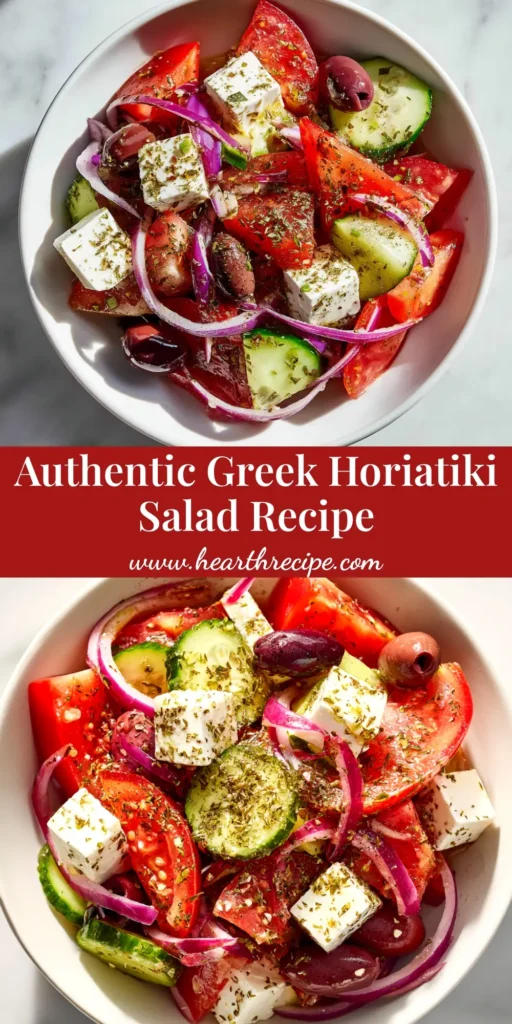









Forget everything you thought you knew about Greek salad. We’re not talking about the beds of iceberg lettuce topped with a few sad olives. We’re diving deep into the heart of Greek cuisine to create a true Greek Horiatiki Salad, the vibrant, fresh, and incredibly simple dish served in every village (or ‘horio’) across Greece. This is the real deal—a celebration of peak-season produce at its finest.
This recipe isn’t just about mixing vegetables; it’s about honoring a tradition of simplicity and flavor. You’ll find no lettuce, no complicated dressings, just the pure, unadulterated taste of sun-ripened tomatoes, crisp cucumbers, and a generous block of creamy feta. Ready to taste the Mediterranean in a bowl? Let’s begin.
What Makes a Salad a “Horiatiki”?
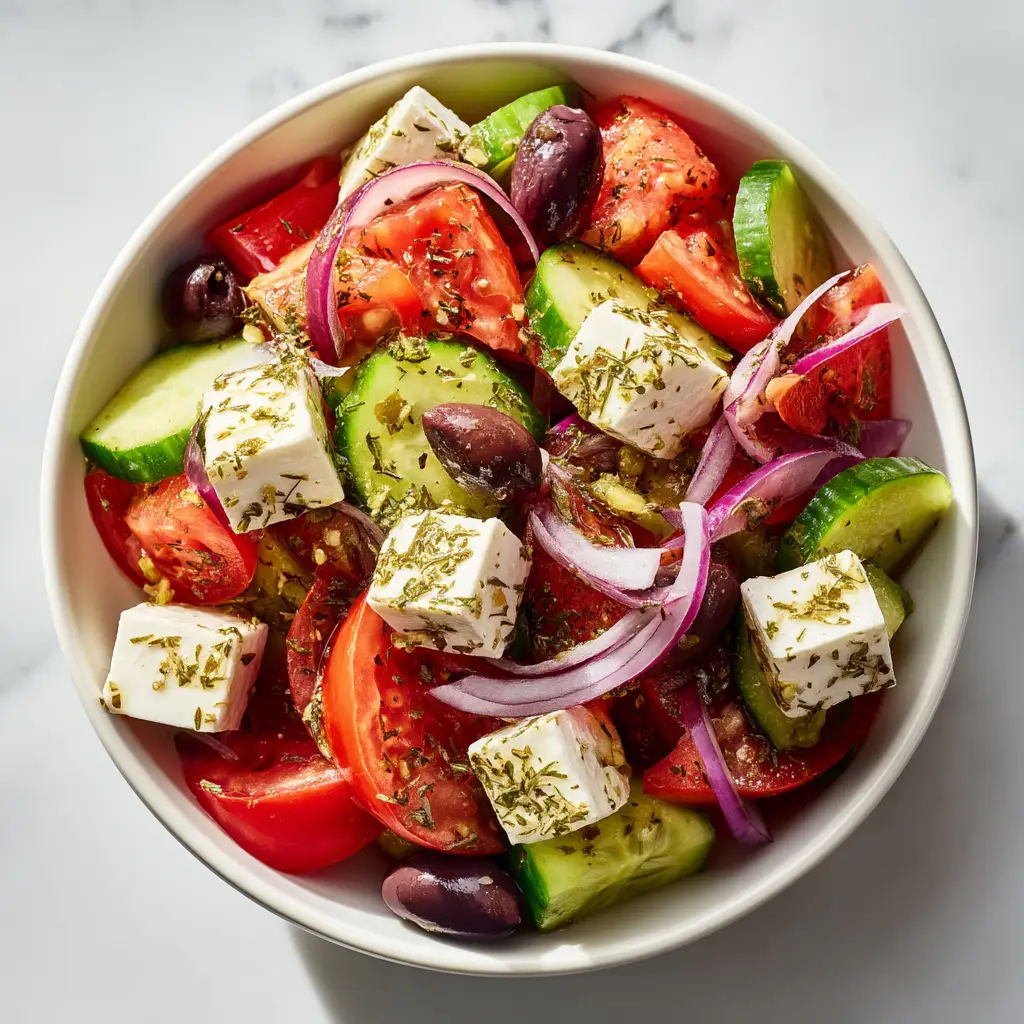
The word “Horiatiki” ( χωριάτικη) literally translates to “village” or “peasant” salad. It reflects its rustic origins, a dish made from ingredients that a farmer would have readily available from their garden. The key distinction that sets a Horiatiki apart from many Westernized “Greek salads” is what it lacks: lettuce.
An authentic Greek Horiatiki Salad is a chunky, hearty mix of fresh vegetables, served simply with a high-quality olive oil and a sprinkle of oregano. The focus is entirely on the quality and flavor of the core ingredients, not on leafy fillers. It’s a testament to the idea that the best meals are often the simplest.
The Core Ingredients for an Authentic Greek Horiatiki Salad
The magic of this salad lies in its simplicity, which means the quality of your ingredients is paramount. There’s nowhere for subpar produce to hide. Seek out the freshest, most flavorful vegetables you can find for a truly authentic experience.
Tomatoes: The Heart of the Salad
Use the best vine-ripened tomatoes you can get your hands on. They should be firm, heavy for their size, and deeply fragrant. In Greece, they use juicy, flavorful summer tomatoes, cut into generous wedges.
Cucumbers: Crisp and Cool
A firm, crisp cucumber is essential. We prefer to peel it in alternating stripes, leaving some of the dark green skin for color and texture. Slice it into thick half-moons to stand up to the other chunky ingredients.
Red Onion: A Pungent Bite
Thinly sliced red onion provides a sharp, pungent counterpoint to the other vegetables. If you find the flavor of raw onion too strong, you can soak the slices in cold water for about 10 minutes to mellow them out.
Kalamata Olives: Rich and Briny
Authentic Kalamata olives are a must. Their rich, briny, and fruity flavor is iconic. Always choose whole olives with the pits in for the best taste and texture.
Feta Cheese: The Creamy Crown
This is non-negotiable. A true Greek Horiatiki Salad is topped with a whole block, or very large slab, of high-quality sheep’s milk feta. Do not crumble it! The feta is meant to be broken up with a fork as you eat, mingling its creamy, tangy saltiness with every bite.
Crafting the Perfect Horiatiki Dressing
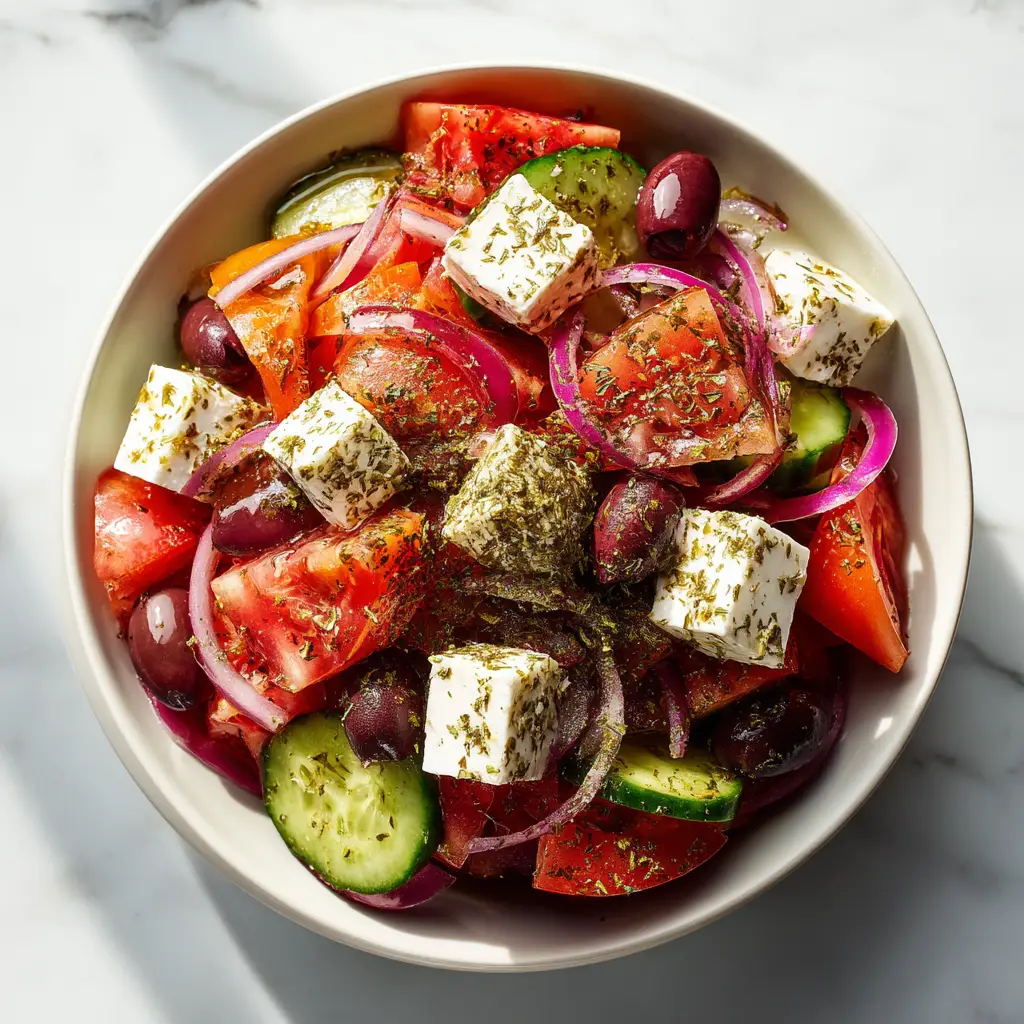
You won’t find a pre-mixed, emulsified vinaigrette here. The dressing for a Horiatiki is created right in the bowl. It consists of two key ingredients: extra virgin olive oil and a splash of red wine vinegar. The “dressing” is finished with a generous sprinkle of dried Greek oregano over the top of the feta.
As you eat, the juices from the tomatoes and other vegetables mingle with the oil and vinegar, creating a delicious, savory liquid at the bottom of the bowl. This is perfect for dipping crusty bread into—a practice the Greeks call “papara.” For another delicious salad idea, check out this Zesty Italian Pasta Salad.
How to Make This Greek Horiatiki Salad Recipe
Making this salad is as easy as a summer breeze. The key is in the preparation—the specific way you chop the vegetables makes a huge difference in the final texture and experience. Follow these simple steps for a perfect result every time.
Chef’s Tip: Don’t dress the salad until the moment you are ready to serve it. Adding the oil and vinegar too early will cause the cucumbers and tomatoes to lose their crispness and become watery.
Expert Tips for the Best Village Salad
- Use the Best Olive Oil: Since the dressing is so simple, the quality of your extra virgin olive oil will shine through. Choose a flavorful, high-quality oil for the best taste.
- Don’t Salt the Vegetables Directly: The feta and olives are already quite salty. You will add a pinch of salt to the dressing, but avoid salting the vegetables directly, as this will draw out water and make them soggy.
- Serve Immediately: This salad is best enjoyed fresh. The crispness of the vegetables is a key part of its charm. If you’re looking for a heartier meal, this salad pairs beautifully with Mediterranean Salmon with Lemon Rice.
- Embrace the Rustic Chop: Don’t cut your vegetables too small. Horiatiki is meant to be a chunky, rustic salad. Think generous wedges of tomato and thick slices of cucumber.
What to Serve With Your Horiatiki
A Greek Horiatiki Salad is incredibly versatile. It can be a light lunch on its own with some crusty bread, or it can be a perfect side dish to a larger meal. It pairs wonderfully with grilled meats and fish, such as Lemon Dill Baked Salmon or a simple grilled chicken breast. It’s also a classic accompaniment to dishes like moussaka or pastitsio.
Frequently Asked Questions
This salad is best served immediately after it’s made to ensure the vegetables stay crisp. If you need to prep ahead, you can chop the vegetables and store them in the fridge. Wait to add the olives, feta, and dressing until just before serving.
No. An authentic Greek Horiatiki Salad never includes lettuce or any other leafy greens. The recipe focuses on a simple, hearty base of fresh, chunky vegetables like tomatoes and cucumbers.
A Horiatiki, or ‘village’ salad, is the true, authentic Greek salad. The main difference is that a Horiatiki never contains lettuce. It’s a rustic mix of chunky tomatoes, cucumbers, red onion, Kalamata olives, and is always topped with a block of feta, not crumbles.
The dressing is incredibly simple and is added directly to the salad. It consists only of high-quality extra virgin olive oil, a splash of red wine vinegar, and a generous sprinkle of dried Greek oregano over the feta cheese.
For the most authentic flavor, use a high-quality Greek feta made from sheep’s milk (or a blend of sheep and goat milk). Look for feta sold in blocks and packed in brine, which has a creamier texture and more complex flavor than pre-crumbled varieties.
The Perfect Greek Horiatiki Salad Recipe
Greek Horiatiki Salad (The Authentic Recipe)
Ingredients
Equipment
Instructions
- In a large, shallow serving bowl, combine the tomato wedges, cucumber slices, and red onion.
- Scatter the Kalamata olives over the vegetables. Place the entire block of feta cheese directly in the center of the salad.
- Just before serving, drizzle the extra virgin olive oil and red wine vinegar evenly over the entire salad.
- Sprinkle the dried Greek oregano and sea salt directly over the block of feta. Serve immediately with crusty bread to soak up the juices.
Notes
Soak the sliced red onion in cold water for 10 minutes to reduce its sharp bite if desired.
Do not add the dressing until you are ready to serve to keep the vegetables crisp.
Share Your Creation!
We are certain this authentic Greek Horiatiki Salad recipe will transport you to a seaside taverna in Greece. It’s a testament to how incredible simple, fresh ingredients can be. If you make this recipe, we’d love to see it! Share your creation on Pinterest and tag us. Your feedback and beautiful photos make our day!