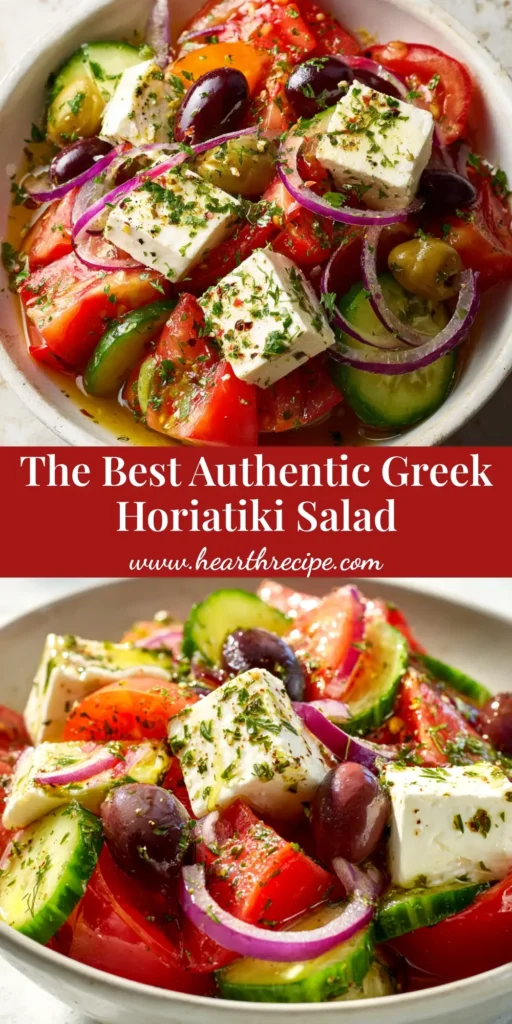









This is the only authentic Greek Horiatiki Salad recipe you will ever need. Forget everything you thought you knew about Greek salad; this traditional version, also known as a “village salad,” is a masterclass in simplicity and freshness. It’s a vibrant celebration of summer’s best produce, with no lettuce to be found.
We’re talking crisp cucumbers, juicy tomatoes, sharp red onion, and briny Kalamata olives, all brought together with a generous block of creamy feta cheese. Dressed in nothing more than high-quality olive oil and a splash of red wine vinegar, this salad lets the ingredients shine. It’s the perfect, refreshing dish for a light lunch or a side to any summer meal.
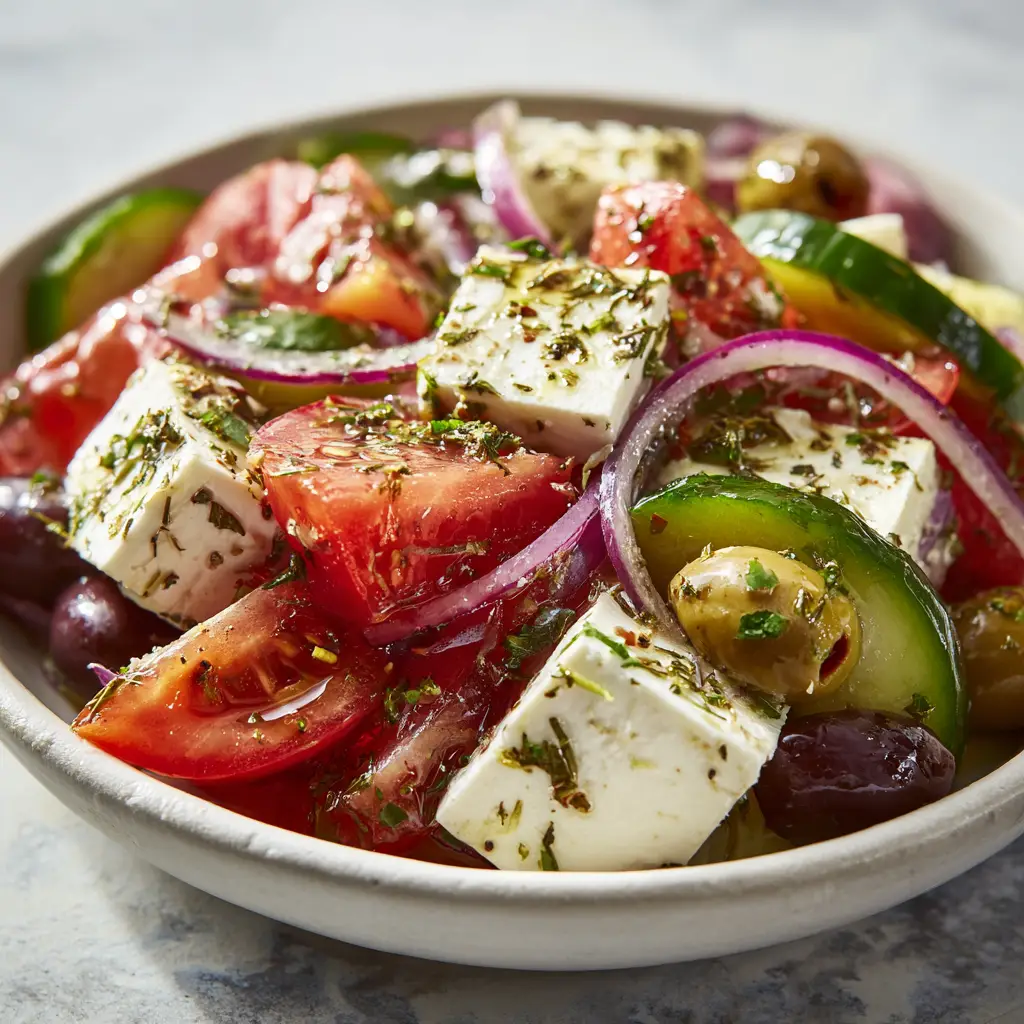
What is a Horiatiki Salad?
“Horiatiki” (χωριάτικη) literally translates to “village” or “peasant” in Greek. This salad is a staple of the Greek countryside, a humble yet incredibly flavorful dish made with readily available, fresh ingredients. It represents the heart of Greek cuisine: simple, pure, and utterly delicious.
The core philosophy is to use produce at its peak. The tomatoes are sun-ripened and bursting with flavor, the cucumbers are crunchy and cool, and the feta is rich and tangy. This isn’t just a salad; it’s a taste of the Mediterranean summer in a bowl.
The Difference Between Horiatiki and American Greek Salad
The most significant difference is the lettuce. A true Greek Horiatiki Salad never contains lettuce. The Americanized version often includes a bed of romaine, which bulks up the salad but dilutes the intense, fresh flavors of the core ingredients.
Additionally, an authentic Horiatiki features a large block of feta placed on top, not crumbled throughout. This allows you to break off creamy pieces as you eat, ensuring every bite is a perfect combination of textures and tastes.
Why You’ll Love This Authentic Greek Horiatiki Salad Recipe
- Incredibly Fresh: It’s the ultimate way to enjoy peak-season vegetables.
- Quick & Easy: This salad comes together in just 15 minutes with simple chopping and mixing.
- Naturally Healthy: Packed with vitamins, minerals, and healthy fats, it’s a dish you can feel great about eating.
- Truly Authentic: Experience the true taste of Greece, just like a salad served in a seaside taverna. A perfect companion to dishes like Avgolemono Soup.
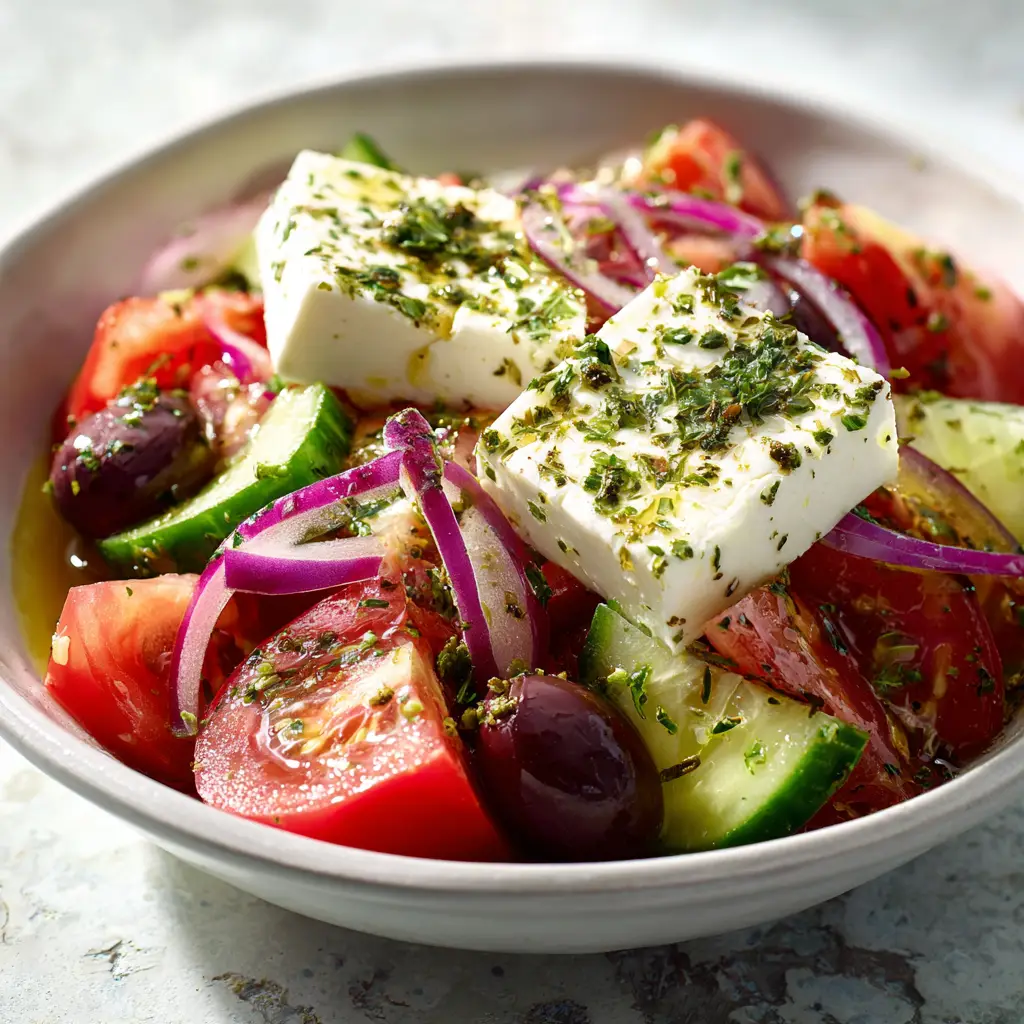
The Key to an Amazing Horiatiki: Quality Ingredients
A recipe this simple relies entirely on the quality of its components. There’s nowhere for subpar ingredients to hide. For the best Greek Horiatiki Salad, seek out the freshest produce and best quality staples you can find.
Tomatoes
Use ripe, in-season tomatoes. Heirloom, vine-ripened, or Roma tomatoes are all excellent choices. They should be firm but give slightly to the touch and smell sweet and earthy. Cut them into large, rustic wedges.
Cucumbers
Persian or English cucumbers are ideal. They have thin skins (no peeling required!) and minimal seeds, providing a crisp, refreshing crunch without any bitterness.
Red Onion
Slice the red onion very thinly. If you find its flavor too sharp, you can soak the slices in cold water for 10 minutes before adding them to the salad. This simple trick mellows the flavor perfectly.
Feta Cheese
This is crucial. Use a block of Greek feta made from sheep’s milk (or a mix of sheep and goat). It’s creamier and more flavorful than feta made from cow’s milk. Avoid pre-crumbled feta, which is often dry and lacks the rich texture we’re looking for.
Olives
Kalamata olives are the traditional choice. Their deep, fruity flavor is essential. Look for whole, unpitted olives for the best taste and texture.
The Simple Vinaigrette
The dressing is just as important. Use a high-quality extra virgin olive oil—one that you would enjoy dipping bread into. A good quality red wine vinegar and a sprinkle of dried oregano are all you need to finish it off.
How to Make the Perfect Greek Horiatiki Salad
Making this salad is as easy as chopping and combining. Start by adding your chopped tomatoes, cucumbers, and thinly sliced red onion to a large, shallow bowl. Drizzle generously with your best extra virgin olive oil and a splash of red wine vinegar. Sprinkle with salt and dried oregano, then gently toss to combine.
Add the Kalamata olives and give it one last gentle stir. Finally, place the block of feta right on top. Drizzle a little more olive oil and sprinkle a pinch of oregano over the feta. Serve immediately for the best flavor and texture.
What to Serve with Horiatiki Salad
This versatile salad pairs wonderfully with a wide range of dishes. It’s a classic accompaniment to grilled meats and fish. Try it alongside Parmesan Crusted Chicken or grilled souvlaki.
It’s also a fantastic light lunch on its own, served with a side of crusty bread for dipping in the flavorful juices at the bottom of the bowl—a practice the Greeks call “papara.” For a more substantial vegetarian meal, pair it with some delicious feta rolls.
Expert Tips for the Best Village Salad
- Don’t Overmix: Toss the vegetables gently to avoid bruising the tomatoes and making the salad watery.
- Serve Immediately: This salad is best enjoyed fresh. The salt will draw water from the vegetables over time, making them less crisp.
- Use a Shallow Bowl: This helps present the salad beautifully and prevents the ingredients from getting crushed at the bottom.
* Season as You Go: Lightly salt the vegetables before adding the feta, as the cheese itself is quite salty.
Storing Leftover Horiatiki
Because of the fresh ingredients, this salad is best eaten the day it’s made. If you do have leftovers, you can store them in an airtight container in the refrigerator for up to one day. The vegetables will soften, but the flavors will still be delicious. For best results, wait to add the dressing and feta until just before serving if you plan to make it ahead.
Frequently Asked Questions
No, an authentic Greek Horiatiki (village) salad does not contain lettuce. The Americanized version often includes it, but the traditional recipe focuses purely on the fresh vegetables.
Horiatiki is incredibly versatile. It’s a perfect side dish for grilled meats like chicken souvlaki or fish. It can also be a light lunch on its own, served with crusty bread to soak up the delicious juices.
A traditional Horiatiki salad is made of ripe tomatoes, crisp cucumbers, thinly sliced red onion, Kalamata olives, and a block of sheep’s milk feta. It’s dressed simply with extra virgin olive oil, red wine vinegar, and a sprinkle of dried oregano.
The best feta is a block of Greek feta made from sheep’s milk or a combination of sheep’s and goat’s milk. It is creamier and more flavorful than cow’s milk feta. Avoid pre-crumbled feta for the best texture.
A Horiatiki salad is the authentic Greek village salad. The main difference is that a true Horiatiki never contains lettuce. It focuses on a simple mix of tomato, cucumber, onion, olives, and a block of feta cheese.
Authentic Greek Horiatiki Salad Recipe
Greek Horiatiki Salad (The Authentic Recipe)
Ingredients
Equipment
Instructions
- In a large, shallow salad bowl, combine the chopped tomatoes, sliced cucumber, and thinly sliced red onion.
- Drizzle with the extra virgin olive oil and red wine vinegar. Sprinkle with sea salt and half of the dried oregano.
- Gently toss the vegetables to coat them evenly in the dressing.
- Add the Kalamata olives and give one final, gentle toss.
- Place the entire block of feta cheese on top of the salad. Drizzle the feta with a little more olive oil and sprinkle with the remaining dried oregano.
- Serve immediately with crusty bread to soak up the juices.
Notes
Soak the Onion: If you find raw red onion too pungent, soak the slices in cold water for 10 minutes, then drain well before adding to the salad.
Don't Crumble the Feta: Serving the feta as a block is traditional and allows for a creamier texture in every bite.
Share Your Creation!
If you make this authentic Greek Horiatiki Salad recipe, I’d love to hear about it! Leave a comment below and let me know how it turned out. Don’t forget to save this recipe to your favorite board on Pinterest!